Department of Experimental, Diagnostic and Specialty Medicine (DIMES), University of Bologna, Italy.
Department of Life Sciences and Biotechnologies, University of Ferrara, Italy.
Mol Oncol. 2021 Oct;15(10):2732-2751. doi: 10.1002/1878-0261.13026. Epub 2021 Jun 23.
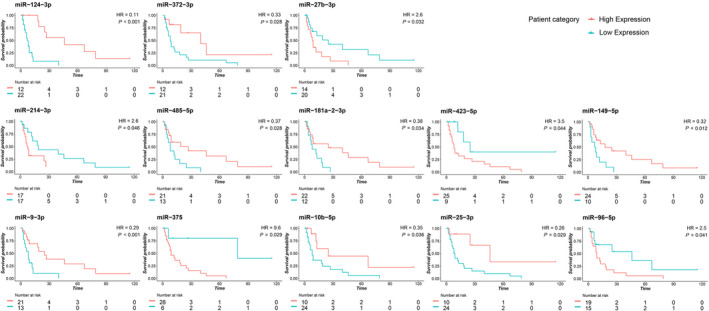
Metastasis is responsible for the majority of cancer-related deaths. Particularly, challenging is the management of metastatic cancer of unknown primary site (CUP), whose tissue of origin (TOO) remains undetermined even after extensive investigations and whose therapy is rather unspecific and poorly effective. Molecular approaches to identify the most probable TOO of CUPs can overcome some of these issues. In this study, we applied a predetermined set of 89 microRNAs (miRNAs) to infer the TOO of 53 metastatic cancers of unknown or uncertain origin. The miRNA expression was assessed with droplet digital PCR in 159 samples, including primary tumors from 17 tumor classes (reference set) and metastases of known and unknown origin (test set). We combined two different statistical models for class prediction to obtain the most probable TOOs: the nearest shrunken centroids approach of Prediction Analysis of Microarrays (PAMR) and the least absolute shrinkage and selection operator (LASSO) models. The molecular test was successful for all formalin-fixed paraffin-embedded samples and provided a TOO identification within 1 week from the biopsy procedure. The most frequently predicted origins were gastrointestinal, pancreas, breast, lung, and bile duct. The assay was applied also to multiple metastases from the same CUP, collected from different metastatic sites: The predictions showed a strong agreement, intrinsically validating our assay. The final CUPs' TOO prediction was compared with the clinicopathological hypothesis of primary site. Moreover, a panel of 13 miRNAs proved to have prognostic value and be associated with overall survival in CUP patients. Our study demonstrated that miRNA expression profiling in CUP samples could be employed as diagnostic and prognostic test. Our molecular analysis can be performed on request, concomitantly with standard diagnostic workup and in association with genetic profiling, to offer valuable indications about the possible primary site, thereby supporting treatment decisions.
转移是导致大多数癌症相关死亡的原因。特别是,转移性癌症未知原发灶(CUP)的治疗极具挑战性,即使经过广泛的检查,其组织来源(TOO)仍未确定,且治疗方法较为非特异性且效果不佳。采用分子方法确定 CUP 的最可能 TOO 可以克服其中的一些问题。在这项研究中,我们应用了一套预先确定的 89 个 microRNAs(miRNAs)来推断 53 例转移性癌症未知或不确定来源的 TOO。在包括 17 种肿瘤类别的原发肿瘤(参考集)和已知及未知来源的转移灶(测试集)的 159 个样本中,采用液滴数字 PCR 评估 miRNA 的表达。我们结合了两种不同的统计模型进行分类预测,以获得最可能的 TOO:预测分析微阵列(PAMR)的最近收缩质心方法和最小绝对收缩和选择算子(LASSO)模型。分子检测对所有福尔马林固定石蜡包埋样本均成功,并在活检后 1 周内提供 TOO 鉴定。最常预测的起源是胃肠道、胰腺、乳腺、肺和胆管。该检测还应用于来自同一 CUP 的多个转移灶,这些转移灶来自不同的转移部位:预测结果具有很强的一致性,这从本质上验证了我们的检测。最终 CUP 的 TOO 预测与原发性部位的临床病理假设进行了比较。此外,一组 13 个 miRNA 被证明具有预后价值,并与 CUP 患者的总生存期相关。我们的研究表明,CUP 样本中的 miRNA 表达谱可作为诊断和预后检测。我们的分子分析可根据要求与标准诊断程序同时进行,并与基因谱分析相关联,以提供有关可能的原发部位的有价值的信息,从而支持治疗决策。