Department of Pathobiological Sciences, University of Wisconsin-Madison, Madison, Wisconsin, USA.
Wisconsin National Primate Research Center, University of Wisconsin-Madison, Madison, Wisconsin, USA.
J Virol. 2021 Jul 26;95(16):e0222020. doi: 10.1128/JVI.02220-20.
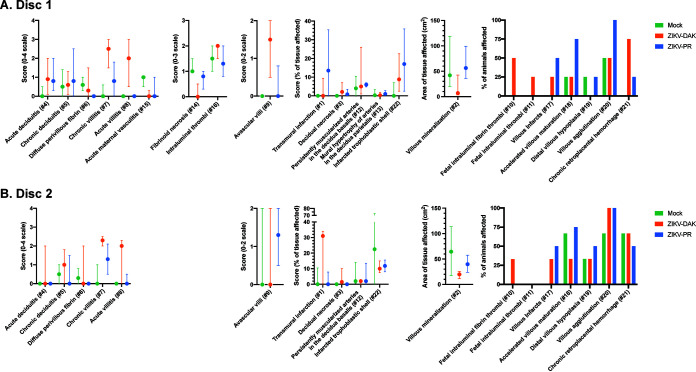
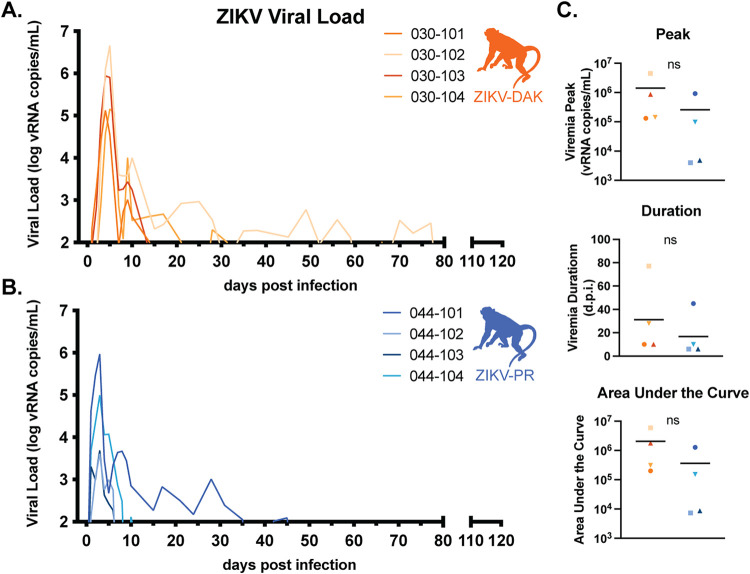
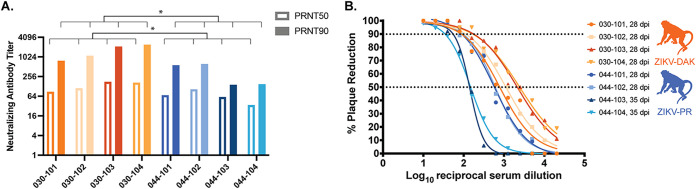
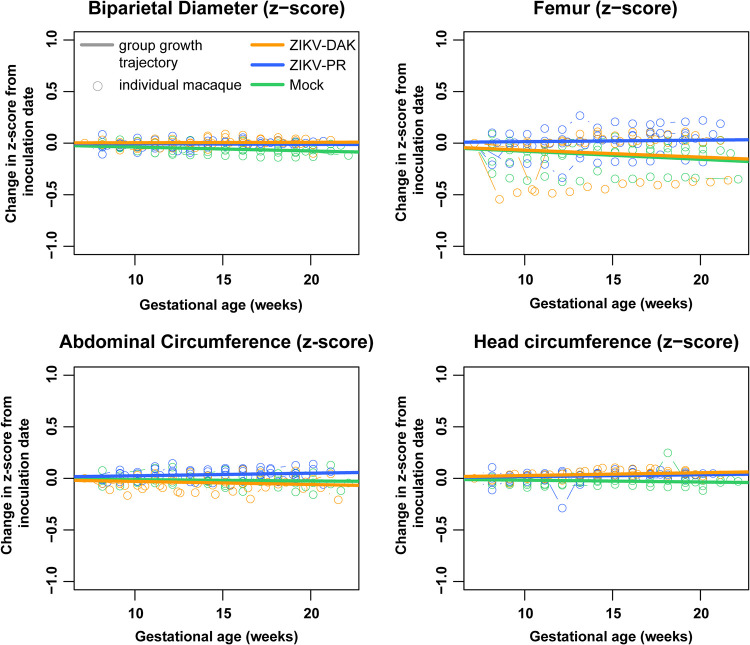
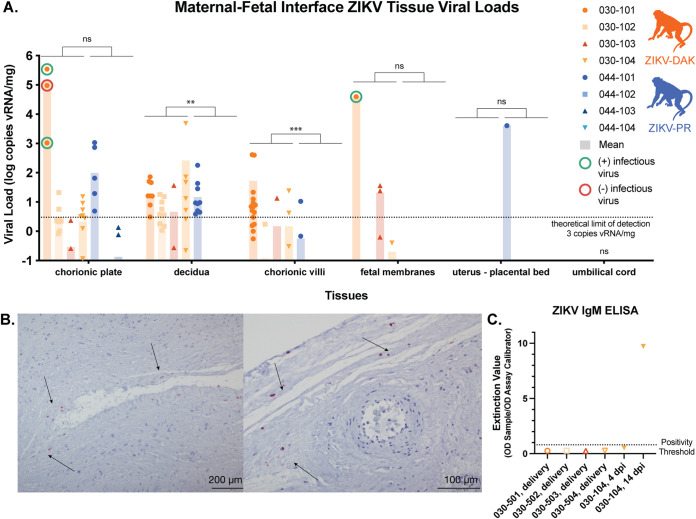
Following the Zika virus (ZIKV) outbreak in the Americas, ZIKV was causally associated with microcephaly and a range of neurological and developmental symptoms, termed congenital Zika syndrome (CZS). The viruses responsible for this outbreak belonged to the Asian lineage of ZIKV. However, and studies assessing the pathogenesis of African-lineage ZIKV demonstrated that African-lineage isolates often replicated to high titers and caused more-severe pathology than Asian-lineage isolates. To date, the pathogenesis of African-lineage ZIKV in a translational model, particularly during pregnancy, has not been rigorously characterized. Here, we infected four pregnant rhesus macaques with a low-passage-number strain of African-lineage ZIKV and compared its pathogenesis to those for a cohort of four pregnant rhesus macaques infected with an Asian-lineage isolate and a cohort of mock-inoculated controls. The viral replication kinetics for the two experimental groups were not significantly different, and both groups developed robust neutralizing antibody titers above levels considered to be protective. There was no evidence of significant fetal head growth restriction or gross fetal harm at delivery (1 to 1.5 weeks prior to full term) in either group. However, a significantly higher burden of ZIKV viral RNA (vRNA) was found in the maternal-fetal interface tissues of the macaques exposed to an African-lineage isolate. Our findings suggest that ZIKV of any genetic lineage poses a threat to pregnant individuals and their infants. ZIKV was first identified in 1947 in Africa, but most of our knowledge of ZIKV is based on studies of the distinct Asian genetic lineage, which caused the outbreak in the Americas in 2015 to 2016. In its most recent update, the WHO stated that improved understanding of African-lineage ZIKV pathogenesis during pregnancy must be a priority. The recent detection of African-lineage isolates in Brazil underscores the need to understand the impact of these viruses. Here, we provide the first comprehensive assessment of African-lineage ZIKV infection during pregnancy in a translational nonhuman primate model. We show that African-lineage isolates replicate with kinetics similar to those of Asian-lineage isolates and can infect the placenta. However, there was no evidence of more-severe outcomes with African-lineage isolates. Our results highlight both the threat that African-lineage ZIKV poses to pregnant individuals and their infants and the need for epidemiological and translational studies with African-lineage ZIKV.
继美洲的寨卡病毒(ZIKV)爆发后,ZIKV 被确定与小头畸形和一系列神经发育症状有关,被称为先天性寨卡综合征(CZS)。引起此次爆发的病毒属于 ZIKV 的亚洲谱系。然而, 和 研究评估了非洲谱系 ZIKV 的发病机制,结果表明,非洲谱系分离株通常复制到高滴度,并引起比亚洲谱系分离株更严重的病理学改变。迄今为止,非洲谱系 ZIKV 在转化模型中的发病机制,特别是在怀孕期间,尚未得到严格描述。在这里,我们用非洲谱系 ZIKV 的低传代数株感染了四只怀孕的恒河猴,并将其发病机制与四只感染亚洲谱系分离株的怀孕恒河猴队列和四组模拟接种对照进行了比较。两组的病毒复制动力学没有显著差异,两组都产生了高于被认为具有保护作用的水平的强烈中和抗体滴度。在两组中,在分娩时(在足月前 1 至 1.5 周)均未发现胎儿头部生长受限或明显的胎儿损害。然而,在接触非洲谱系分离株的恒河猴的母婴界面组织中,发现 ZIKV 病毒 RNA(vRNA)的负担明显更高。我们的研究结果表明,任何遗传谱系的 ZIKV 都会对孕妇及其婴儿构成威胁。ZIKV 于 1947 年在非洲首次被发现,但我们对 ZIKV 的大部分了解都是基于对明显的亚洲遗传谱系的研究,该谱系于 2015 年至 2016 年在美洲引起了疫情。在其最新更新中,世界卫生组织表示,必须优先加强对怀孕期间非洲谱系 ZIKV 发病机制的了解。最近在巴西检测到非洲谱系分离株突出表明需要了解这些病毒的影响。在这里,我们在转化型非人类灵长类动物模型中首次对怀孕期间的非洲谱系 ZIKV 感染进行了全面评估。我们表明,非洲谱系分离株的复制动力学与亚洲谱系分离株相似,并且可以感染胎盘。然而,没有证据表明非洲谱系分离株会导致更严重的后果。我们的研究结果既强调了非洲谱系 ZIKV 对孕妇及其婴儿的威胁,也强调了需要进行非洲谱系 ZIKV 的流行病学和转化研究。