• 文献检索
  • 文档翻译
  • 深度研究
  • 学术资讯
  • Suppr Zotero 插件Zotero 插件
  • 邀请有礼
  • 套餐&价格
  • 历史记录
应用&插件
Suppr Zotero 插件Zotero 插件浏览器插件Mac 客户端Windows 客户端微信小程序
定价
高级版会员购买积分包购买API积分包
服务
文献检索文档翻译深度研究API 文档MCP 服务
关于我们
关于 Suppr公司介绍联系我们用户协议隐私条款
关注我们

Suppr 超能文献

核心技术专利:CN118964589B侵权必究
粤ICP备2023148730 号-1Suppr @ 2026

文献检索

告别复杂PubMed语法,用中文像聊天一样搜索,搜遍4000万医学文献。AI智能推荐,让科研检索更轻松。

立即免费搜索

文件翻译

保留排版,准确专业,支持PDF/Word/PPT等文件格式,支持 12+语言互译。

免费翻译文档

深度研究

AI帮你快速写综述,25分钟生成高质量综述,智能提取关键信息,辅助科研写作。

立即免费体验

寨卡病毒的非洲株在猪胎儿传播模型中比亚洲株引起更严重的感染。

The African strain of Zika virus causes more severe infection than Asian strain in a porcine fetal transmission model.

机构信息

a Vaccine and Infectious Disease Organization-International Vaccine Centre (VIDO-InterVac), University of Saskatchewan , Saskatoon , Canada.

b School of Public Health, University of Saskatchewan , Saskatoon , Canada.

出版信息

Emerg Microbes Infect. 2019;8(1):1098-1107. doi: 10.1080/22221751.2019.1644967.

DOI:10.1080/22221751.2019.1644967
PMID:31340725
原文链接:https://pmc.ncbi.nlm.nih.gov/articles/PMC6711198/
Abstract

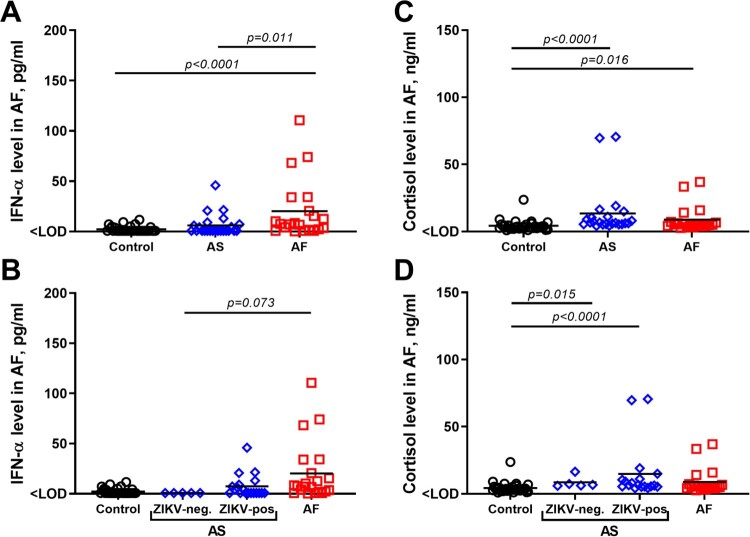
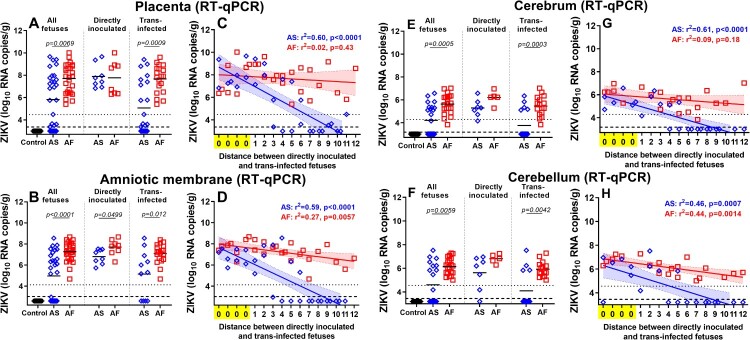
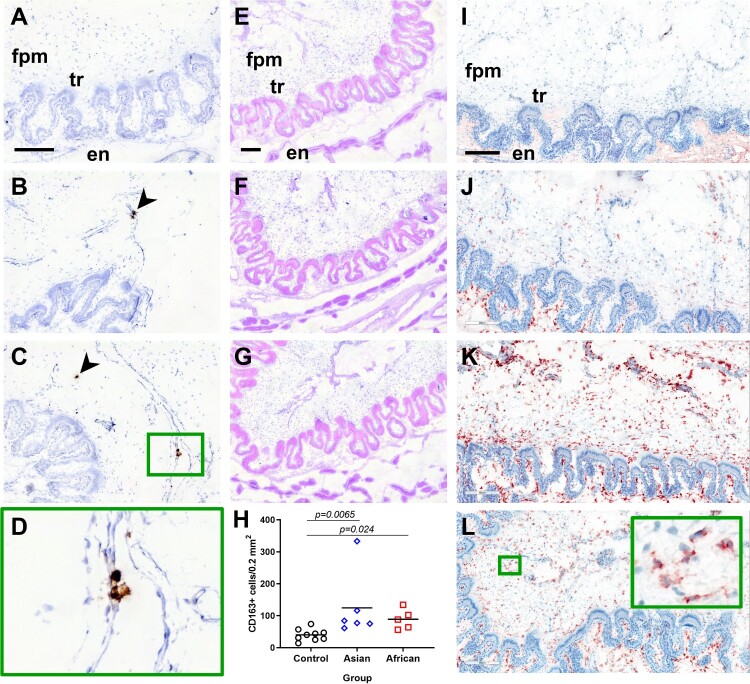
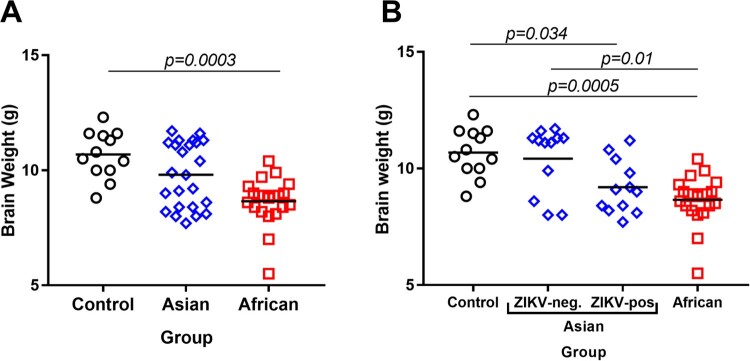
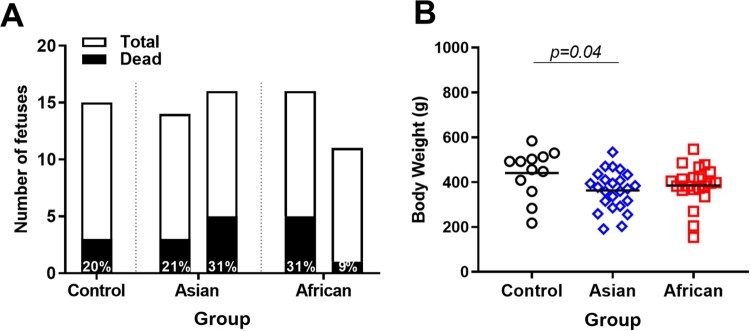
Studies in mice showed that African Zika virus (ZIKV) strains cause more damage in embryos. These studies, however, were limited to the mouse-adapted African MR766 strain or infection at early gestation. Here, we compared infection of Asian and African strains in the fetal pig model at midgestation. Both strains caused fetal infection. ZIKV was detected in placenta, amniotic membrane, amniotic fluid, fetal blood, and brain. The African strain produced more vigorous infection as represented by more efficient virus transmission between siblings, and higher viral loads in fetal organs and membranes. Infection with both strains was associated with reduced fetal brain weight and increased number of placental CD163-positive cells, as well as elevated interferon alpha and cortisol levels. This is the first large animal model study which demonstrated that African strain of ZIKV, with no passage history in experimental animals, can cause persistent infection in fetuses and fetal membranes at midgestation. Our studies also suggest that similar to Asian strains, ZIKV of African lineage might cause silent pathology which is difficult to identify in deceptively healthy fetuses. The findings emphasize the need for further studies to highlight the impact of ZIKV heterogeneity on infection outcomes during pregnancy.

摘要

在老鼠身上的研究表明,非洲寨卡病毒(ZIKV)株在胚胎中引起更多的损害。然而,这些研究仅限于适应于老鼠的非洲 MR766 株或在妊娠早期的感染。在这里,我们比较了中孕期胎儿猪模型中感染的亚洲和非洲株。两种株都引起了胎儿感染。ZIKV 被检测到在胎盘、羊膜、羊水、胎儿血液和大脑中。非洲株产生了更强烈的感染,表现为兄弟姐妹之间更有效的病毒传播,以及胎儿器官和膜中的更高病毒载量。两种株的感染都与胎儿脑重减轻和胎盘 CD163 阳性细胞增多有关,以及干扰素 α 和皮质醇水平升高。这是第一个大型动物模型研究,表明没有在实验动物中经过传代的非洲 ZIKV 株,可在妊娠中期引起胎儿和胎膜的持续感染。我们的研究还表明,类似于亚洲株,非洲谱系的 ZIKV 可能会引起难以在看似健康的胎儿中识别的沉默性病理。这些发现强调了需要进一步研究来强调寨卡病毒异质性对妊娠期间感染结果的影响。
https://cdn.ncbi.nlm.nih.gov/pmc/blobs/6291/6711198/2c3006813536/TEMI_A_1644967_F0005_OC.jpg
https://cdn.ncbi.nlm.nih.gov/pmc/blobs/6291/6711198/1bbb6874634d/TEMI_A_1644967_F0001_OC.jpg
https://cdn.ncbi.nlm.nih.gov/pmc/blobs/6291/6711198/4cdc730607ce/TEMI_A_1644967_F0002_OC.jpg
https://cdn.ncbi.nlm.nih.gov/pmc/blobs/6291/6711198/3ab0e3f393d1/TEMI_A_1644967_F0003_OC.jpg
https://cdn.ncbi.nlm.nih.gov/pmc/blobs/6291/6711198/afce01f0ef3c/TEMI_A_1644967_F0004_OC.jpg
https://cdn.ncbi.nlm.nih.gov/pmc/blobs/6291/6711198/2c3006813536/TEMI_A_1644967_F0005_OC.jpg
https://cdn.ncbi.nlm.nih.gov/pmc/blobs/6291/6711198/1bbb6874634d/TEMI_A_1644967_F0001_OC.jpg
https://cdn.ncbi.nlm.nih.gov/pmc/blobs/6291/6711198/4cdc730607ce/TEMI_A_1644967_F0002_OC.jpg
https://cdn.ncbi.nlm.nih.gov/pmc/blobs/6291/6711198/3ab0e3f393d1/TEMI_A_1644967_F0003_OC.jpg
https://cdn.ncbi.nlm.nih.gov/pmc/blobs/6291/6711198/afce01f0ef3c/TEMI_A_1644967_F0004_OC.jpg
https://cdn.ncbi.nlm.nih.gov/pmc/blobs/6291/6711198/2c3006813536/TEMI_A_1644967_F0005_OC.jpg

相似文献

1
The African strain of Zika virus causes more severe infection than Asian strain in a porcine fetal transmission model.寨卡病毒的非洲株在猪胎儿传播模型中比亚洲株引起更严重的感染。
Emerg Microbes Infect. 2019;8(1):1098-1107. doi: 10.1080/22221751.2019.1644967.
2
African-Lineage Zika Virus Replication Dynamics and Maternal-Fetal Interface Infection in Pregnant Rhesus Macaques.非洲系寨卡病毒在怀孕恒河猴中的复制动态和母胎界面感染。
J Virol. 2021 Jul 26;95(16):e0222020. doi: 10.1128/JVI.02220-20.
3
Subclinical in utero Zika virus infection is associated with interferon alpha sequelae and sex-specific molecular brain pathology in asymptomatic porcine offspring.亚临床宫内寨卡病毒感染与干扰素α后遗症以及无症状猪后代的性别特异性分子脑病理学有关。
PLoS Pathog. 2019 Nov 14;15(11):e1008038. doi: 10.1371/journal.ppat.1008038. eCollection 2019 Nov.
4
Zika Virus Infects Early- and Midgestation Human Maternal Decidual Tissues, Inducing Distinct Innate Tissue Responses in the Maternal-Fetal Interface.寨卡病毒感染人类妊娠早期和中期的母体蜕膜组织,在母胎界面诱导不同的先天性组织反应。
J Virol. 2017 Jan 31;91(4). doi: 10.1128/JVI.01905-16. Print 2017 Feb 15.
5
A Porcine Model of Zika Virus Infection to Profile the In Utero Interferon Alpha Response. Zika 病毒感染的猪模型分析宫内干扰素 α 反应。
Methods Mol Biol. 2020;2142:181-195. doi: 10.1007/978-1-0716-0581-3_15.
6
Zika virus infection in immunocompetent pregnant mice causes fetal damage and placental pathology in the absence of fetal infection.寨卡病毒感染免疫功能正常的怀孕小鼠可导致胎儿损伤和胎盘病理学改变,而无胎儿感染。
PLoS Pathog. 2018 Apr 10;14(4):e1006994. doi: 10.1371/journal.ppat.1006994. eCollection 2018 Apr.
7
Intrauterine Zika virus infection of pregnant immunocompetent mice models transplacental transmission and adverse perinatal outcomes.妊娠免疫功能正常小鼠模型的宫内寨卡病毒感染可经胎盘传播并导致不良围产期结局。
Nat Commun. 2017 Feb 21;8:14575. doi: 10.1038/ncomms14575.
8
Zika Virus Infection during Pregnancy in Mice Causes Placental Damage and Fetal Demise.小鼠孕期感染寨卡病毒会导致胎盘损伤和胎儿死亡。
Cell. 2016 May 19;165(5):1081-1091. doi: 10.1016/j.cell.2016.05.008. Epub 2016 May 11.
9
Gestational Stage and IFN-λ Signaling Regulate ZIKV Infection In Utero.妊娠期和 IFN-λ 信号调节 ZIKV 宫内感染。
Cell Host Microbe. 2017 Sep 13;22(3):366-376.e3. doi: 10.1016/j.chom.2017.08.012.
10
Fetal Brain Infection Is Not a Unique Characteristic of Brazilian Zika Viruses.胎儿脑部感染并非巴西寨卡病毒的特有特征。
Viruses. 2018 Oct 3;10(10):541. doi: 10.3390/v10100541.

引用本文的文献

1
An Overview of Zika Virus and Zika Virus Induced Neuropathies.寨卡病毒及寨卡病毒诱发的神经病变概述
Int J Mol Sci. 2024 Dec 24;26(1):47. doi: 10.3390/ijms26010047.
2
Endogenous ZAP is associated with altered Zika virus infection phenotype.内源性 ZAP 与寨卡病毒感染表型改变有关。
Virol J. 2024 Nov 9;21(1):285. doi: 10.1186/s12985-024-02557-x.
3
Asian Zika virus can acquire generic African-lineage mutations during infection.亚洲 Zika 病毒在感染期间可以获得具有普遍非洲谱系的突变。

本文引用的文献

1
Children Born to Mothers with Rash During Zika Virus Epidemic in Brazil: First 18 Months of Life.巴西寨卡病毒疫情期间出疹母亲所生儿童:头 18 个月的生活。
J Trop Pediatr. 2019 Dec 1;65(6):592-602. doi: 10.1093/tropej/fmz019.
2
Zika viruses of African and Asian lineages cause fetal harm in a mouse model of vertical transmission.非裔和亚洲谱系的寨卡病毒在垂直传播的小鼠模型中导致胎儿受损。
PLoS Negl Trop Dis. 2019 Apr 17;13(4):e0007343. doi: 10.1371/journal.pntd.0007343. eCollection 2019 Apr.
3
Zika in Angola and India.安哥拉和印度的寨卡病毒病
Emerg Microbes Infect. 2023 Dec;12(2):2263592. doi: 10.1080/22221751.2023.2263592. Epub 2023 Oct 8.
4
Infection of the maternal-fetal interface and vertical transmission following low-dose inoculation of pregnant rhesus macaques (Macaca mulatta) with an African-lineage Zika virus.经低剂量接种源自非洲谱系的寨卡病毒后,母胎界面感染和垂直传播在怀孕恒河猴(Macaca mulatta)中发生。
PLoS One. 2023 May 4;18(5):e0284964. doi: 10.1371/journal.pone.0284964. eCollection 2023.
5
Frequent first-trimester pregnancy loss in rhesus macaques infected with African-lineage Zika virus.感染了非洲谱系寨卡病毒的恒河猴频繁发生早期妊娠丢失。
PLoS Pathog. 2023 Mar 28;19(3):e1011282. doi: 10.1371/journal.ppat.1011282. eCollection 2023 Mar.
6
Offspring affected with Zika virus infection retain molecular footprints in the bone marrow and blood cells.受寨卡病毒感染的后代在骨髓和血细胞中保留分子痕迹。
Emerg Microbes Infect. 2023 Dec;12(1):2147021. doi: 10.1080/22221751.2022.2147021.
7
CpG content in the Zika virus genome affects infection phenotypes in the adult brain and fetal lymph nodes.寨卡病毒基因组中的 CpG 含量影响成年大脑和胎儿淋巴结中的感染表型。
Front Immunol. 2022 Aug 2;13:943481. doi: 10.3389/fimmu.2022.943481. eCollection 2022.
8
Fetal loss in pregnant rhesus macaques infected with high-dose African-lineage Zika virus.感染高剂量非洲系寨卡病毒的怀孕恒河猴流产。
PLoS Negl Trop Dis. 2022 Aug 4;16(8):e0010623. doi: 10.1371/journal.pntd.0010623. eCollection 2022 Aug.
9
Japanese encephalitis virus persists in the human reproductive epithelium and porcine reproductive tissues.日本脑炎病毒在人类生殖上皮和猪生殖组织中持续存在。
PLoS Negl Trop Dis. 2022 Jul 29;16(7):e0010656. doi: 10.1371/journal.pntd.0010656. eCollection 2022 Jul.
10
Downregulation of transcriptional activity, increased inflammation, and damage in the placenta following Zika virus infection is associated with adverse pregnancy outcomes.寨卡病毒感染后胎盘转录活性下调、炎症增加及损伤与不良妊娠结局相关。
Front Virol. 2022 Feb;2. doi: 10.3389/fviro.2022.782906. Epub 2022 Feb 22.
J Travel Med. 2019 Jun 11;26(5). doi: 10.1093/jtm/taz012.
4
Zika Virus Seroprevalence in Urban and Rural Areas of Suriname, 2017.苏里南城乡地区 2017 年寨卡病毒血清流行率。
J Infect Dis. 2019 Jun 5;220(1):28-31. doi: 10.1093/infdis/jiz063.
5
Zika virus outbreak in Rajasthan, India in 2018 was caused by a virus endemic to Asia.印度拉贾斯坦邦 2018 年的寨卡病毒爆发是由亚洲地方性病毒引起的。
Infect Genet Evol. 2019 Apr;69:199-202. doi: 10.1016/j.meegid.2019.01.026. Epub 2019 Jan 28.
6
Differential transmission of Asian and African Zika virus lineages by Aedes aegypti from New Caledonia.新喀里多尼亚埃及伊蚊对亚洲和非洲寨卡病毒谱系的差异传播。
Emerg Microbes Infect. 2018 Sep 26;7(1):159. doi: 10.1038/s41426-018-0166-2.
7
Male offspring born to mildly ZIKV-infected mice are at risk of developing neurocognitive disorders in adulthood.雄性子代幼鼠在轻度感染寨卡病毒的情况下,在成年后有发展出神经认知障碍的风险。
Nat Microbiol. 2018 Oct;3(10):1161-1174. doi: 10.1038/s41564-018-0236-1. Epub 2018 Sep 10.
8
Seasonality of birth defects in West Africa: could congenital Zika syndrome be to blame?西非出生缺陷的季节性:先天性寨卡综合征是罪魁祸首吗?
F1000Res. 2018 Feb 7;7:159. doi: 10.12688/f1000research.13858.2. eCollection 2018.
9
Persistent Zika virus infection in porcine conceptuses is associated with elevated in utero cortisol levels.猪胚胎中寨卡病毒的持续感染与子宫内皮质醇水平升高有关。
Virulence. 2018;9(1):1338-1343. doi: 10.1080/21505594.2018.1504558.
10
The Aftermath of Zika: Need for Long-Term Monitoring of Exposed Children.寨卡病毒的后续影响:需要对暴露儿童进行长期监测。
Trends Microbiol. 2018 Sep;26(9):729-732. doi: 10.1016/j.tim.2018.05.011. Epub 2018 Jun 27.