Department of Pharmacology, College of Korean Medicine, Sangji University, Wonju-si, Gangwon-do, Korea.
Department of Pharmaceutical Biochemistry, College of Pharmacy, Kyung Hee University, Seoul, Republic of Korea.
Neoplasia. 2021 Jun;23(6):561-573. doi: 10.1016/j.neo.2021.05.002. Epub 2021 May 31.
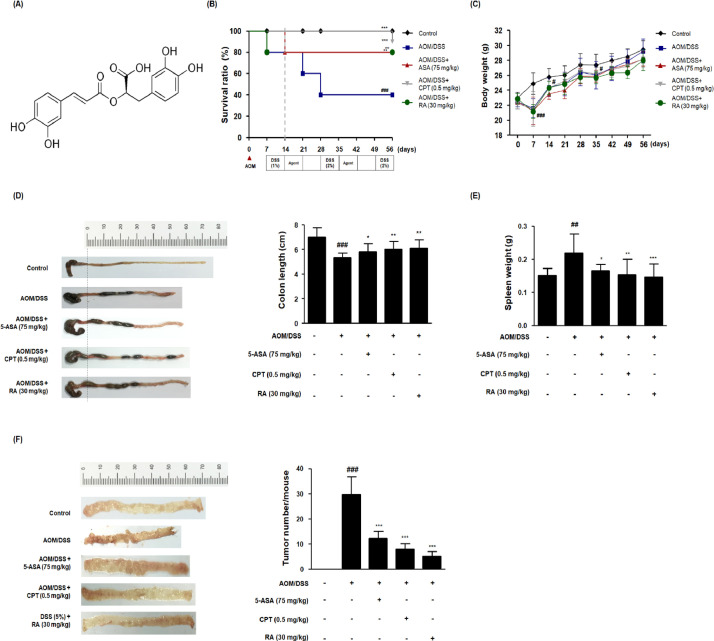
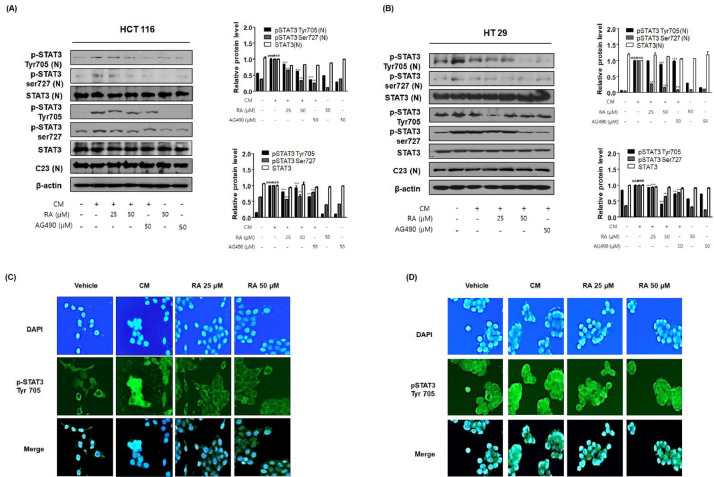
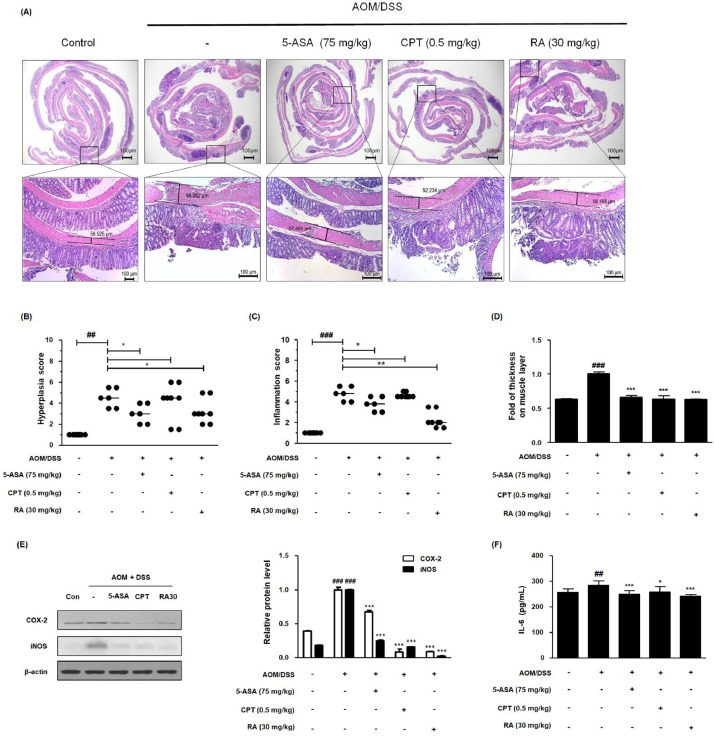
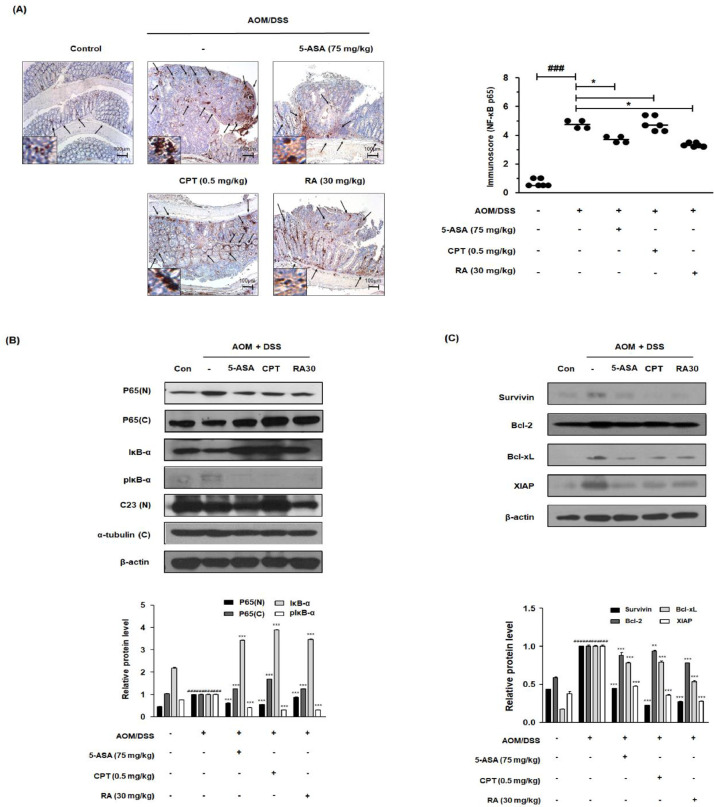
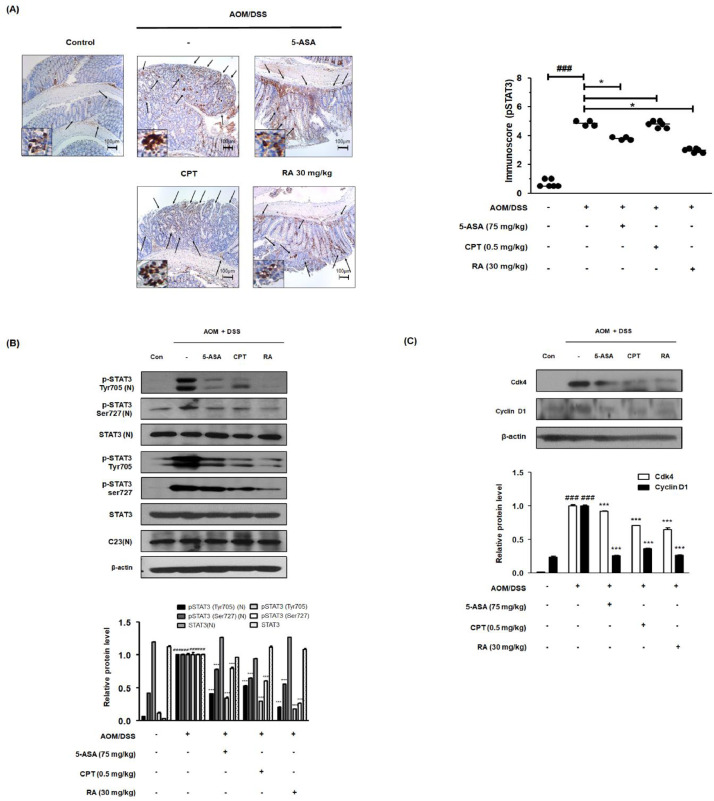
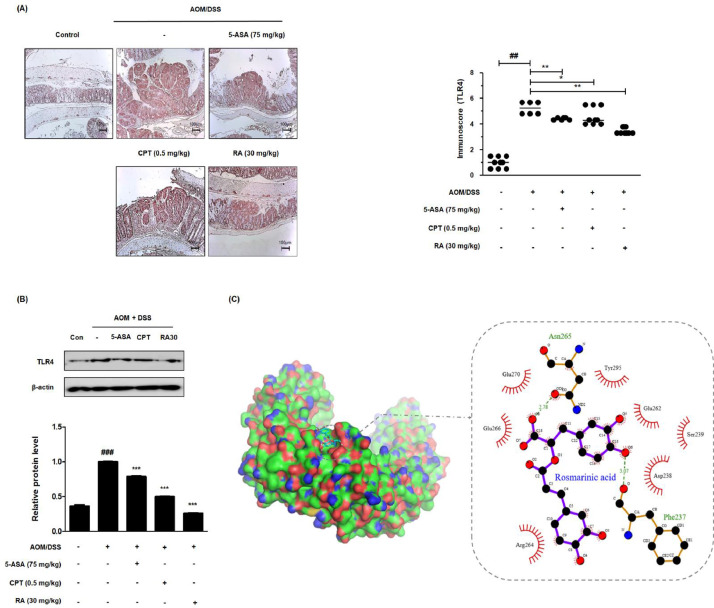
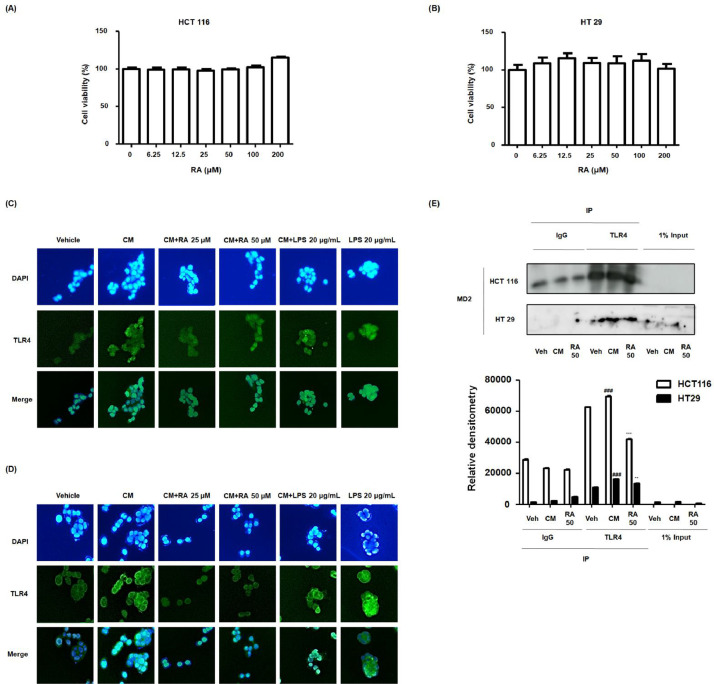
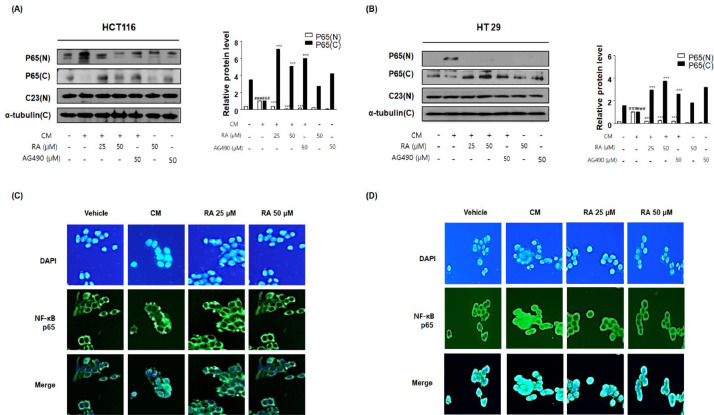
Previously, we found that rosmarinic acid (RA) exerted anti-inflammatory activities in a dextran sulfate sodium (DSS)-induced colitis model. Here, we investigated the anti-tumor effects of RA on colitis-associated colon cancer (CAC) and the underlying molecular mechanisms. We established an azoxymethane (AOM)/DSS-induced CAC murine model for in vivo studies and used a conditioned media (CM) culture system in vitro. H&E staining, immunohistochemistry, western blot assay, enzyme-linked immunosorbent assay, molecular docking, co-immunoprecipitation, and immunofluorescence assay were utilized to investigate how RA prevented colorectal cancer. In the AOM/DSS-induced CAC murine model, RA significantly reduced colitis severity, inflammation-related protein expression, tumor incidence, and colorectal adenoma development. It significantly modulated toll-like receptor-4 (TLR4)-mediated nuclear factor-kappa B (NF-κB) and signal transducer and activator of transcription 3 (STAT3) activation, thus attenuating the expression of anti-apoptotic factors, which mediate transcription factor-dependent tumor growth. In vitro, RA inhibited CM-induced TLR4 overexpression and competitively inhibited TLR4-myeloid differentiation factor 2 complex in an inflammatory microenvironment. Thus, RA suppressed NF-κB and STAT3 activation in colon cancer cells in an inflammatory microenvironment. Therefore, RA suppressed colitis-associated tumorigenesis in the AOM/DSS-induced CAC murine model and abrogated human colon cancer progression in an inflammatory microenvironment by propitiating TLR4-mediated NF-κB and STAT3 activation, pleiotropically.
先前,我们发现迷迭香酸(RA)在葡聚糖硫酸钠(DSS)诱导的结肠炎模型中发挥抗炎作用。在这里,我们研究了 RA 对结肠炎相关结肠癌(CAC)的抗肿瘤作用及其潜在的分子机制。我们建立了体内研究用的氧化偶氮甲烷(AOM)/DSS 诱导的 CAC 小鼠模型,并在体外使用了条件培养基(CM)培养系统。通过 H&E 染色、免疫组织化学、Western blot 分析、酶联免疫吸附试验、分子对接、共免疫沉淀和免疫荧光分析来研究 RA 如何预防结直肠癌。在 AOM/DSS 诱导的 CAC 小鼠模型中,RA 显著减轻了结肠炎的严重程度、炎症相关蛋白的表达、肿瘤的发生率以及结直肠腺瘤的发展。它显著调节了 Toll 样受体 4(TLR4)介导的核因子-κB(NF-κB)和信号转导子和转录激活子 3(STAT3)的激活,从而减弱了介导转录因子依赖性肿瘤生长的抗凋亡因子的表达。在体外,RA 抑制了 CM 诱导的 TLR4 过表达,并在炎症微环境中竞争性抑制 TLR4-髓样分化因子 2 复合物。因此,RA 在炎症微环境中抑制了结肠癌细胞中 NF-κB 和 STAT3 的激活。因此,RA 通过促进 TLR4 介导的 NF-κB 和 STAT3 激活,在 AOM/DSS 诱导的 CAC 小鼠模型中抑制了结肠炎相关的肿瘤发生,并在炎症微环境中阻断了人结肠癌的进展。