Gastroenterology Unit, Department of Medicine, A.O.U.I. Policlinico G.B. Rossi & University of Verona, Piazzale L.A. Scuro, 10, 37134, Verona, Italy.
Microbiology Section, Department of Diagnostics and Public Health, University of Verona, Verona, Italy.
Stem Cell Res Ther. 2021 Jun 2;12(1):316. doi: 10.1186/s13287-021-02376-9.
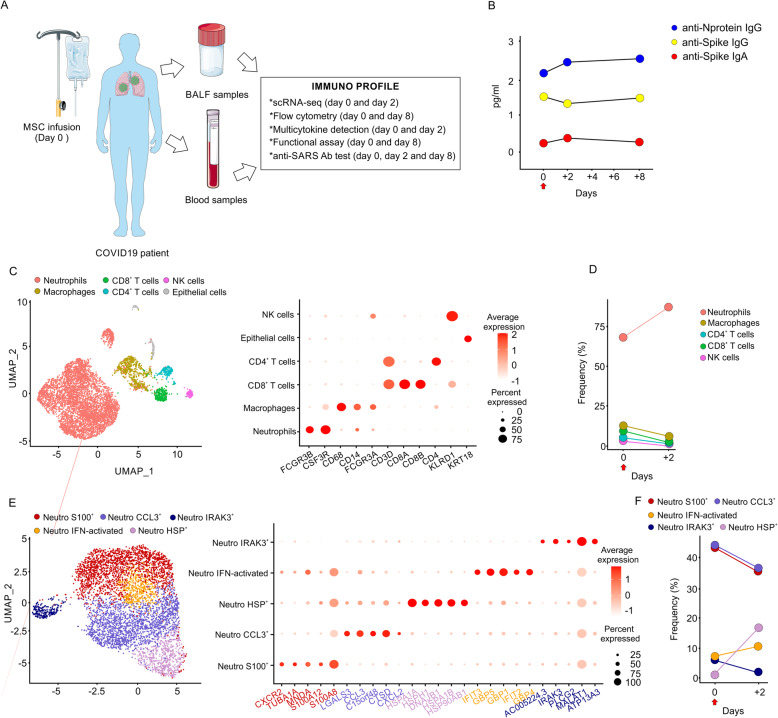
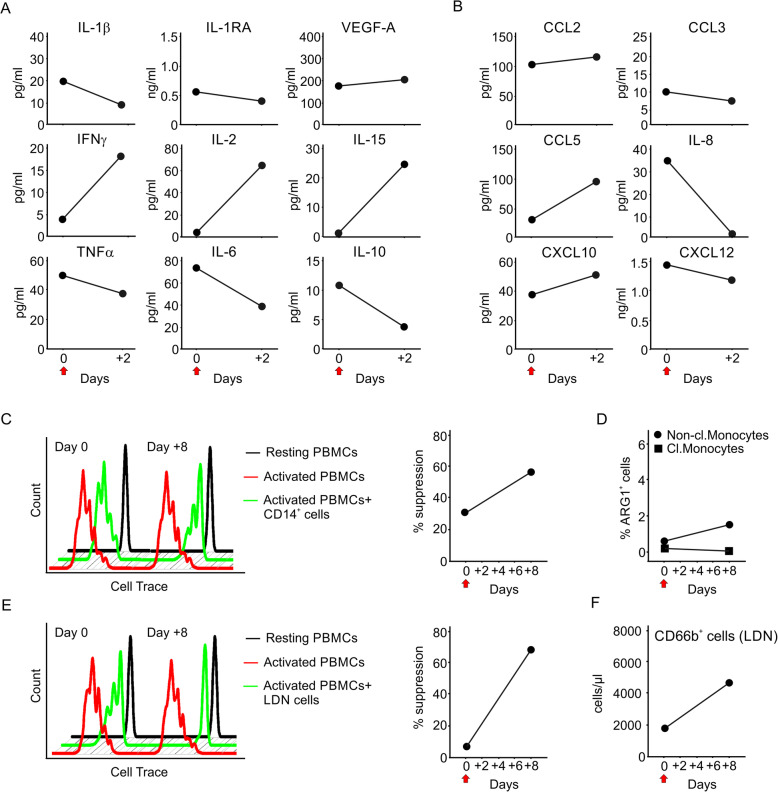
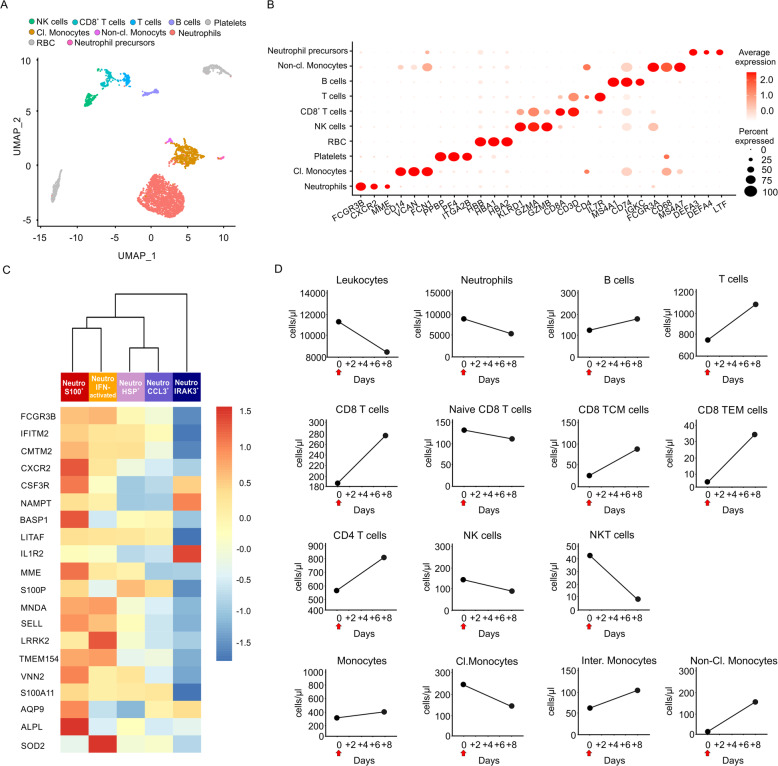
Coronavirus disease 2019 (COVID-19) may result in a life-threatening condition due to a hyperactive immune reaction to severe acute respiratory syndrome-coronavirus-2 infection, for which no effective treatment is available. Based on the potent immunomodulatory properties of mesenchymal stromal cells (MSCs), a growing number of trials are ongoing. This prompted us to carry out a thorough immunological study in a patient treated with umbilical cord-derived MSCs and admitted to the Intensive Care Unit for COVID-19-related pneumonia. The exploratory analyses were assessed on both peripheral blood and bronchoalveolar fluid lavage samples at baseline and after cellular infusion by means of single-cell RNA sequencing, flow cytometry, ELISA, and functional assays. Remarkably, a normalization of circulating T lymphocytes count paralleled by a reduction of inflammatory myeloid cells, and a decrease in serum levels of pro-inflammatory cytokines, mostly of interleukin-6 and tumor necrosis factor-α, were observed. In addition, a drop of plasma levels of those chemokines essential for neutrophil recruitment became evident that paralleled the decrease of lung-infiltrating inflammatory neutrophils. Finally, circulating monocytes and low-density gradient neutrophils acquired immunosuppressive function. This scenario was accompanied by an amelioration of respiratory, renal, inflammatory, and pro-thrombotic indexes. Our results provide the first immunological data possibly related to the use of umbilical cord-derived MSCs in severe COVID-19 context.
新型冠状病毒病(COVID-19)可能由于对严重急性呼吸综合征冠状病毒 2 感染的过度活跃免疫反应而导致危及生命的情况,目前对此尚无有效治疗方法。基于间充质基质细胞(MSCs)的强大免疫调节特性,越来越多的试验正在进行中。这促使我们对一名因 COVID-19 相关肺炎而入住重症监护病房并接受脐带源 MSC 治疗的患者进行了全面的免疫学研究。通过单细胞 RNA 测序、流式细胞术、ELISA 和功能测定,在基线和细胞输注后对外周血和支气管肺泡灌洗液样本进行了探索性分析。值得注意的是,循环 T 淋巴细胞计数的正常化伴随着炎症性髓样细胞的减少,以及促炎细胞因子(主要是白细胞介素 6 和肿瘤坏死因子-α)的血清水平降低。此外,对招募中性粒细胞至关重要的那些趋化因子的血浆水平明显下降,这与肺浸润性炎症中性粒细胞的减少相平行。最后,循环单核细胞和低浓度梯度中性粒细胞获得了免疫抑制功能。这种情况伴随着呼吸、肾脏、炎症和促血栓形成指标的改善。我们的结果提供了与严重 COVID-19 背景下使用脐带源 MSC 相关的首批免疫数据。