Korea Research Institute of Bioscience and Biotechnology (KRIBB), Daejeon 34141, Republic of Korea.
KRIBB School of Bioscience, Korea University of Science and Technology, Daejeon 34113, Republic of Korea.
Sci Adv. 2021 Jun 2;7(23). doi: 10.1126/sciadv.abh1586. Print 2021 Jun.
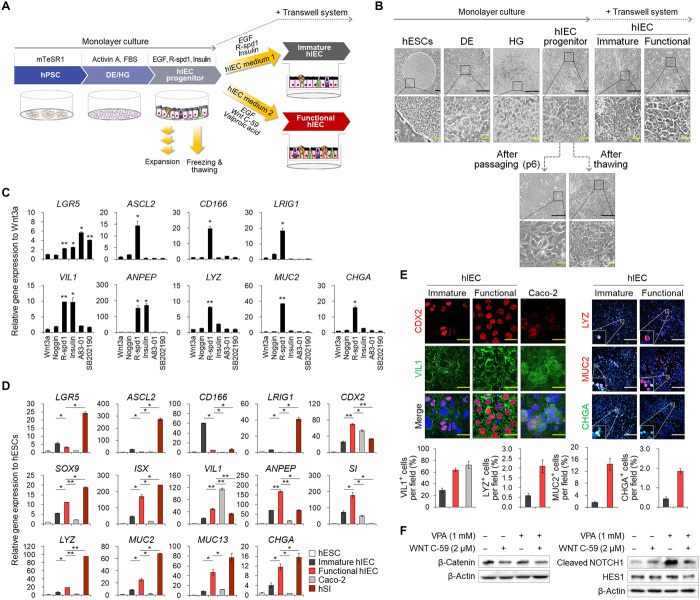
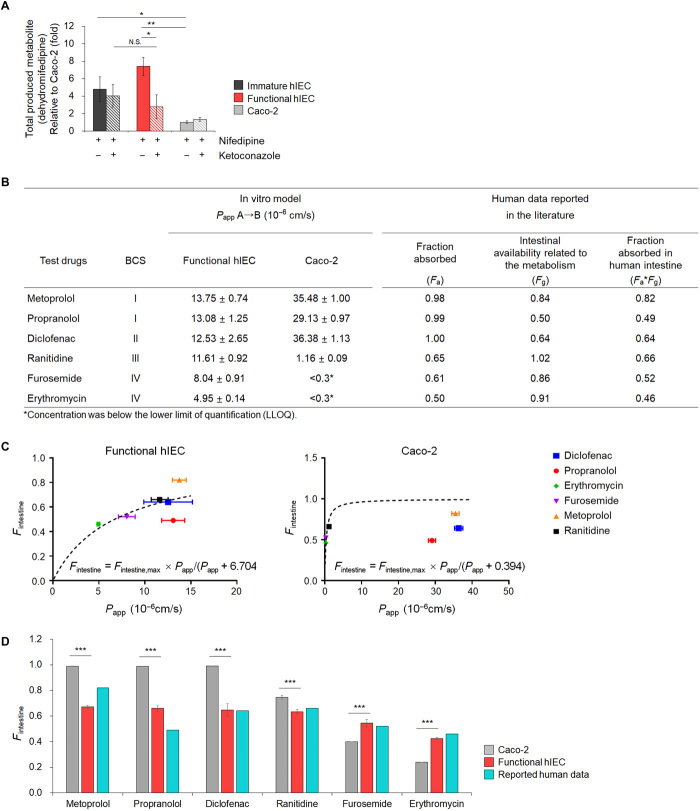
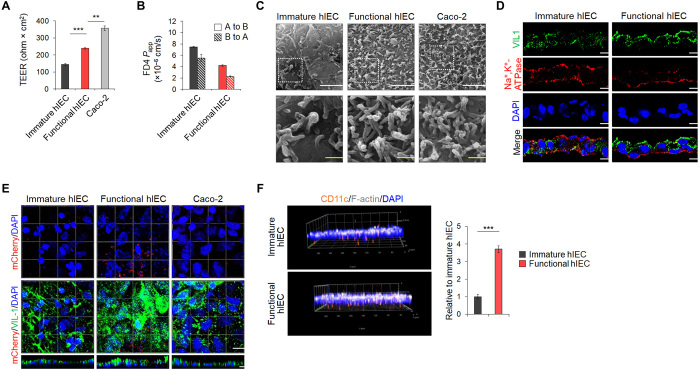
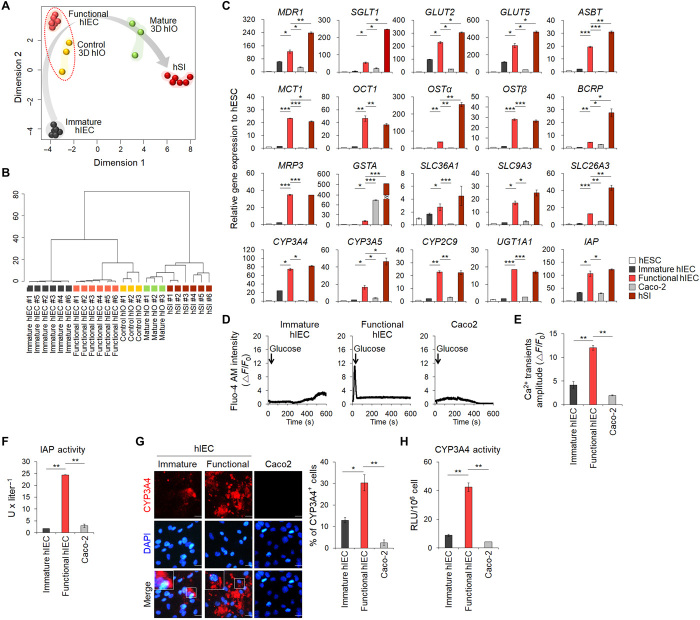
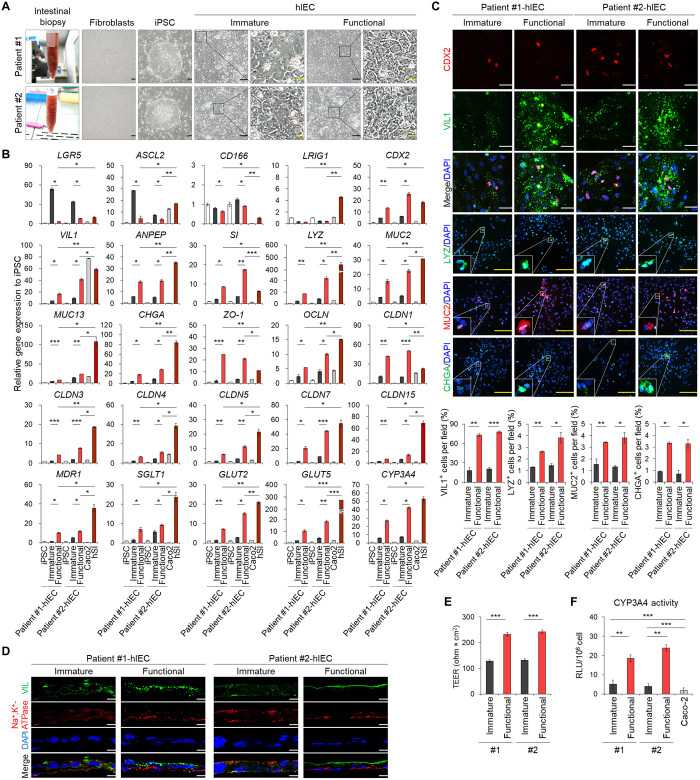
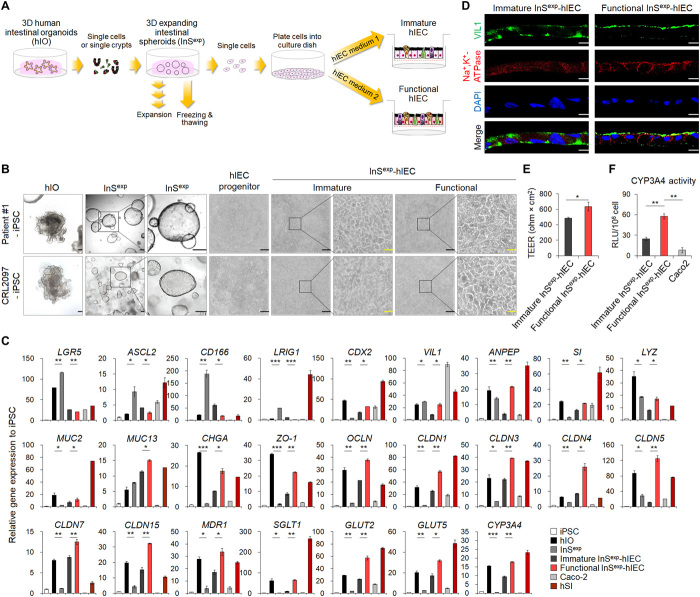
Advanced technologies are required for generating human intestinal epithelial cells (hIECs) harboring cellular diversity and functionalities to predict oral drug absorption in humans and study normal intestinal epithelial physiology. We developed a reproducible two-step protocol to induce human pluripotent stem cells to differentiate into highly expandable hIEC progenitors and a functional hIEC monolayer exhibiting intestinal molecular features, cell type diversity, and high activities of intestinal transporters and metabolic enzymes such as cytochrome P450 3A4 (CYP3A4). Functional hIECs are more suitable for predicting compounds metabolized by CYP3A4 and absorbed in the intestine than Caco-2 cells. This system is a step toward the transition from three-dimensional (3D) intestinal organoids to 2D hIEC monolayers without compromising cellular diversity and function. A physiologically relevant hIEC model offers a novel platform for creating patient-specific assays and support translational applications, thereby bridging the gap between 3D and 2D culture models of the intestine.
需要先进的技术来生成具有细胞多样性和功能的人肠上皮细胞(hIECs),以预测人体的口服药物吸收并研究正常的肠上皮生理学。我们开发了一种可重复的两步法方案,可诱导人多能干细胞分化为具有高扩展性的 hIEC 祖细胞和功能 hIEC 单层,表现出肠分子特征、细胞类型多样性以及肠转运体和代谢酶(如细胞色素 P450 3A4(CYP3A4))的高活性。功能 hIEC 比 Caco-2 细胞更适合预测由 CYP3A4 代谢和在肠道吸收的化合物。该系统是从三维(3D)肠类器官向 2D hIEC 单层过渡的一步,而不会影响细胞多样性和功能。生理相关的 hIEC 模型为创建患者特异性测定提供了新的平台,并支持转化应用,从而弥合了肠的 3D 和 2D 培养模型之间的差距。