Erasmus School of Social and Behavioural Sciences, Erasmus University Rotterdam, Burgemeester Oudlaan 50, 3000 DR, Rotterdam, The Netherlands.
Research Center Adolescent Development, Utrecht University, Utrecht, The Netherlands.
Sci Rep. 2021 Jun 2;11(1):11563. doi: 10.1038/s41598-021-90851-x.
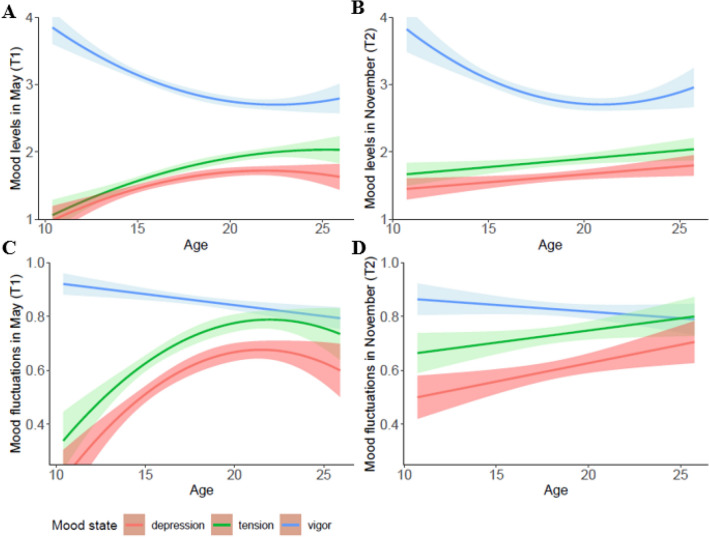
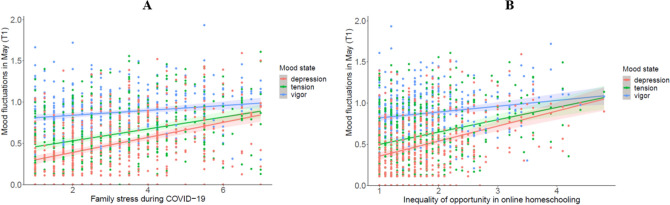
Adolescence is a formative period for socio-emotional development which is threatened by the COVID-19 pandemic. The current longitudinal study examined two aims: (1) the short- and long-term effects of the pandemic on young people's mood (i.e. vigor, tension, and depression levels) and emotional reactivity (i.e. fluctuations in daily mood), and (2) the impact of stressors on mood, emotional reactivity, self-oriented (i.e. maladaptive behavior towards COVID-19 rules) and other-benefitting behaviors (i.e. behavior aimed at helping and comforting others). We conducted an online two-week daily diary study among 462 Dutch adolescents (M = 15.27 years, 64% females) and 371 young adults (M = 21.49 years, 81% females) in May 2020, with a follow-up in November 2020 (N = 238 and 231, respectively adolescents and young adults). In May 2020, young adults and older relative to younger adolescents showed higher levels and more fluctuations in tension and depression and lower levels of vigor. Vigor levels decreased and tension and depression levels increased between May 2020 and November 2020, especially for younger adolescents. There were positive associations between instability of negative emotions (i.e. tension and depression fluctuations) and the exposure to stressors (i.e. family stress and inequality of online homeschooling) in the adolescent sample. Together, this study demonstrates vulnerability regarding young people's mood and emotional reactivity during the COVID-19 pandemic, especially for adolescents who experience more stressors.
青春期是社会情感发展的形成期,但这一时期受到了 COVID-19 大流行的威胁。本纵向研究有两个目的:(1)大流行对年轻人情绪(即活力、紧张和抑郁水平)和情绪反应(即日常情绪波动)的短期和长期影响;(2)压力源对情绪、情绪反应、自我导向(即针对 COVID-19 规则的适应不良行为)和其他受益行为(即旨在帮助和安慰他人的行为)的影响。我们于 2020 年 5 月在 462 名荷兰青少年(M = 15.27 岁,64%为女性)和 371 名年轻成年人(M = 21.49 岁,81%为女性)中进行了一项为期两周的在线日常日记研究,在 2020 年 11 月进行了随访(N = 238 和 231,分别为青少年和年轻成年人)。2020 年 5 月,年轻成年人和年龄较大的青少年比年龄较小的青少年表现出更高的紧张和抑郁水平和更低的活力水平,且情绪波动更大。2020 年 5 月至 2020 年 11 月期间,活力水平下降,紧张和抑郁水平升高,尤其是对于年轻青少年。在青少年样本中,负性情绪(即紧张和抑郁波动)的不稳定性与压力源(即家庭压力和在线家庭学校教育的不平等)之间存在正相关。总之,这项研究表明,在 COVID-19 大流行期间,年轻人的情绪和情绪反应存在脆弱性,尤其是对于经历更多压力源的青少年。