Health Informatics Department, Debre Berhan University, Asrat Woldeyes Health Sciences Campus, Debre Birhan, Ethiopia.
Health Informatics, Ethiopian Public Health Institute, Addis Ababa, Ethiopia.
BMC Infect Dis. 2024 Aug 15;24(1):828. doi: 10.1186/s12879-024-09736-9.
Malaria is a serious, fatal disease, and a high-risk determinant for human health globally. Children, pregnant women, and migrants are vulnerable groups for malaria infection in African regions. Recently, malaria is an endemic disease in Ethiopia.
This study aimed to determine the pooled prevalence of malaria and its determinant factors among the most vulnerable populations in Ethiopia.
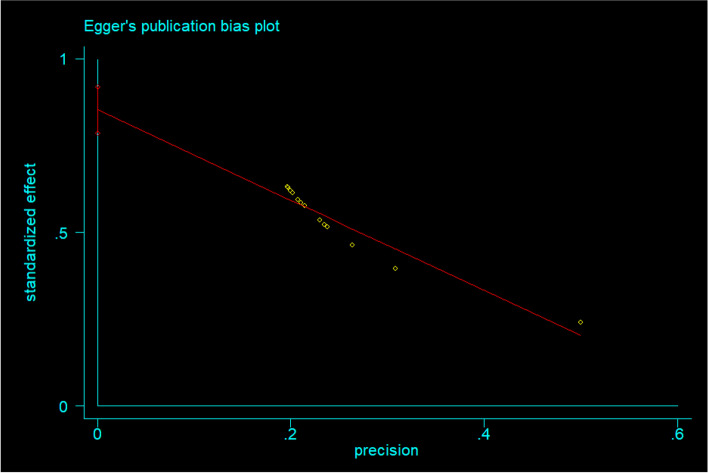
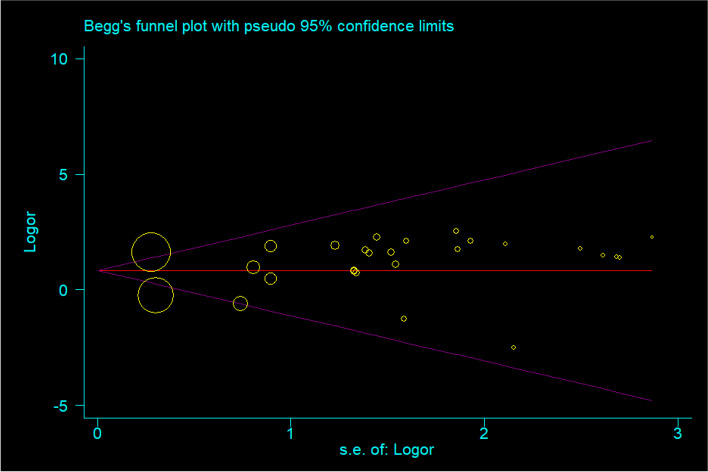
Electronic databases, including PubMed, Google Scholar, Web of Science, Semantic Scholar, and Scopus were used for searching articles published since the 2020 Gregorian calendar and onwards. All peer-reviewed Ethiopian journals, health institutions, and Universities were considered for article searching. A PRISMA flow chart and Endnote software were used for article screening, and to remove duplications, respectively. The modified version of the Newcastle-Ottawa Scale was used for potential risk of bias assessments. The heterogeneity among the included studies was evaluated using the indicator of heterogeneity (I). Egger's test and funnel plot were used to examine the possible publication bias. A random-effects analysis was used to assess the pooled prevalence of malaria, and its determinant factors with a 95% CI. The screening process, data extraction, and quality assessment were done independently, and any disagreements were resolved through discussions.
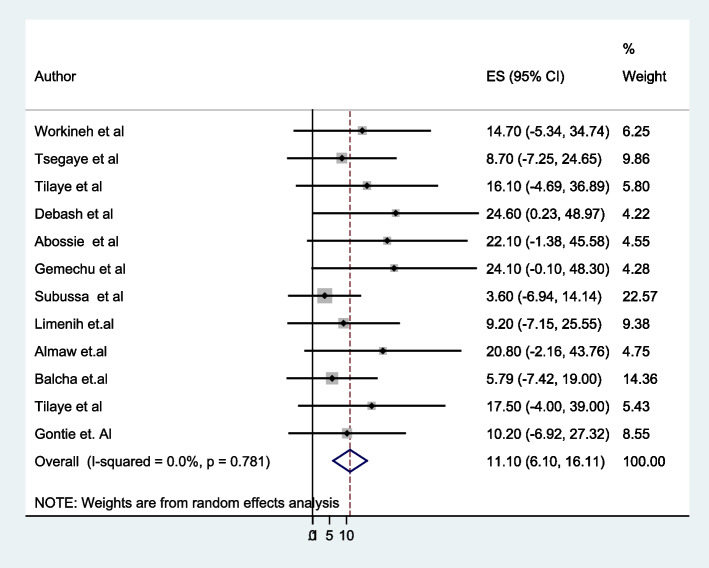
A total of twelve studies were included in this study. The pooled malaria prevalence was 11.10% (95% CI: 6.10, 16.11). Stagnant water (AOR: 4.19, 95% CI: 2.47, 7.11), no insecticide-treated net utilization (AOR: 3.15, 95% CI: 1.73, 5.73), and staying outdoors at night (AOR: 5.19, 95% CI: 2.08, 12.94) were the pooled estimated statistically risk factors for malaria prevalence. Whereas, insecticide-treated bed net utilization (AOR: 1.59, 95% CI: 0.23, 10.95) reduces the risk of malaria infection.
The pooled prevalence of malaria is high among vulnerable populations. Creating awareness regarding utilization of insecticide-treated bed nets, and draining stagnant water from the environment are possible interventions to reduce the prevalence of malaria.
疟疾是一种严重的致命疾病,是全球人类健康的高危决定因素。儿童、孕妇和移民是非洲地区疟疾感染的脆弱群体。最近,疟疾在埃塞俄比亚是一种地方病。
本研究旨在确定埃塞俄比亚最脆弱人群中疟疾的总流行率及其决定因素。
使用电子数据库,包括 PubMed、Google Scholar、Web of Science、Semantic Scholar 和 Scopus,检索自 2020 年公历以来发表的文章。所有经过同行评审的埃塞俄比亚期刊、卫生机构和大学都被认为是文章检索的来源。使用 PRISMA 流程图和 Endnote 软件分别对文章进行筛选,并去除重复。使用改良的纽卡斯尔-渥太华量表评估潜在的偏倚风险。使用异质性指标(I)评估纳入研究之间的异质性。使用 Egger 检验和漏斗图检查可能存在的发表偏倚。使用随机效应分析评估疟疾的总流行率及其决定因素,并给出 95%置信区间。筛选过程、数据提取和质量评估均由独立人员进行,如果存在分歧,则通过讨论解决。
本研究共纳入 12 项研究。疟疾的总流行率为 11.10%(95%置信区间:6.10%,16.11%)。静止水(AOR:4.19,95%置信区间:2.47,7.11)、未使用杀虫剂处理过的蚊帐(AOR:3.15,95%置信区间:1.73,5.73)和夜间在户外停留(AOR:5.19,95%置信区间:2.08,12.94)是疟疾流行的 pooled 估计风险因素。然而,使用杀虫剂处理过的蚊帐(AOR:1.59,95%置信区间:0.23,10.95)可以降低疟疾感染的风险。
在脆弱人群中,疟疾的总流行率较高。提高对使用杀虫剂处理过的蚊帐的认识,以及清除环境中的死水,可能是降低疟疾流行率的干预措施。