Abossie Ashenafi, Yohanes Tsegaye, Nedu Adisu, Tafesse Weynshet, Damitie Mengistu
Arba Minch University, College of Medicine and Health Sciences, Department of Medical Laboratory Science, Arba Minch, Ethiopia.
Wachamo University, College of Medicine and Health Sciences, Department of Medical Laboratory Science, Hosanna, Ethiopia.
Infect Drug Resist. 2020 Feb 7;13:363-372. doi: 10.2147/IDR.S223873. eCollection 2020.
Malaria is a major public health problem affecting humans, particularly in the tropics and subtropics. Children under 5 years old are the group most vulnerable to malaria infection because of less developed immune system. Countries have set targets that led to control and eliminate malaria with interventions of the at-risk groups, however malaria infection remained a major public health challenge in endemic areas.
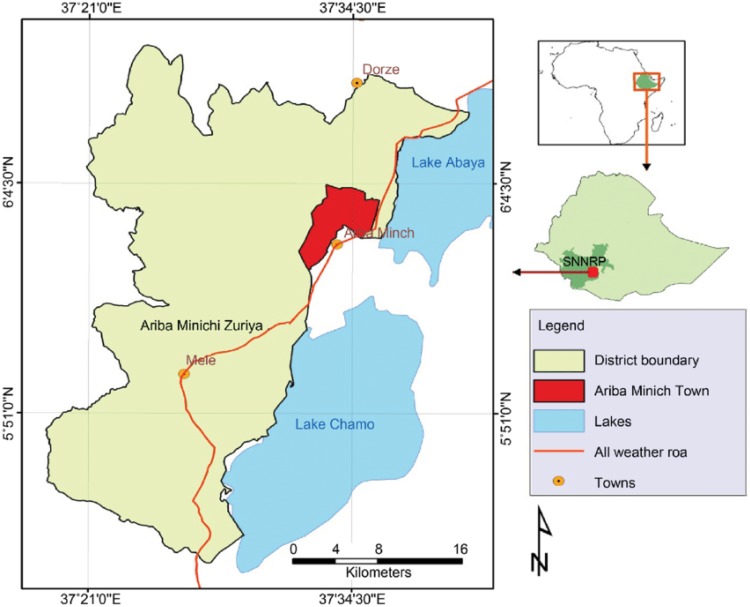
This study aimed at determining the magnitude of malaria and associated factors among febrile children under 5 years old in Arba Minch "Zuria" district.
The study was conducted from April to May 2017. Blood samples were collected from 271 systematically selected febrile children under 5 years old. Thin and thick blood smears were prepared, stained with 10% Giemsa and examined under light microscope. Data of sociodemographic data, determinant factors, and knowledge and prevention practices of malaria were collected using a pretested structured questionnaire. Data were analyzed using binomial and multinomial regression model in SPSS Statistics program, version 25.
Among those febrile children, 22.1% (60/271) were positive for malaria; 50.0%, 48.33% and 1.66% of them were positive for and mixed infections of both parasites, respectively. Malaria infection was associated with nearby presence of stagnant water to resident areas (AOR=8.19; 95%CI: 3.62-18.5, <0.0001). Children who slept under insecticide-treated mosquito nets (ITNs) were more likely to be protected from malaria infection than those did not sleep under an ITNs (AOR=9.65; 95%CI: 4.623-20.15, <0.0001).
Malaria infection is highly prevalent in children aged between 37 and 59 months old, in Arba Minch "Zuria" district. The proximity of residence to stagnant water and the use of ITNs are the most dominant risk factor for malaria infection. Improved access to all malaria interventions is needed to interrupt the transmission at the community level with a special focus on the risk groups.
疟疾是一个影响人类的重大公共卫生问题,尤其是在热带和亚热带地区。5岁以下儿童由于免疫系统发育不完善,是最易感染疟疾的群体。各国制定了通过对高危人群采取干预措施来控制和消除疟疾的目标,然而在疟疾流行地区,疟疾感染仍然是一项重大的公共卫生挑战。
本研究旨在确定阿尔巴明奇“祖里亚”地区5岁以下发热儿童中疟疾的感染程度及相关因素。
研究于2017年4月至5月进行。从271名系统选取的5岁以下发热儿童中采集血样。制备薄血涂片和厚血涂片,用10%吉姆萨染色并在光学显微镜下检查。使用预先测试的结构化问卷收集社会人口学数据、决定因素以及疟疾的知识和预防措施等数据。在SPSS Statistics 25版程序中使用二项式和多项回归模型对数据进行分析。
在这些发热儿童中,22.1%(60/271)疟疾检测呈阳性;其中间日疟原虫、恶性疟原虫和混合感染阳性率分别为50.0%、48.33%和1.66%。疟疾感染与居民点附近存在积水有关(比值比=8.19;95%置信区间:3.62 - 18.5,<0.0001)。睡在经杀虫剂处理的蚊帐(ITN)下的儿童比未睡在ITN下的儿童更有可能免受疟疾感染(比值比=9.65;95%置信区间:4.623 - 20.15,<0.0001)。
在阿尔巴明奇“祖里亚”地区,37至59个月大的儿童中疟疾感染非常普遍。居住地靠近积水以及使用ITN是疟疾感染最主要的危险因素。需要改善所有疟疾干预措施的可及性,以在社区层面阻断传播,尤其要关注高危人群。