Yan Guanyu, An Yue, Xu Boyang, Wang Ningning, Sun Xuren, Sun Mingjun
Department of Gastroenterology, The First Hospital of China Medical University, Shenyang, China.
Front Oncol. 2021 May 17;11:670490. doi: 10.3389/fonc.2021.670490. eCollection 2021.
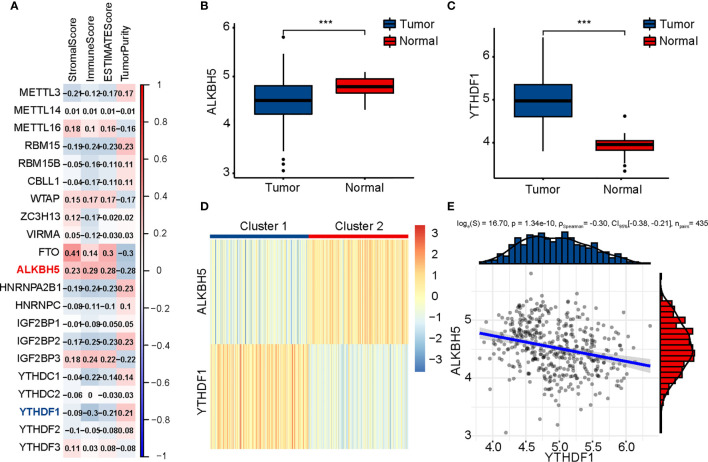
ALKBH5 and YTHDF1 are regarded as the eraser and reader, respectively, in N6-methyladenosine (m6A) modification. Recently, immune contexture has been drawing increasing attention in terms of the progression and treatment of cancers. This study aimed to determine the relationship between ALKBH5/YTHDF1 and immunological characteristics of colon adenocarcinoma (COAD).
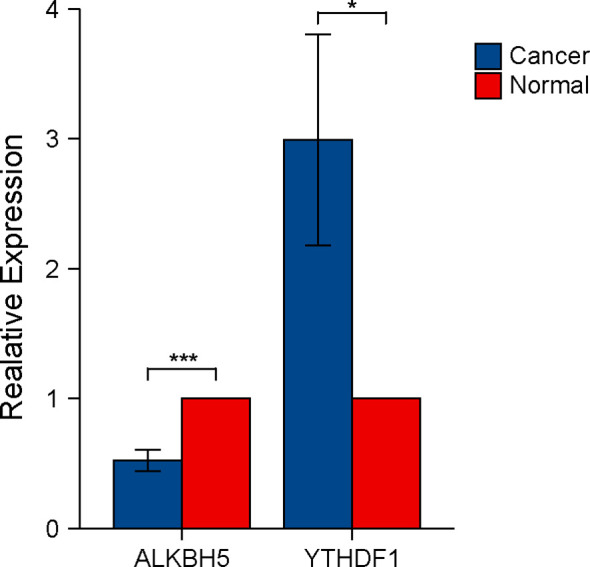
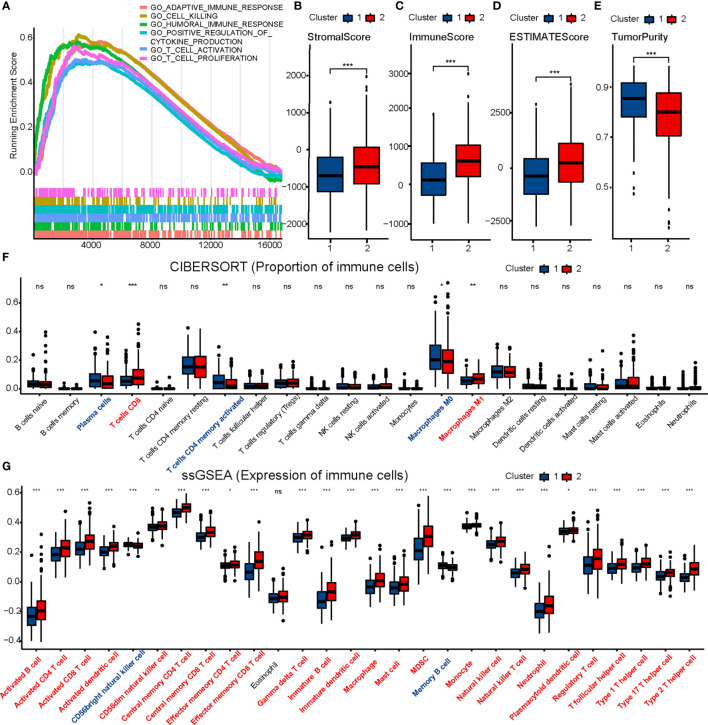
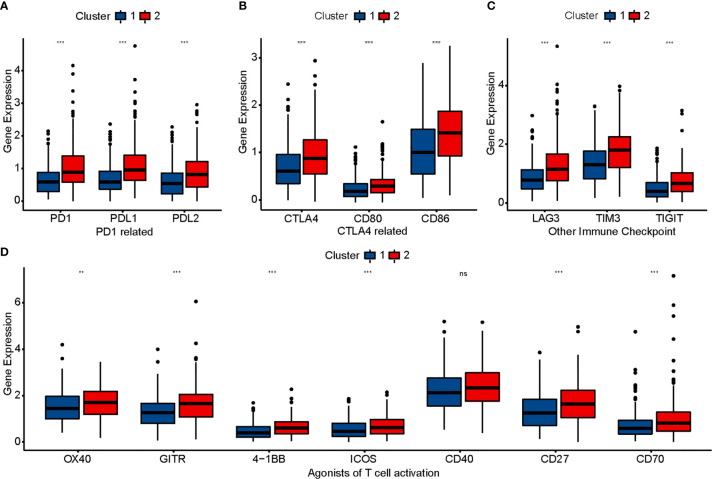
Expression of ALKBH5 and YTHDF1 was investigated across TCGA and GEO validated in our study. Patients with COAD were divided into two clusters using consensus clustering based on the expression of ALKBH5 and YTHDF1. We then compared their clinical characteristics and performed gene set enrichment analysis (GSEA) to identify the functional differences. Immune infiltration analyses were conducted using ESTIMATE, CIBERSORT, and ssGSEA. In addition, we evaluated the expression of the targets of immune checkpoint inhibitors (ICIs) and calculated the tumor mutation burden (TMB) of the tumor samples. Weighted gene co-expression network analysis (WGCNA) was used to identify the genes related to both ALKBH5/YTHDF1 expression and immunity. GSE39582 was utilized for external validation of immunological features between the two clusters.
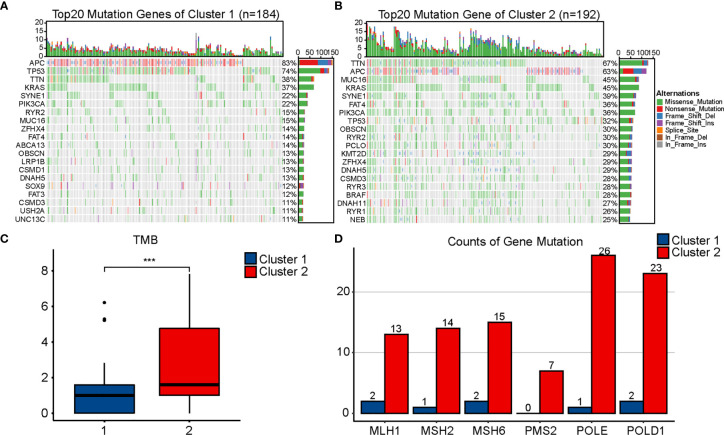
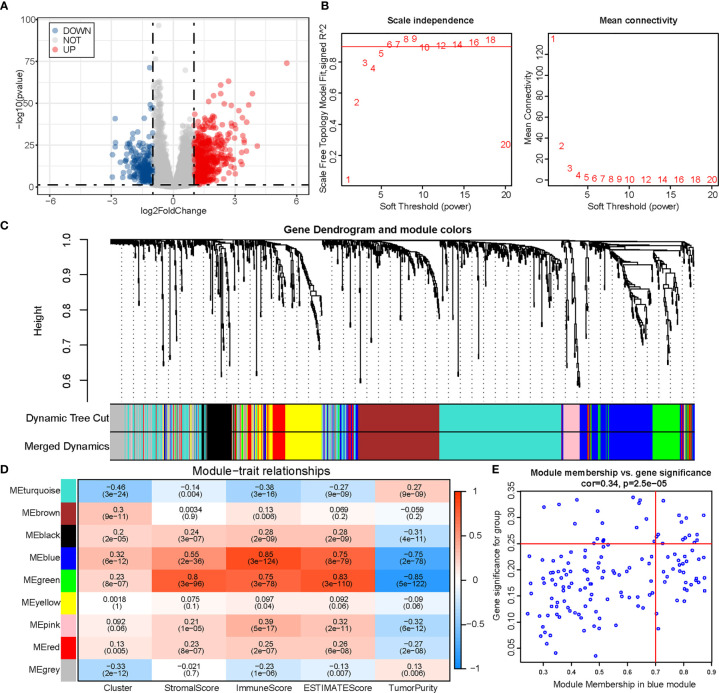
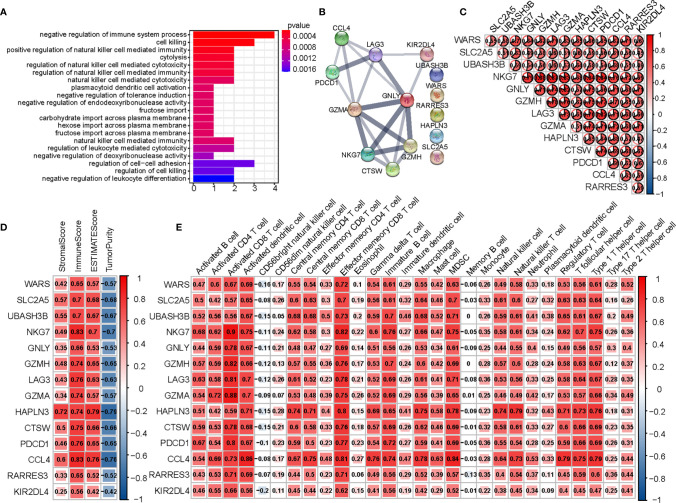
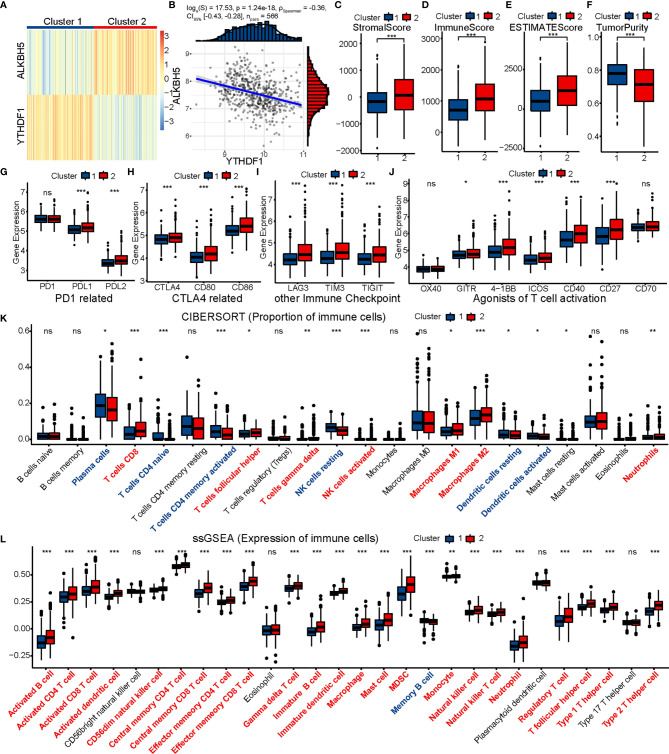
Cluster 2 had high expression of ALKBH5 and lesser so of YTHDF1, whereas Cluster 1 had just the reverse. Cluster 1 had a higher N stage and pathological stage than Cluster 2. The latter had stronger immune infiltration, higher expression of targets of ICIs, more TMB, and a larger proportion of deficiency in mismatch repair-microsatellite instability-high (dMMR-MSI-H) status than Cluster 1. Moreover, WGCNA revealed 14 genes, including PD1 and LAG3, related to both the expression of ALKBH5/YTHDF1 and immune scores.
ALKBH5 and YTHDF1 influence immune contexture and can potentially transform cold tumors into hot tumors in patients with COAD.
在N6-甲基腺苷(m6A)修饰中,ALKBH5和YTHDF1分别被视为去甲基化酶和阅读蛋白。近年来,免疫微环境在癌症进展和治疗方面受到越来越多的关注。本研究旨在确定ALKBH5/YTHDF1与结肠腺癌(COAD)免疫特征之间的关系。
在我们的研究中,通过TCGA和GEO数据库验证了ALKBH5和YTHDF1的表达情况。基于ALKBH5和YTHDF1的表达,采用一致性聚类将COAD患者分为两个亚群。然后我们比较了它们的临床特征,并进行基因集富集分析(GSEA)以确定功能差异。使用ESTIMATE、CIBERSORT和ssGSEA进行免疫浸润分析。此外,我们评估了免疫检查点抑制剂(ICIs)靶点的表达,并计算了肿瘤样本的肿瘤突变负荷(TMB)。使用加权基因共表达网络分析(WGCNA)来识别与ALKBH5/YTHDF1表达和免疫相关的基因。利用GSE39582对两个亚群之间的免疫特征进行外部验证。
亚群2中ALKBH5表达较高,YTHDF1表达较低,而亚群1则相反。亚群1的N分期和病理分期高于亚群2。亚群2的免疫浸润更强,ICIs靶点表达更高,TMB更多,错配修复缺陷-微卫星高度不稳定(dMMR-MSI-H)状态的比例比亚群1更大。此外,WGCNA揭示了14个基因,包括PD1和LAG3,与ALKBH5/YTHDF1的表达和免疫评分相关。
ALKBH5和YTHDF1影响免疫微环境,并可能将COAD患者的冷肿瘤转化为热肿瘤。