Asghar Adil, Naaz Shagufta, Chaudhary Binita
Anatomy, All India Institute of Medical Sciences Patna, Patna, IND.
Anaesthesiology, All India Institute of Medical Sciences Patna, Patna, IND.
Cureus. 2021 Apr 28;13(4):e14743. doi: 10.7759/cureus.14743.
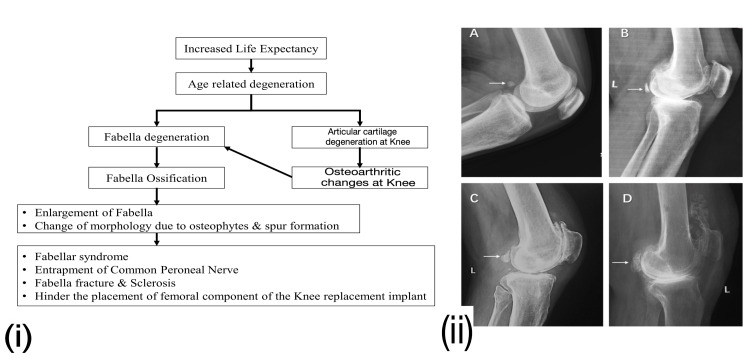
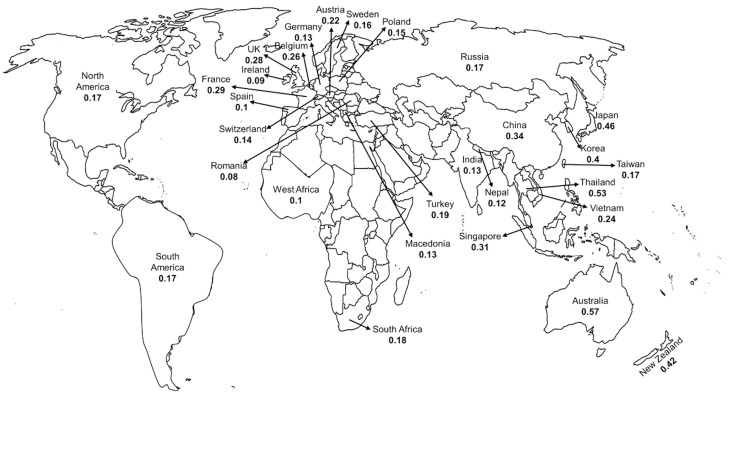
The primary studies demonstrated that fabellar prevalence (FP) varied with ethnic and geographical distribution. Osteoarthritis (OA) and age-related degeneration have a significant association with FP. The prevalence of OA worldwide was doubled with life expectancy. Increased life expectancy has increased exposure to OA and age-related degeneration which could be a possible reason for the rise of FP. The analysis was conducted to provide insight about FP in respect to geographical, ethnic, sex, and laterality distribution.
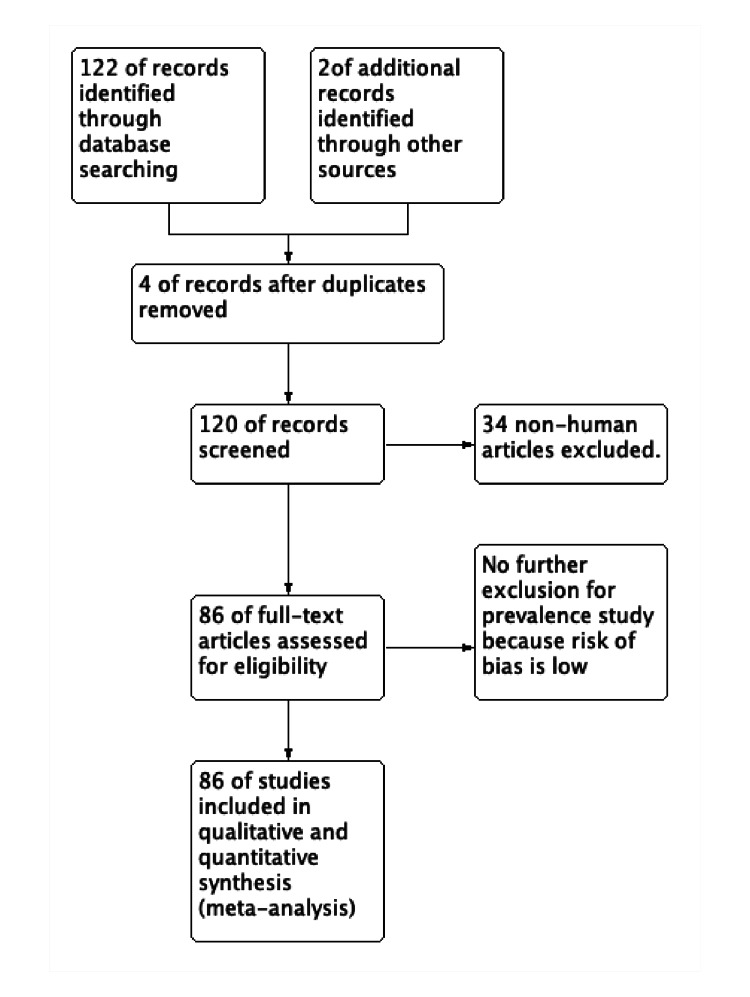
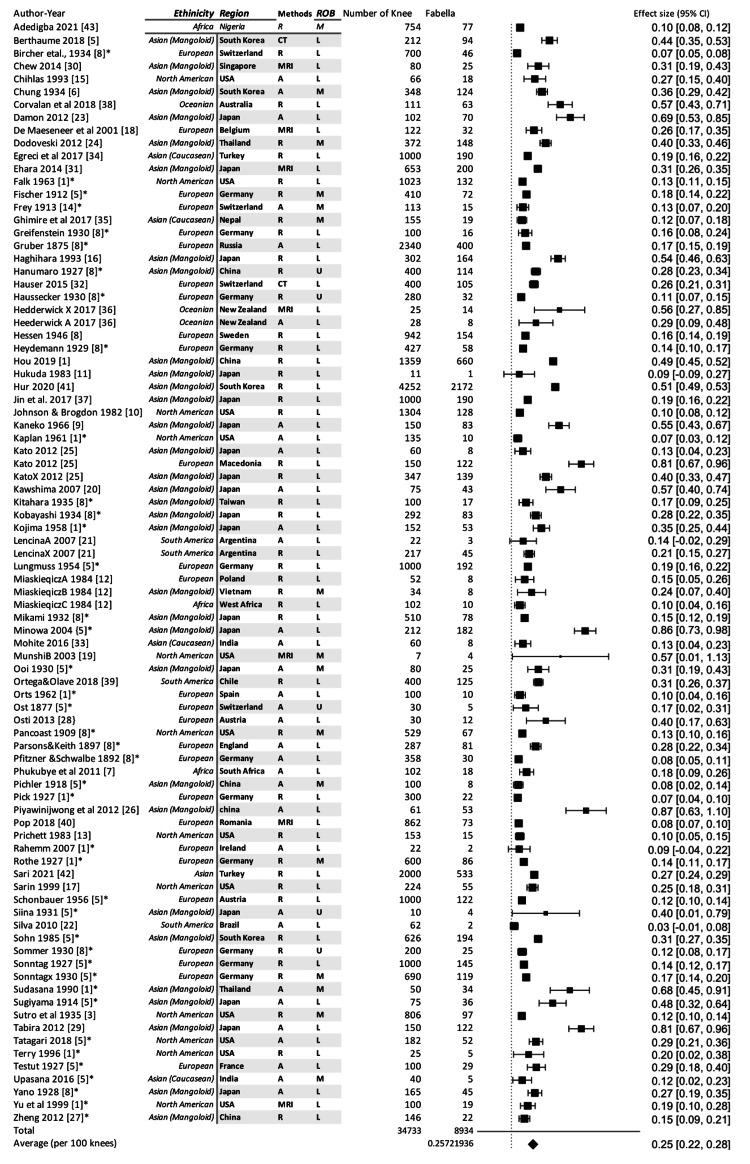
Eighty-six studies were included which have data from 34,733 knee joints. Fifty radiological studies were consisting of 27,293 knees and 36 cadaveric studies had the data of 7,440 knees of dissected specimens, respectively. The prevalence, Odds, and rate ratios were calculated for aging, osteoarthritis, and ethnic variation. Results: The worldwide FP was 25% (95% CI, 0.22, 0.28). The prevalence of fabella was found to be higher in cadaveric studies (32%) than radiological studies (19%) with significant heterogeneity. The FP was 16-18% till 1950 which was doubled by 2020 (35%). The FP in OA knee was 51% which was thrice of baseline.
初步研究表明,豆状骨患病率(FP)随种族和地理分布而变化。骨关节炎(OA)和年龄相关性退变与FP有显著关联。全球OA患病率随着预期寿命的增加而翻倍。预期寿命的增加使人们更多地接触到OA和年龄相关性退变,这可能是FP上升的一个潜在原因。本分析旨在深入了解FP在地理、种族、性别和左右侧分布方面的情况。
纳入了86项研究,这些研究来自34733个膝关节的数据。其中50项放射学研究包含27293个膝关节的数据,36项尸体研究分别有7440个解剖标本膝关节的数据。计算了衰老、骨关节炎和种族差异的患病率、优势比和率比。结果:全球FP为25%(95%CI,0.22,0.28)。尸体研究中豆状骨的患病率(32%)高于放射学研究(19%),且存在显著异质性。到1950年FP为16%-18%,到2020年翻倍(35%)。OA膝关节中的FP为51%,是基线水平的三倍。