State Key Laboratory of Microbial Metabolism and Joint International Research Laboratory of Metabolic & Developmental Sciences, School of Life Sciences and Biotechnology, Shanghai Jiao Tong University, Shanghai, 200240, China.
Present address: Department of Genetics, Yale School of Medicine, New Haven, CT, 06510, USA.
BMC Biol. 2021 Jun 4;19(1):117. doi: 10.1186/s12915-021-01048-7.
The vacuole/lysosome is the final destination of autophagic pathways, but can also itself be degraded in whole or in part by selective macroautophagic or microautophagic processes. Diverse molecular mechanisms are involved in these processes, the characterization of which has lagged behind those of ATG-dependent macroautophagy and ESCRT-dependent endosomal multivesicular body pathways.
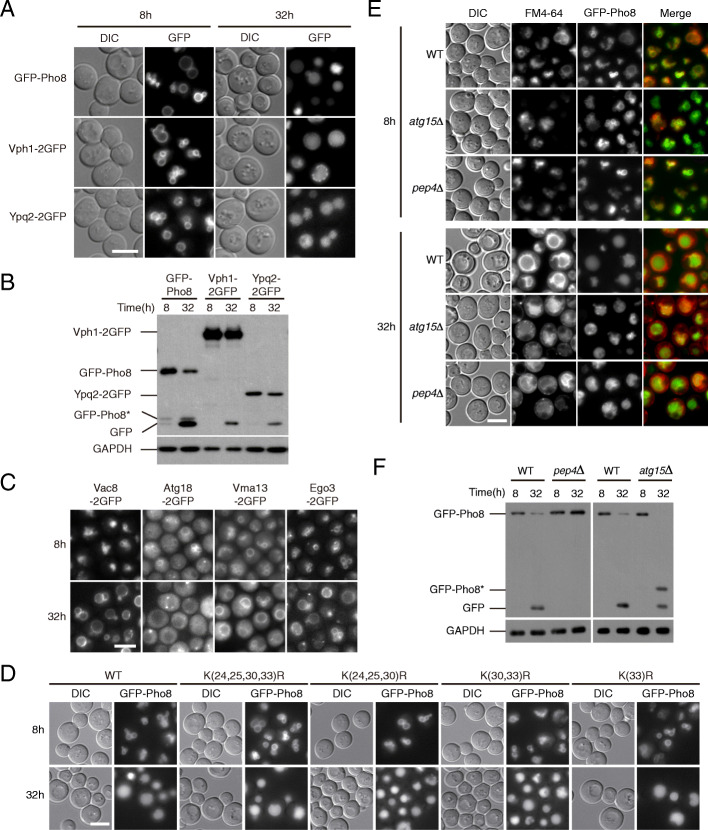
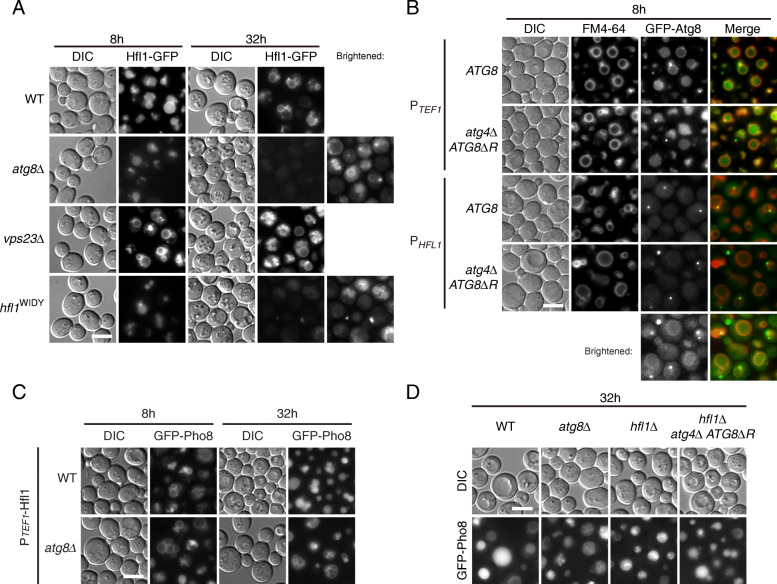
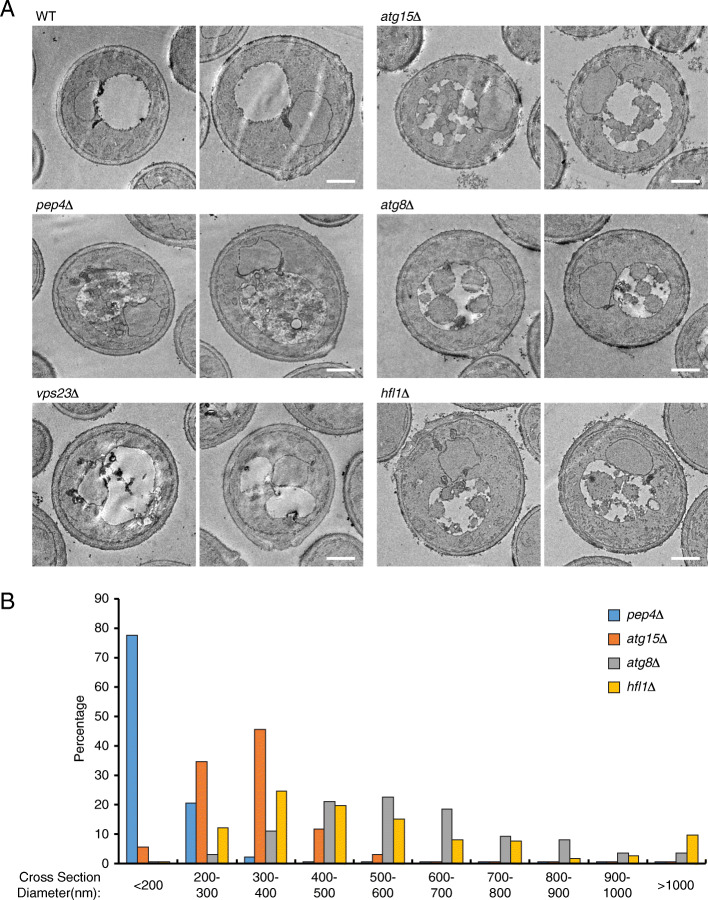
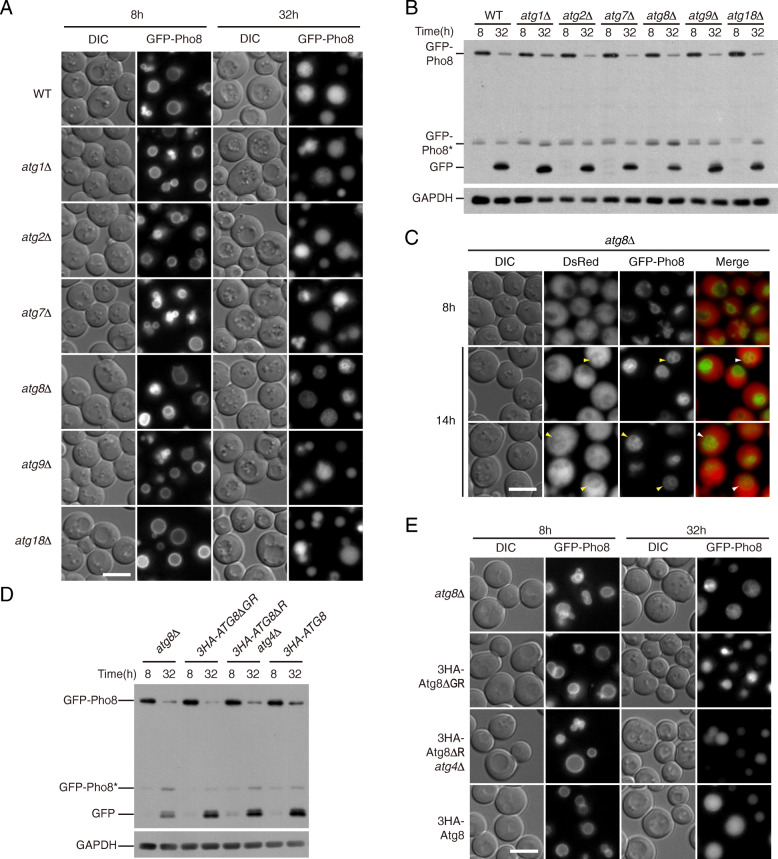
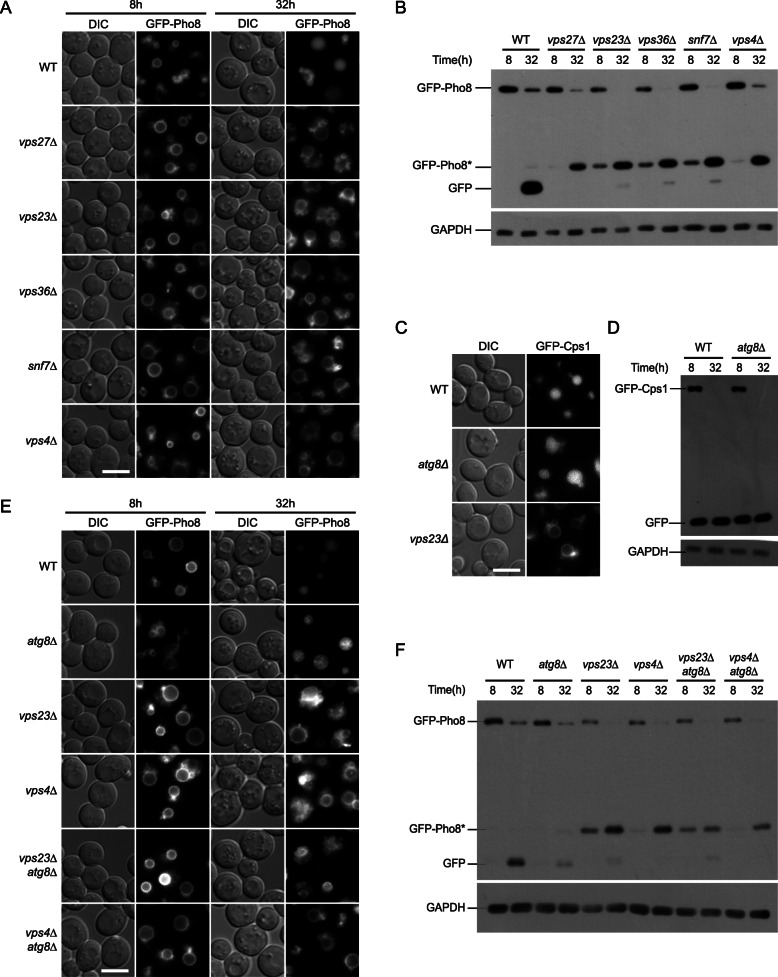
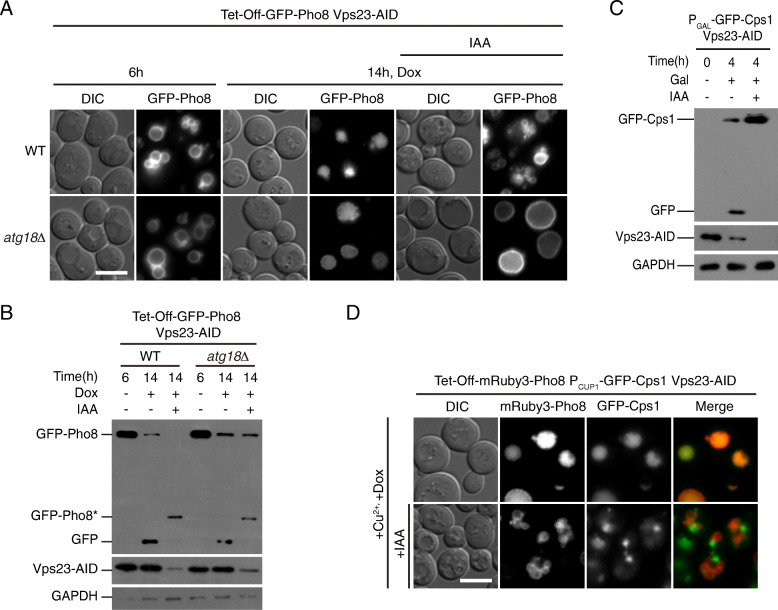
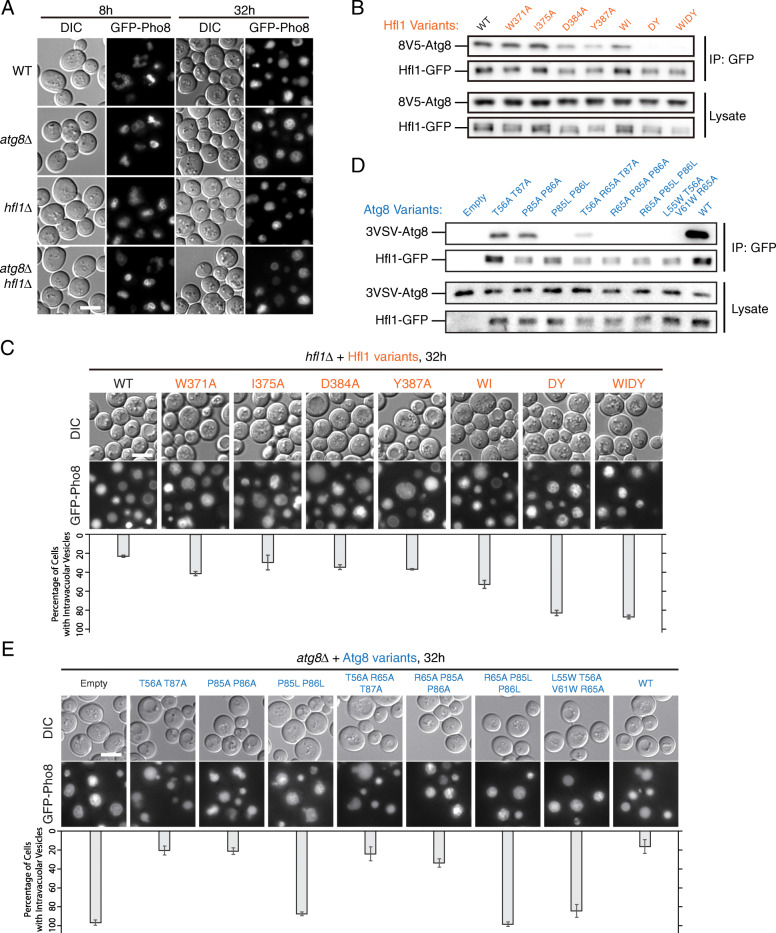
Here we show that as yeast cells gradually exhaust available nutrients and approach stationary phase, multiple vacuolar integral membrane proteins with unrelated functions are degraded in the vacuolar lumen. This degradation depends on the ESCRT machinery, but does not strictly require ubiquitination of cargos or trafficking of cargos out of the vacuole. It is also temporally and mechanistically distinct from NPC-dependent microlipophagy. The turnover is facilitated by Atg8, an exception among autophagy proteins, and an Atg8-interacting vacuolar membrane protein, Hfl1. Lack of Atg8 or Hfl1 led to the accumulation of enlarged lumenal membrane structures in the vacuole. We further show that a key function of Hfl1 is the membrane recruitment of Atg8. In the presence of Hfl1, lipidation of Atg8 is not required for efficient cargo turnover. The need for Hfl1 can be partially bypassed by blocking Atg8 delipidation.
Our data reveal a vacuolar membrane protein degradation process with a unique dependence on vacuole-associated Atg8 downstream of ESCRTs, and we identify a specific role of Hfl1, a protein conserved from yeast to plants and animals, in membrane targeting of Atg8.
液泡/溶酶体是自噬途径的最终归宿,但也可以通过选择性的巨自噬或微自噬过程被全部或部分降解。这些过程涉及多种分子机制,其特征描述落后于 ATG 依赖性巨自噬和 ESCRT 依赖性内体多泡体途径。
在这里,我们表明,随着酵母细胞逐渐耗尽可用的营养物质并接近静止期,具有不同功能的多个液泡整合膜蛋白在液泡腔内被降解。这种降解依赖于 ESCRT 机制,但并不严格要求货物的泛素化或货物从液泡中的运输。它也在时间和机制上与 NPC 依赖性微脂噬作用不同。Atg8 促进了周转率,Atg8 是自噬蛋白中的一个例外,以及一个与 Atg8 相互作用的液泡膜蛋白 Hfl1。缺乏 Atg8 或 Hfl1 导致液泡中腔室膜结构的扩大和积累。我们进一步表明,Hfl1 的一个关键功能是 Atg8 的膜募集。在 Hfl1 存在的情况下,脂质化的 Atg8 对于有效的货物周转率不是必需的。通过阻断 Atg8 的去脂化,Hfl1 的需求可以部分绕过。
我们的数据揭示了一种液泡膜蛋白降解过程,该过程独特地依赖于 ESCRTs 下游的液泡相关 Atg8,并且我们确定了 Hfl1 的特定作用,Hfl1 是从酵母到植物和动物都保守的一种蛋白质,在 Atg8 的膜靶向中发挥作用。