Department of Preventive Medicine, Yonsei University College of Medicine, Seoul, Korea.
Department of Public Health, Yonsei University Graduate School, Seoul, Korea.
J Prev Med Public Health. 2021 May;54(3):166-172. doi: 10.3961/jpmph.21.069. Epub 2021 May 7.
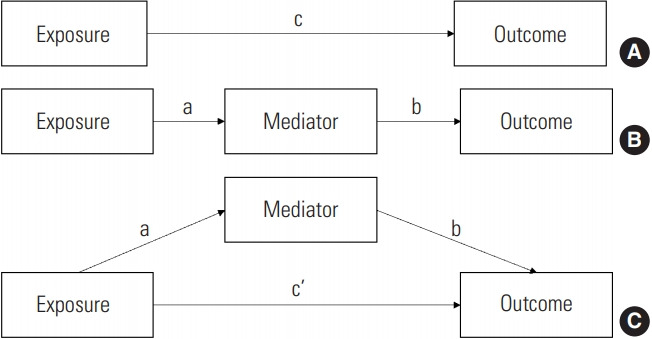
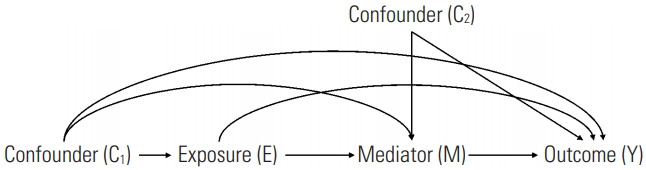
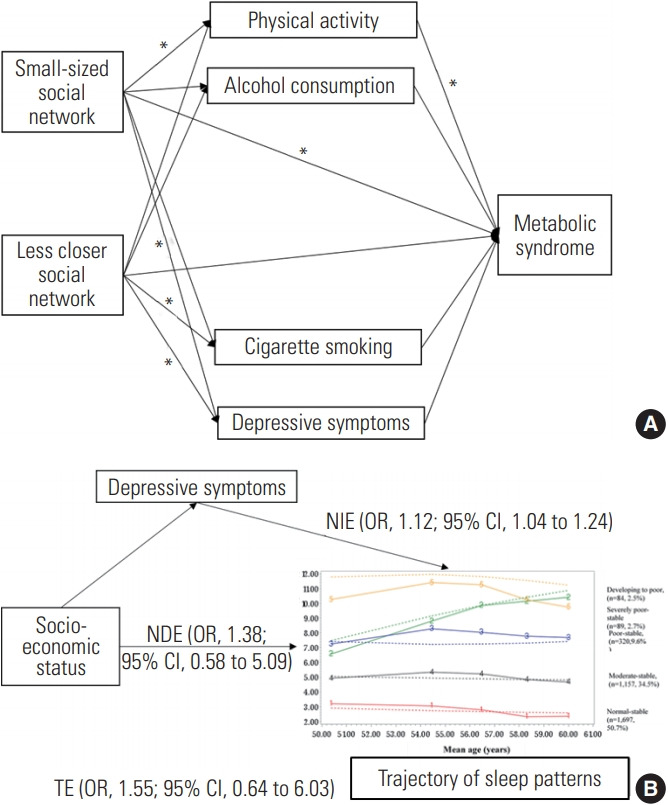
Traditional epidemiological assessments, which mainly focused on evaluating the statistical association between two major components-the exposure and outcome-have recently evolved to ascertain the in-between process, which can explain the underlying causal pathway. Mediation analysis has emerged as a compelling method to disentangle the complex nature of these pathways. The statistical method of mediation analysis has evolved from simple regression analysis to causal mediation analysis, and each amendment refined the underlying mathematical theory and required assumptions. This short guide will introduce the basic statistical framework and assumptions of both traditional and modern mediation analyses, providing examples conducted with real-world data.
传统的流行病学评估主要侧重于评估两个主要组成部分(暴露和结局)之间的统计学关联,而最近则发展到确定可以解释潜在因果途径的中间过程。中介分析已成为一种强大的方法,可以厘清这些途径的复杂性质。中介分析的统计方法已经从简单的回归分析发展到因果中介分析,每次修正都完善了基础的数学理论和所需的假设。本简短指南将介绍传统和现代中介分析的基本统计框架和假设,并提供使用实际数据进行的示例。