Zheng Zibin, Lyu Wentao, Ren Ying, Li Xiaoqiong, Zhao Shenjun, Yang Hua, Xiao Yingping
State Key Laboratory for Managing Biotic and Chemical Threats to the Quality and Safety of Agro-Products, Institute of Agro-Product Safety and Nutrition, Zhejiang Academy of Agricultural Sciences, Hangzhou, China.
Hubei Key Laboratory of Animal Nutrition and Feed Science, Wuhan Polytechnic University, Wuhan, China.
Front Nutr. 2021 May 19;8:690138. doi: 10.3389/fnut.2021.690138. eCollection 2021.
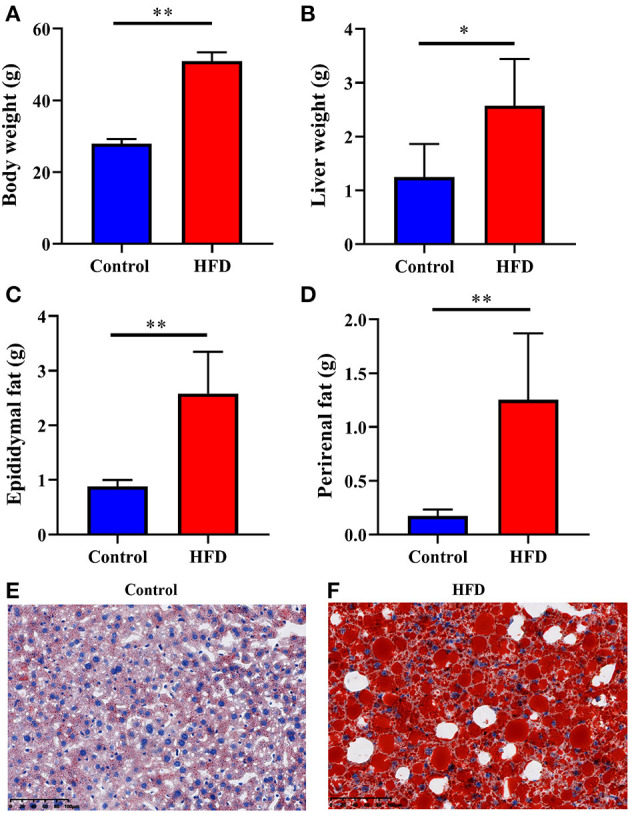
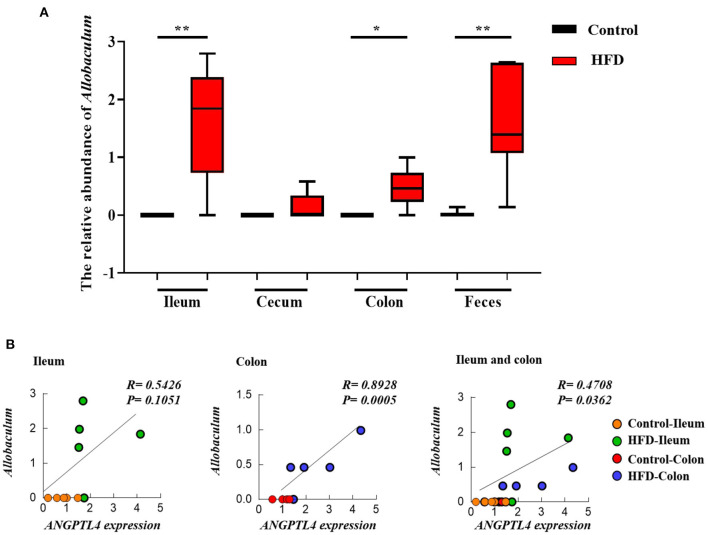
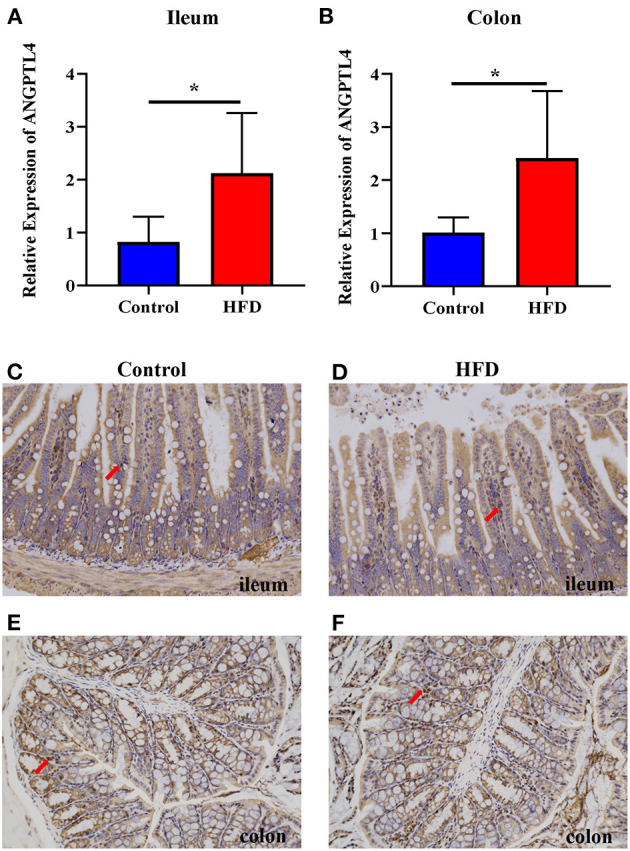
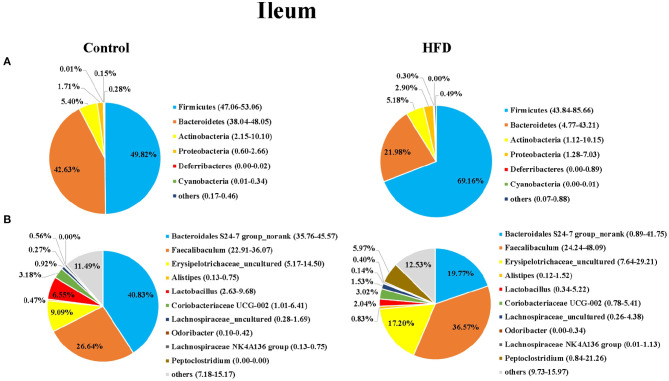
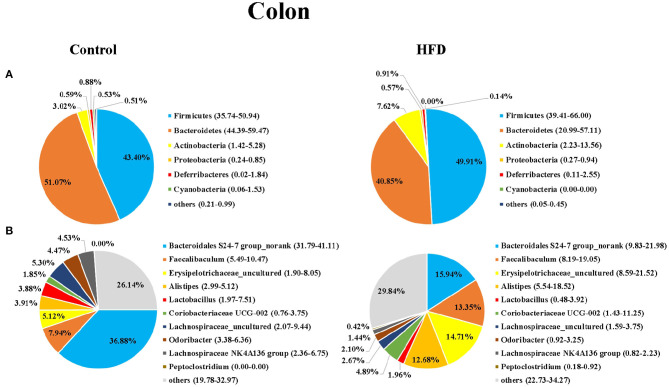
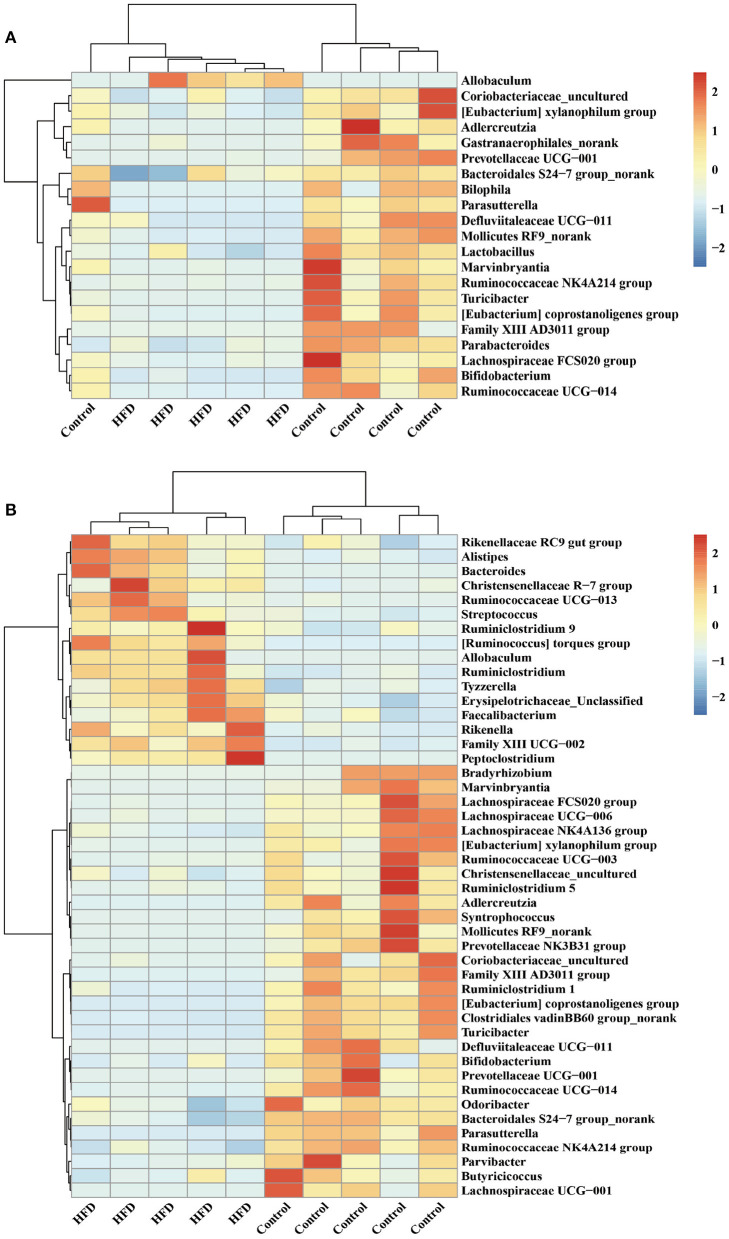
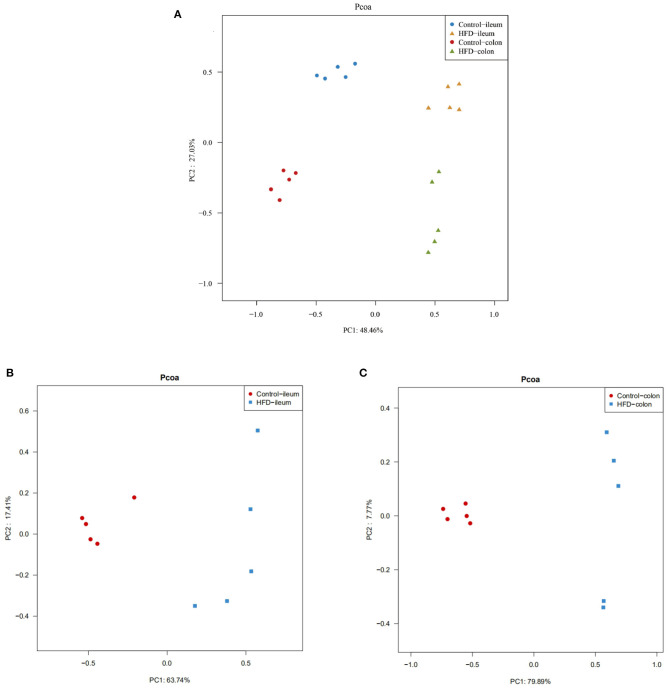
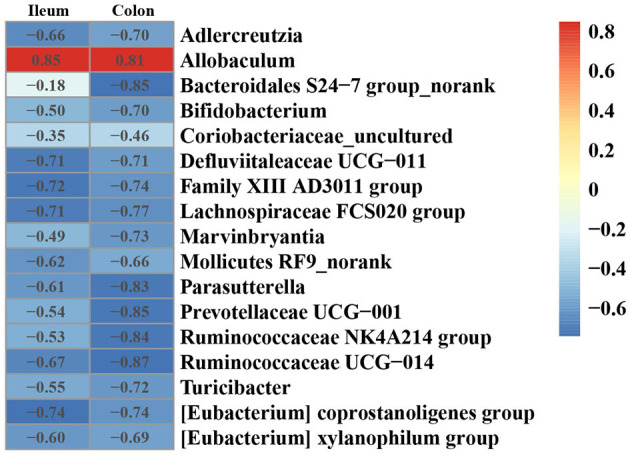
Increasing studies have shown that obesity is the primary cause of cardiovascular diseases, non-alcoholic fatty liver diseases, type 2 diabetes, and a variety of cancers. The dysfunction of gut microbiota was proved to result in obesity. Recent research indicated ANGPTL4 was a key regulator in lipid metabolism and a circulating medium for gut microbiota and fat deposition. The present study was conducted to investigate the alteration of gut microbiota and ANGPTL4 expression in the gastrointestinal tract of mice treated by the high-fat diet. Ten C57BL/6J mice were randomly allocated to two groups and fed with a high-fat diet (HFD) containing 60% fat or a normal-fat diet (Control) containing 10% fat. The segments of ileum and colon were collected for the determination of ANGPTL4 expression by RT-qPCR and immunohistochemical analysis while the ileal and colonic contents were collected for 16S rRNA gene sequencing. The results showed HFD significantly increased mice body weight, epididymal fat weight, perirenal fat weight, liver weight, and the lipid content in the liver ( < 0.05). The relative expression of ANGPTL4 and the ANGPTL4-positive cells in the ileum and colon of mice was significantly increased by HFD treatment. Furthermore, 16S rRNA gene sequencing of the ileal and colonic microbiota suggested that HFD treatment changed the composition of the gut microbiota. The ratio of Firmicutes to Bacteroidetes and the abundance of was significantly higher in the HFD group than in the Control group while the abundance of , and was significantly decreased. Interestingly, the abundance of was positively correlated with the expression of ANGPTL4. These findings provide a theoretical foundation for the development of strategies to control the obesity and related diseases by the regulation of ANGPTL4 and gut microbiota.
越来越多的研究表明,肥胖是心血管疾病、非酒精性脂肪性肝病、2型糖尿病和多种癌症的主要原因。肠道微生物群功能失调被证明会导致肥胖。最近的研究表明,血管生成素样蛋白4(ANGPTL4)是脂质代谢的关键调节因子,也是肠道微生物群与脂肪沉积之间的循环介质。本研究旨在探讨高脂饮食处理的小鼠胃肠道中肠道微生物群的变化及ANGPTL4的表达情况。将10只C57BL/6J小鼠随机分为两组,分别给予含60%脂肪的高脂饮食(HFD)或含10%脂肪的正常脂肪饮食(对照组)。收集回肠和结肠段,通过逆转录定量聚合酶链反应(RT-qPCR)和免疫组织化学分析测定ANGPTL4的表达,同时收集回肠和结肠内容物进行16S核糖体RNA(rRNA)基因测序。结果显示,高脂饮食显著增加了小鼠体重、附睾脂肪重量、肾周脂肪重量、肝脏重量以及肝脏中的脂质含量(P<0.05)。高脂饮食处理显著增加了小鼠回肠和结肠中ANGPTL4的相对表达以及ANGPTL4阳性细胞数量。此外,回肠和结肠微生物群的16S rRNA基因测序表明,高脂饮食处理改变了肠道微生物群的组成。高脂饮食组中厚壁菌门与拟杆菌门的比例以及[具体菌属1]的丰度显著高于对照组,而[具体菌属2]、[具体菌属3]和[具体菌属4]的丰度显著降低。有趣的是,[具体菌属1]的丰度与ANGPTL4的表达呈正相关。这些发现为通过调节ANGPTL4和肠道微生物群来控制肥胖及相关疾病的策略制定提供了理论基础。