Zuniga Kyle B, Graff Rebecca E, Feiger David B, Meng Maxwell V, Porten Sima P, Kenfield Stacey A
Department of Urology, University of California, San Francisco, CA, USA.
Osher Center for Integrative Medicine, University of California, San Francisco, CA, USA.
Bladder Cancer. 2020;6(1):9-23. doi: 10.3233/blc-190249. Epub 2020 Mar 28.
A broad, comprehensive review of studies exploring associations between lifestyle factors and non-muscle invasive bladder cancer (NMIBC) outcomes is warranted to consolidate recommendations and identify gaps in research.
To summarize the literature on associations between lifestyle factors and clinical outcomes among patients with NMIBC.
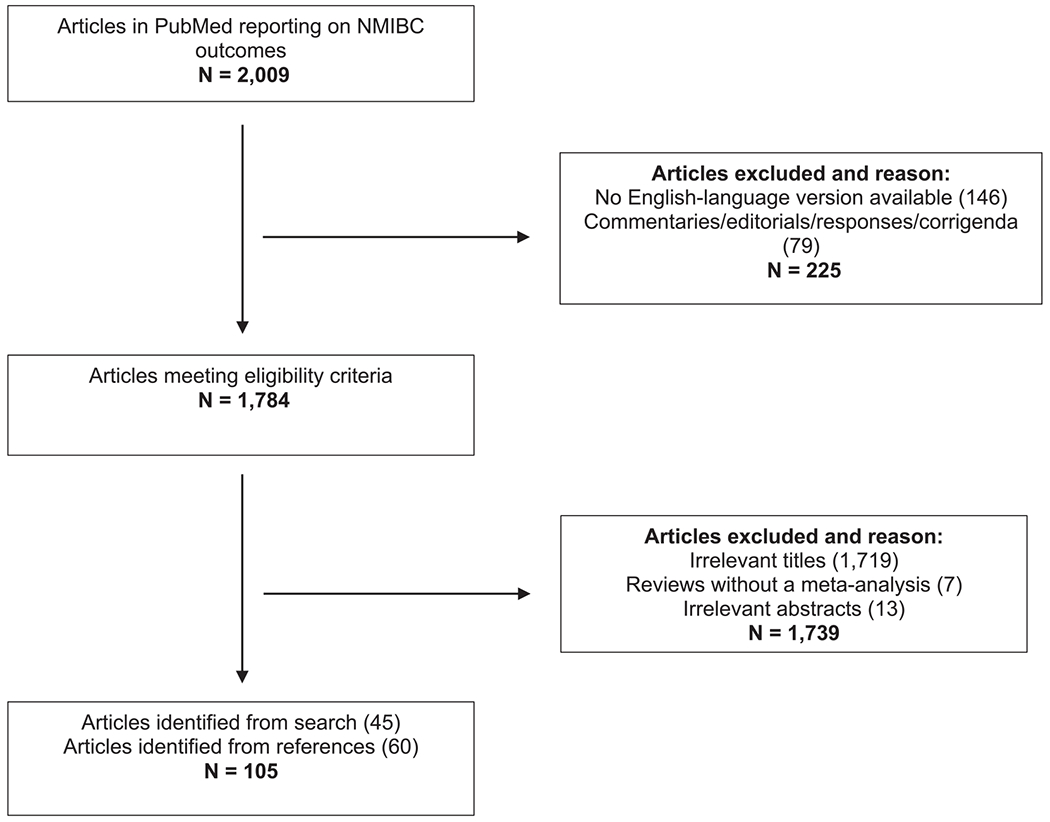
PubMed was systematically queried for articles published through March 2019 regarding lifestyle factors and recurrence, progression, cancer-specific mortality, and all-cause mortality among patients with NMIBC.
Notwithstanding many ambiguities, there is good-quality evidence suggesting a benefit of smoking avoidance/cessation, healthy body mass index (BMI), and type II diabetes mellitus prevention and treatment. probiotic supplementation may reduce recurrence. There have been individual studies suggesting a benefit for uncooked broccoli and supplemental vitamin E as well as avoidance of supplemental vitamin B9, areca nut chewing, and a "Western diet" pattern high in fried foods and red meat. Additional studies do not suggest associations between NMIBC outcomes and use of fibrin clot inhibitors; insulin and other oral hypoglycemics; statins; supplemental selenium, vitamin A, vitamin C, and vitamin B6; fluid intake and intake of specific beverages (e.g., alcohol, coffee, green tea, cola); various dietary patterns (e.g., Tex-Mex, high fruit and vegetable, low-fat); and occupational and chemical exposures.
Despite a myriad of publications on lifestyle factors and NMIBC, a need remains for research on unexplored associations (e.g., physical activity) and further studies that can elucidate causal effects. This would inform future implementation strategies for healthy lifestyle change in NMIBC patients.
有必要对探索生活方式因素与非肌层浸润性膀胱癌(NMIBC)预后之间关联的研究进行广泛、全面的综述,以整合建议并找出研究中的差距。
总结关于生活方式因素与NMIBC患者临床预后之间关联的文献。
系统检索PubMed,查找截至2019年3月发表的有关NMIBC患者生活方式因素与复发、进展、癌症特异性死亡率和全因死亡率的文章。
尽管存在许多不明确之处,但有高质量证据表明避免吸烟/戒烟、保持健康的体重指数(BMI)以及预防和治疗2型糖尿病有益。补充益生菌可能会降低复发率。有个别研究表明,生西兰花和补充维生素E有益,同时应避免补充维生素B9、嚼槟榔以及避免“西方饮食”模式(即富含油炸食品和红肉)。其他研究未表明NMIBC预后与使用纤维蛋白凝块抑制剂、胰岛素和其他口服降糖药、他汀类药物、补充硒、维生素A、维生素C和维生素B6、液体摄入量以及特定饮料(如酒精、咖啡、绿茶、可乐)的摄入量、各种饮食模式(如德克萨斯-墨西哥饮食、高果蔬饮食、低脂饮食)以及职业和化学暴露之间存在关联。
尽管有大量关于生活方式因素与NMIBC的出版物,但仍需要对未探索的关联(如体育活动)进行研究,并开展进一步研究以阐明因果效应。这将为未来NMIBC患者健康生活方式改变的实施策略提供依据。