Ellwanger Joel Henrique, Chies José Artur Bogo
Universidade Federal do Rio Grande do Sul, Departamento de Genética, Programa de Pós-Graduação em Genética e Biologia Molecular, Laboratório de Imunobiologia e Imunogenética, Porto Alegre, RS, Brazil.
Genet Mol Biol. 2021 Jun 4;44(1 Suppl 1):e20200355. doi: 10.1590/1678-4685-GMB-2020-0355. eCollection 2021.
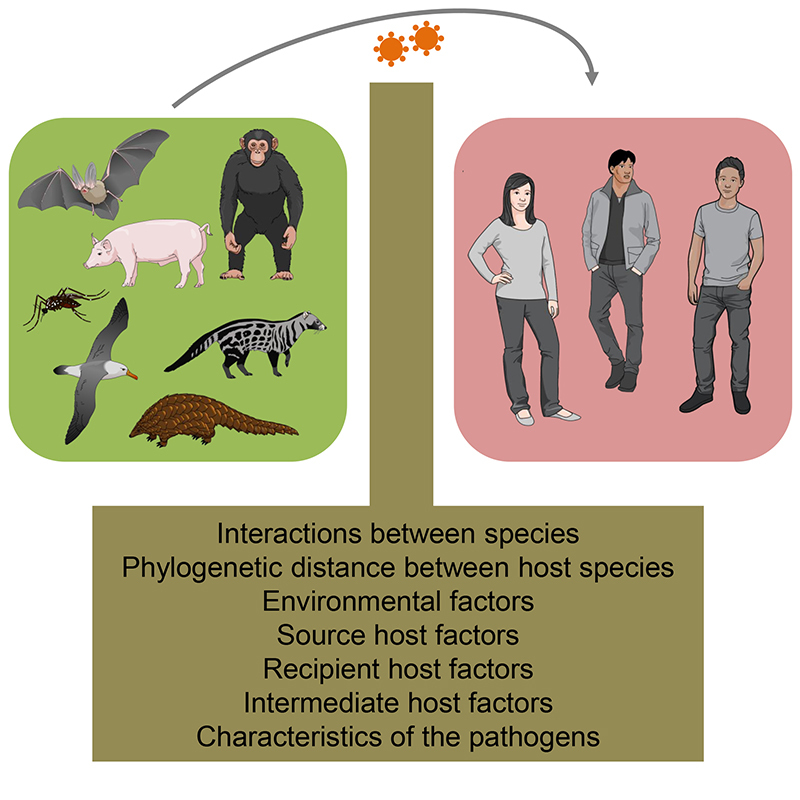
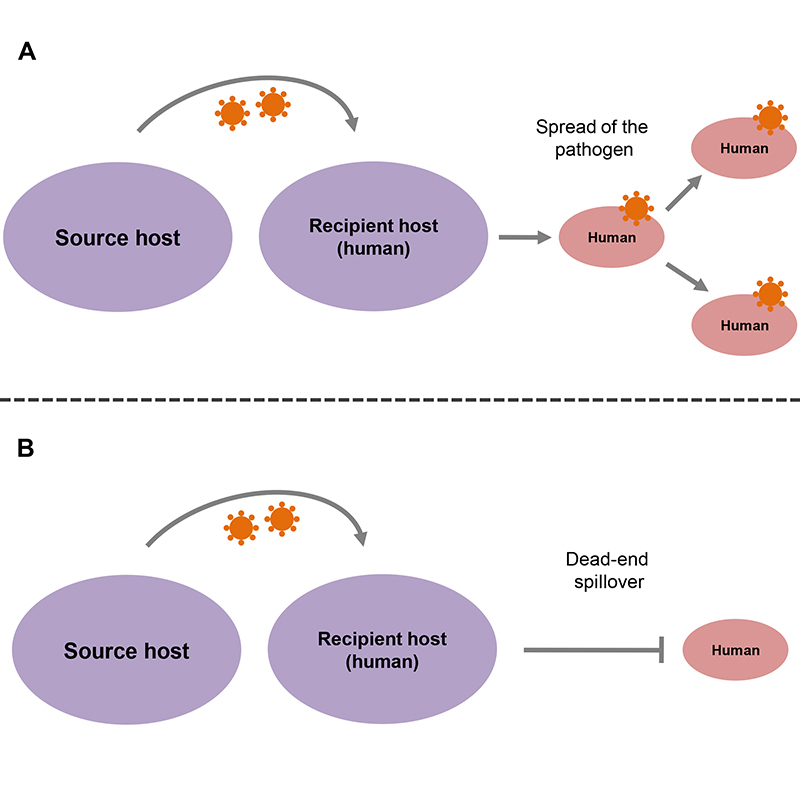
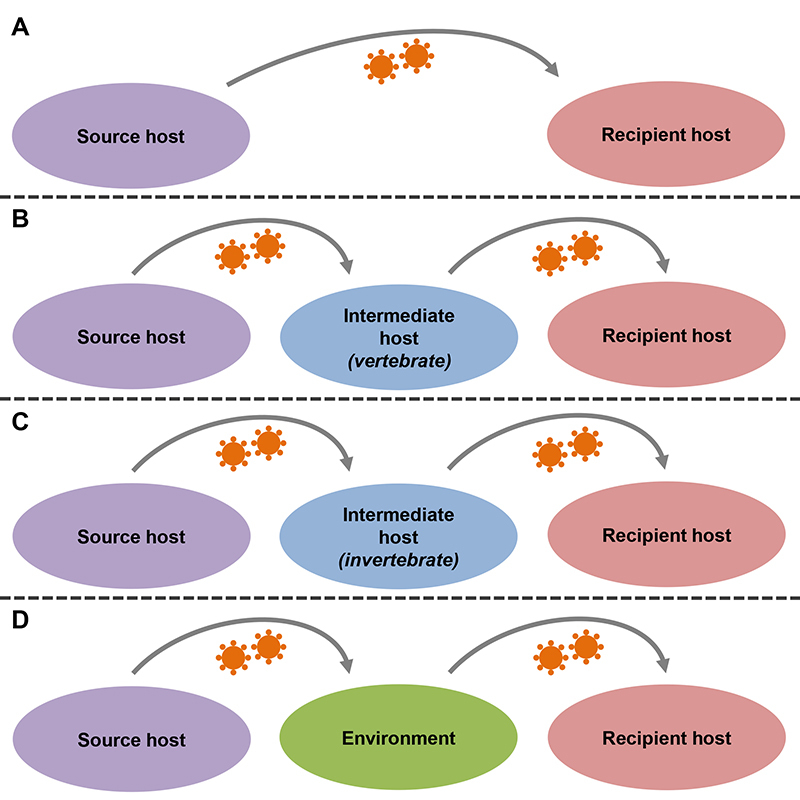
The transmission of pathogens from wild animals to humans is called "zoonotic spillover". Most human infectious diseases (60-75%) are derived from pathogens that originally circulated in non-human animal species. This demonstrates that spillover has a fundamental role in the emergence of new human infectious diseases. Understanding the factors that facilitate the transmission of pathogens from wild animals to humans is essential to establish strategies focused on the reduction of the frequency of spillover events. In this context, this article describes the basic aspects of zoonotic spillover and the main factors involved in spillover events, considering the role of the inter-species interactions, phylogenetic distance between host species, environmental drivers, and specific characteristics of the pathogens, animals, and humans. As an example, the factors involved in the emergence of Severe Acute Respiratory Syndrome Coronavirus 2 (SARS-CoV-2) pandemic are discussed, indicating what can be learned from this public health emergency, and what can be applied to the Brazilian scenario. Finally, this article discusses actions to prevent or reduce the frequency of zoonotic spillover events.
病原体从野生动物传播给人类被称为“人畜共患病外溢”。大多数人类传染病(60%-75%)源自最初在非人类动物物种中传播的病原体。这表明外溢在新型人类传染病的出现中起着根本性作用。了解促进病原体从野生动物传播给人类的因素对于制定旨在减少外溢事件发生频率的策略至关重要。在此背景下,本文描述了人畜共患病外溢的基本方面以及外溢事件中的主要因素,同时考虑了物种间相互作用、宿主物种间的系统发育距离、环境驱动因素以及病原体、动物和人类的特定特征所起的作用。例如,文中讨论了严重急性呼吸综合征冠状病毒2(SARS-CoV-2)大流行出现过程中涉及的因素,指出了从这一突发公共卫生事件中可以吸取的教训以及可应用于巴西情况的内容。最后,本文讨论了预防或减少人畜共患病外溢事件发生频率的行动。