Department of Dermatology, Inselspital, Bern University Hospital, University of Bern, Bern, Switzerland.
Faculty of Medicine, University of Zurich, Zurich, Switzerland.
Semin Immunopathol. 2021 Jun;43(3):393-409. doi: 10.1007/s00281-021-00868-7. Epub 2021 Jun 7.
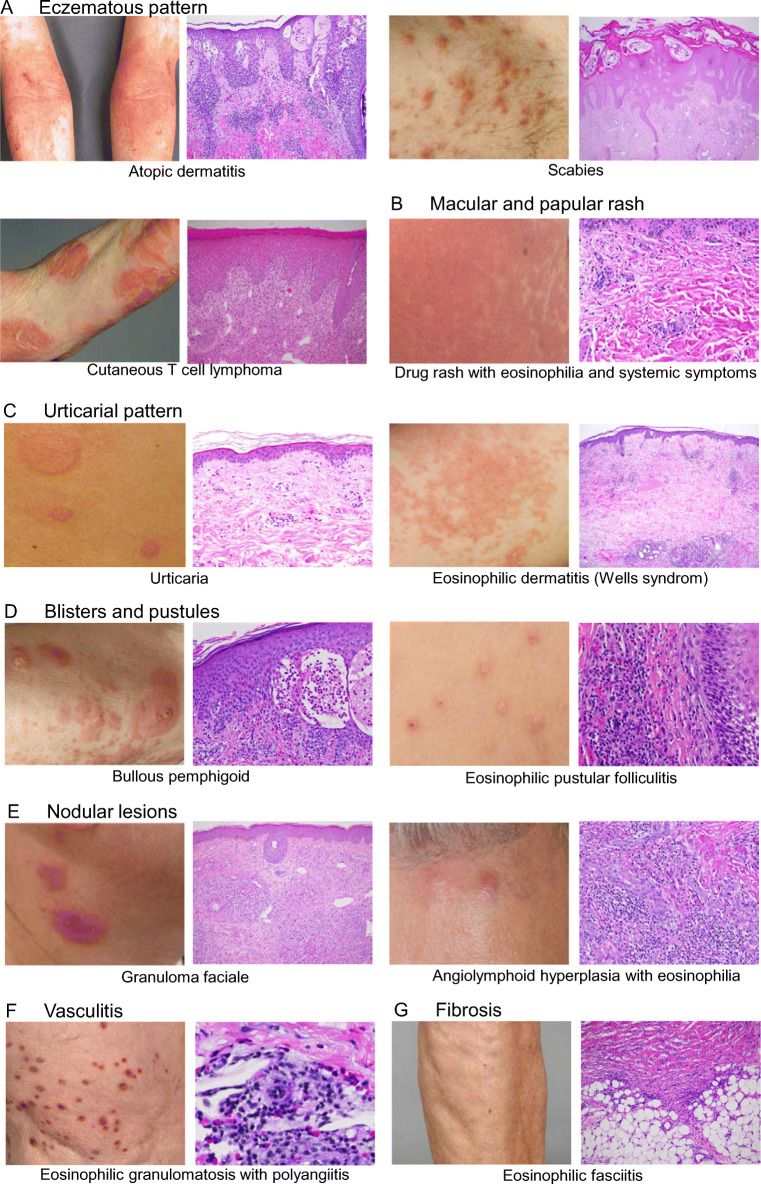
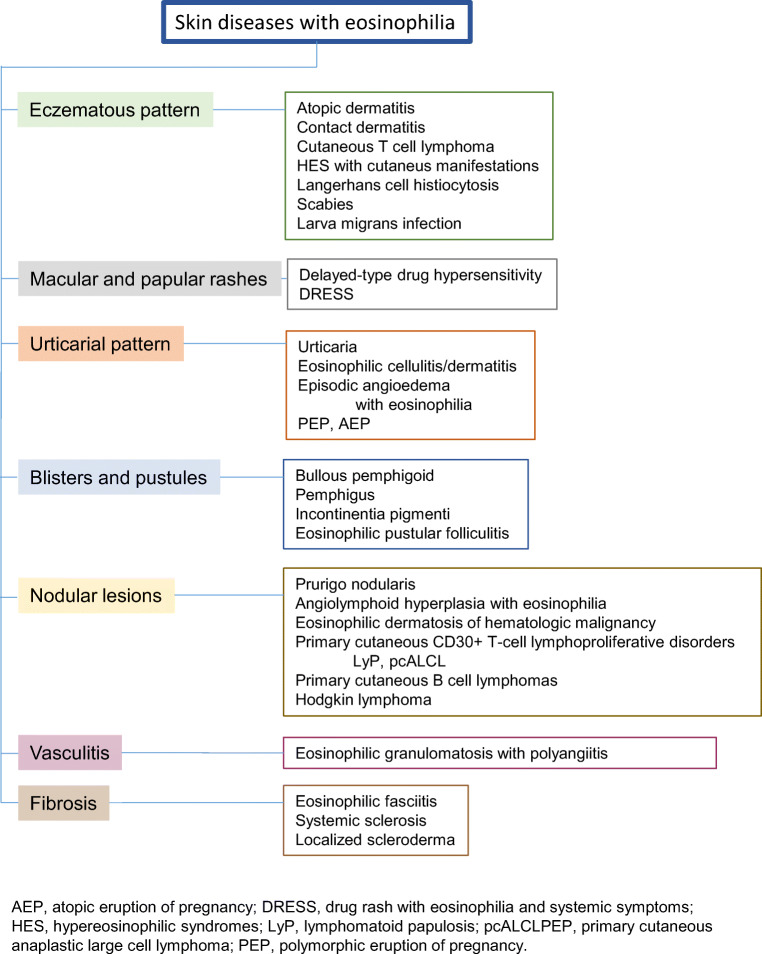
Eosinophil infiltration is a common finding in a broad spectrum of skin diseases, despite the fact that the skin is devoid of eosinophils under physiologic conditions. Although cutaneous eosinophilia is reactive, cytokine-mediated in most cases, diseases with an intrinsic mutation-mediated clonal expansion of eosinophils can also manifest on the skin. As eosinophils are involved in host defense, regulate immune responses, generate pruritus, induce remodeling and fibrosis, and can cause tissue damage, they have the capacity to actively contribute to the pathogenesis of diseases. Recent research provided deeper insights in the mechanisms, e.g., bacterial and viral clearance, blister formation, recruitment of cytotoxic T cells, and generation of pruritus, by which eosinophils might come into action. This review aims at providing an overview on the clinical presentations of eosinophil-associated dermatoses and the current understanding of their pathogenic role in these diseases. Further, we discuss the effects of therapies targeting eosinophils.
嗜酸性粒细胞浸润是广泛皮肤疾病的常见表现,尽管在生理条件下皮肤中不存在嗜酸性粒细胞。虽然皮肤嗜酸性粒细胞增多症是反应性的,在大多数情况下是细胞因子介导的,但由于内在突变介导的嗜酸性粒细胞克隆性扩张的疾病也可以在皮肤上表现出来。由于嗜酸性粒细胞参与宿主防御、调节免疫反应、产生瘙痒、诱导重塑和纤维化,并可能导致组织损伤,因此它们有能力积极促进疾病的发病机制。最近的研究提供了更深层次的机制见解,例如嗜酸性粒细胞可能发挥作用的机制,包括清除细菌和病毒、水疱形成、细胞毒性 T 细胞募集和瘙痒产生。本综述旨在概述与嗜酸性粒细胞相关的皮肤病的临床表现,以及目前对这些疾病中其致病作用的理解。此外,我们还讨论了针对嗜酸性粒细胞的治疗方法的效果。