Zangouei Amir Sadra, Moghbeli Meysam
Student Research Committee, Faculty of Medicine, Mashhad University of Medical Sciences, Mashhad, Iran.
Department of Medical Genetics and Molecular Medicine, School of Medicine, Mashhad University of Medical Sciences, Mashhad, Iran.
Genes Environ. 2021 Jun 7;43(1):21. doi: 10.1186/s41021-021-00192-4.
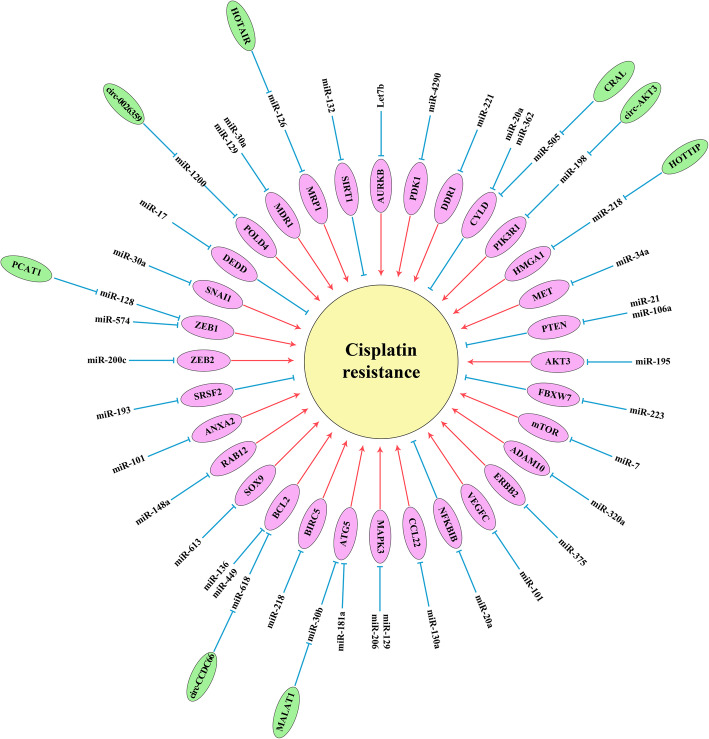
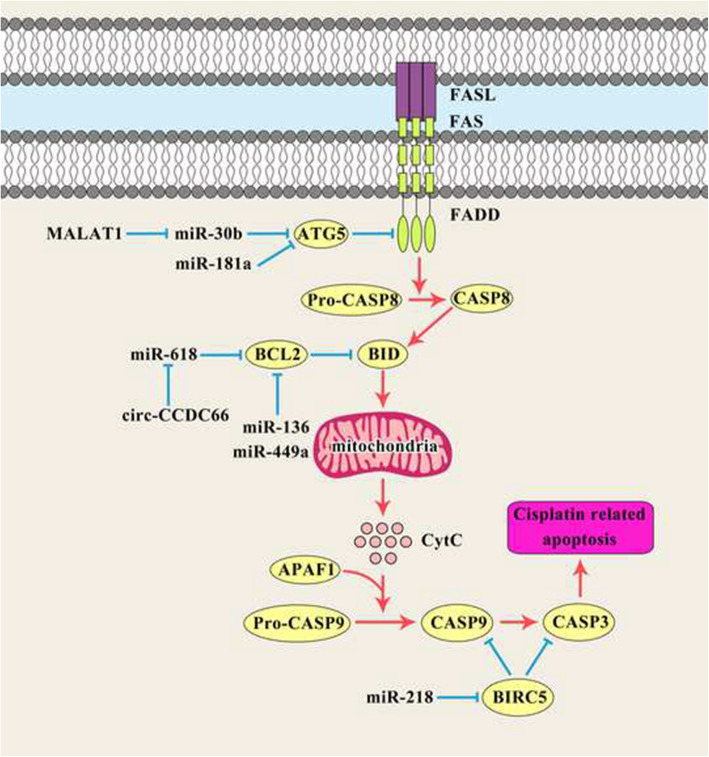
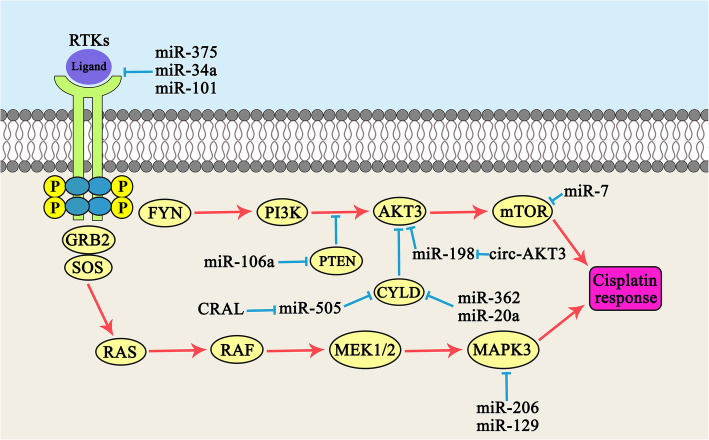
Combined chemotherapeutic treatment is the method of choice for advanced and metastatic gastric tumors. However, resistance to chemotherapeutic agents is one of the main challenges for the efficient gastric cancer (GC) treatment. Cisplatin (CDDP) is used as an important regimen of chemotherapy for GC which induces cytotoxicity by interfering with DNA replication in cancer cells and inducing their apoptosis. Majority of patients experience cisplatin-resistance which is correlated with tumor metastasis and relapse. Moreover, prolonged and high-dose cisplatin administrations cause serious side effects such as nephrotoxicity, ototoxicity, and anemia. Since, there is a high rate of recurrence after CDDP treatment in GC patients; it is required to clarify the molecular mechanisms associated with CDDP resistance to introduce novel therapeutic methods. There are various cell and molecular processes associated with multidrug resistance (MDR) including drug efflux, detoxification, DNA repair ability, apoptosis alteration, signaling pathways, and epithelial-mesenchymal transition (EMT). MicroRNAs are a class of endogenous non-coding RNAs involved in chemo resistance of GC cells through regulation of all of the MDR mechanisms. In present review we have summarized all of the miRNAs associated with cisplatin resistance based on their target genes and molecular mechanisms in gastric tumor cells. This review paves the way of introducing a miRNA-based panel of prognostic markers to improve the efficacy of chemotherapy and clinical outcomes in GC patients. It was observed that miRNAs are mainly involved in cisplatin response of gastric tumor cells via regulation of signaling pathways, autophagy, and apoptosis.
联合化疗是晚期和转移性胃肿瘤的首选治疗方法。然而,对化疗药物的耐药性是高效治疗胃癌(GC)的主要挑战之一。顺铂(CDDP)是GC化疗的重要方案,它通过干扰癌细胞中的DNA复制并诱导其凋亡来诱导细胞毒性。大多数患者会出现顺铂耐药,这与肿瘤转移和复发相关。此外,长期和高剂量使用顺铂会导致严重的副作用,如肾毒性、耳毒性和贫血。由于GC患者在CDDP治疗后复发率很高,因此需要阐明与顺铂耐药相关的分子机制,以引入新的治疗方法。有多种细胞和分子过程与多药耐药(MDR)相关,包括药物外排、解毒、DNA修复能力、凋亡改变、信号通路和上皮-间质转化(EMT)。微小RNA(MicroRNAs)是一类内源性非编码RNA,通过调节所有MDR机制参与GC细胞的化疗耐药。在本综述中,我们根据其靶基因和胃肿瘤细胞中的分子机制,总结了所有与顺铂耐药相关的miRNA。本综述为引入基于miRNA的预后标志物组合以提高GC患者化疗疗效和临床结果铺平了道路。据观察,miRNA主要通过调节信号通路、自噬和凋亡参与胃肿瘤细胞的顺铂反应。