University of Edinburgh School of Medicine, Edinburgh, UK.
Department of Urology, University of California-San Francisco, San Francisco, CA, USA.
Cancer Med. 2021 Jul;10(13):4564-4574. doi: 10.1002/cam4.3974. Epub 2021 Jun 8.
Cancer patients incur high care costs; however, there is a paucity of literature characterizing unmet financial obligations for patients with urologic cancers. Kidney cancer patients are particularly burdened by costs associated with novel systemic treatments. This study aimed to ascertain the characteristics of GoFundMe® crowdfunding campaigns for patients with kidney cancer, in order to better understand the financial needs of this population.
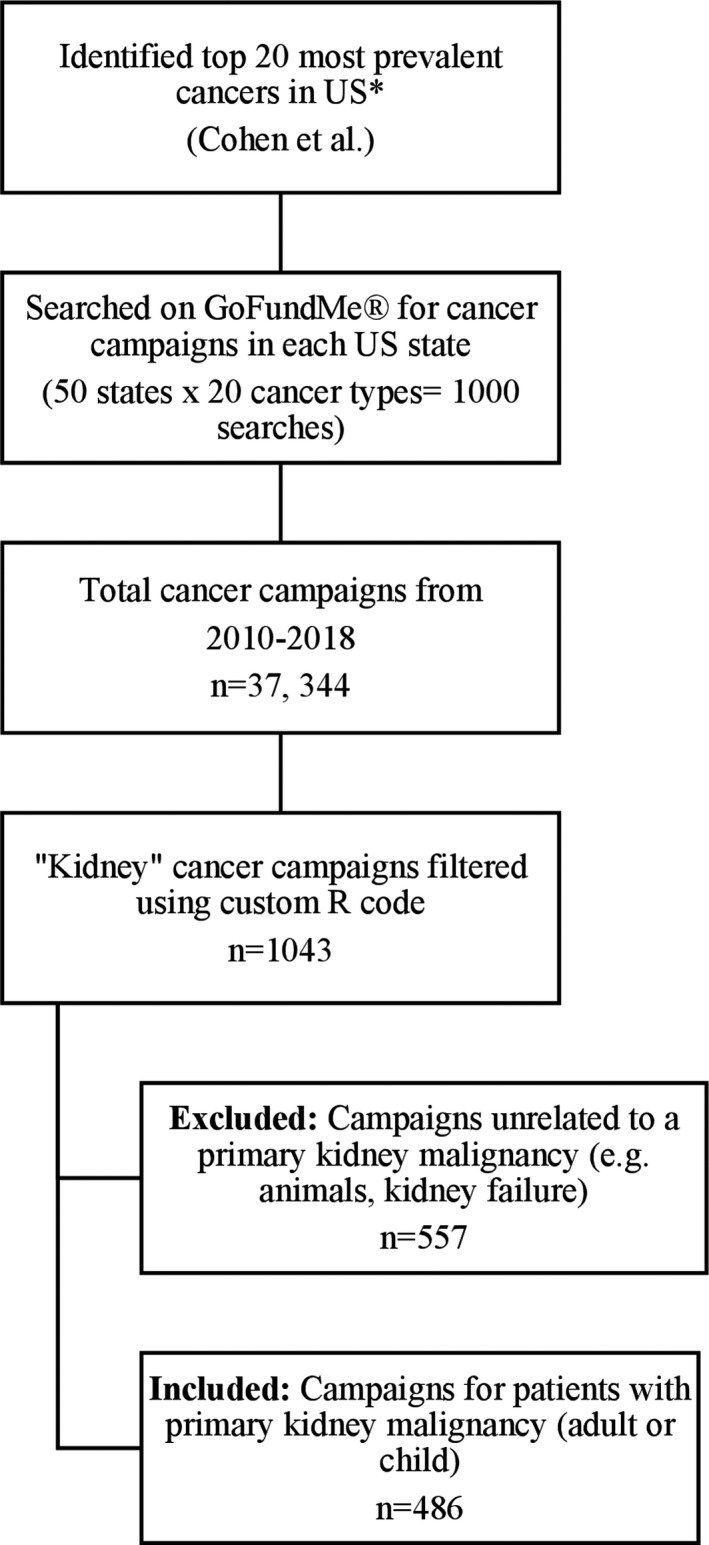
We performed a cross-sectional, quantitative, and qualitative analysis of all kidney cancer GoFundMe® campaigns since 2010. Fundraising metrics such as goal funds and amount raised, were extracted. Eight independent investigators collected patient, disease and campaign-level variables from campaign stories (κ = 0.72). In addition, we performed a content analysis of campaign narratives spotlighting the primary appeal of the patient's life story.
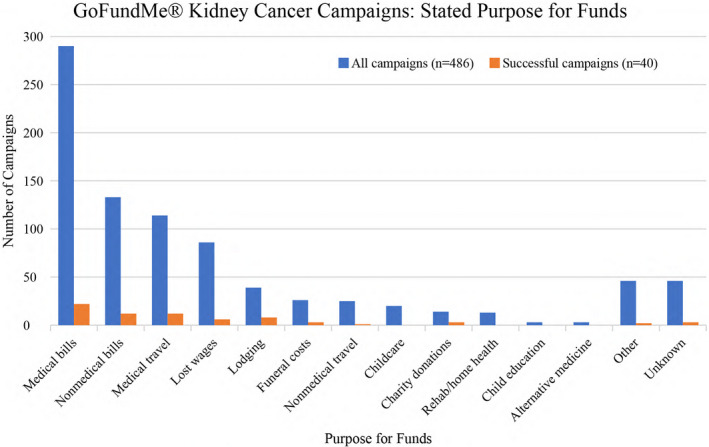
A total of 486 GoFundMe® kidney cancer campaigns were reviewed. The median goal funds were 10,000USD [IQR = 5000, 20,000] and the median amount raised was 1450USD [IQR = 578, 4050]. Most campaigns were for adult males (53%) and 62% of adults had children. A minority were for pediatric patients (17%). Thirty-seven percent of adult patients were primary wage earners and 43% reported losing their job or substantially reducing hours due to illness. Twenty-nine percent reported no insurance or insufficient coverage. Campaigns most frequently sought funds for medical bills (60%), nonmedical bills (27%), and medical travel (23%). Qualitative campaign narratives mostly emphasized patients' hardship (46.3%) or high moral character (35.2%). Only 8% of campaigns achieved their target funds.
Despite fundraising efforts, patients with kidney cancer face persistent financial barriers, incurring both medical and nonmedical cost burdens. This may be compounded by limited or no insurance. Cancer care providers should be aware of financial constraints placed on kidney cancer patients, and consider how these may impact treatment regimens.
癌症患者的医疗费用高昂;然而,目前鲜有文献描述泌尿系统癌症患者未满足的经济负担。接受新型全身治疗的肾癌患者的经济负担尤其沉重。本研究旨在确定肾癌患者 GoFundMe®众筹活动的特征,以便更好地了解这一人群的经济需求。
我们对自 2010 年以来所有肾癌 GoFundMe®活动进行了横断面、定量和定性分析。提取筹款指标,如目标资金和筹集金额。8 名独立研究人员从活动故事中收集患者、疾病和活动级别变量(κ=0.72)。此外,我们对活动叙述进行了内容分析,重点分析了患者生活故事的主要诉求。
共审查了 486 个肾癌 GoFundMe®活动。中位数目标资金为 10000 美元[IQR=5000,20000],中位数筹集金额为 1450 美元[IQR=578,4050]。大多数活动是针对成年男性(53%),62%的成年人有子女。少数是针对儿科患者(17%)。37%的成年患者是主要收入者,43%的患者因疾病而失业或大幅减少工作时间。29%的患者报告没有保险或保险不足。活动最常寻求资金用于支付医疗账单(60%)、非医疗账单(27%)和医疗旅行(23%)。活动叙述主要强调患者的困难(46.3%)或高尚的道德品质(35.2%)。只有 8%的活动达到了目标资金。
尽管进行了筹款努力,但肾癌患者仍面临持续的经济障碍,同时承担医疗和非医疗费用负担。这可能因保险有限或没有保险而加剧。癌症护理提供者应了解肾癌患者面临的经济限制,并考虑这些限制如何影响治疗方案。