Large Animal Clinical Sciences, College of Veterinary Medicine, Michigan State University, 784 Wilson Road, East Lansing, MI, 48824, USA.
BMC Genomics. 2021 Jun 11;22(1):438. doi: 10.1186/s12864-021-07758-0.
Myofibrillar myopathy in humans causes protein aggregation, degeneration, and weakness of skeletal muscle. In horses, myofibrillar myopathy is a late-onset disease of unknown origin characterized by poor performance, atrophy, myofibrillar disarray, and desmin aggregation in skeletal muscle. This study evaluated molecular and ultrastructural signatures of myofibrillar myopathy in Warmblood horses through gluteal muscle tandem-mass-tag quantitative proteomics (5 affected, 4 control), mRNA-sequencing (8 affected, 8 control), amalgamated gene ontology analyses, and immunofluorescent and electron microscopy.
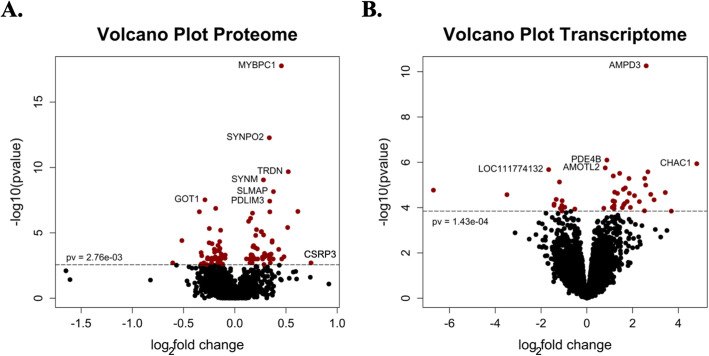
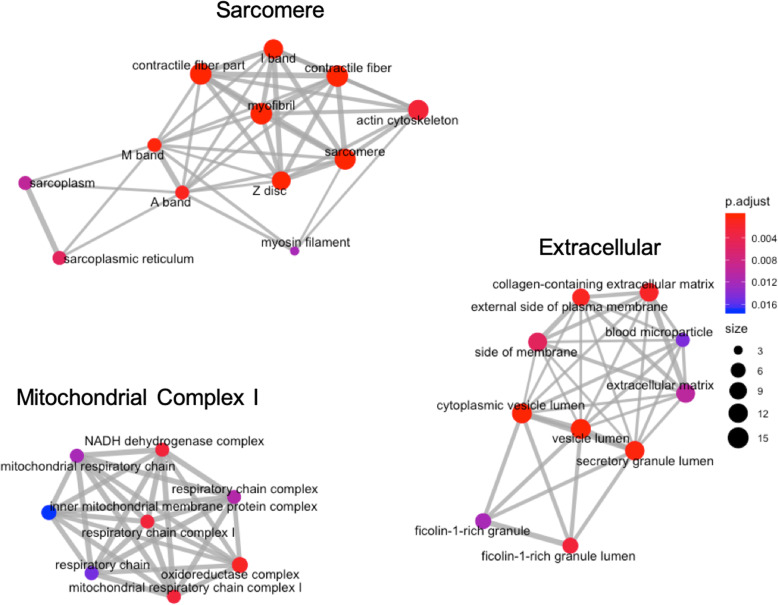
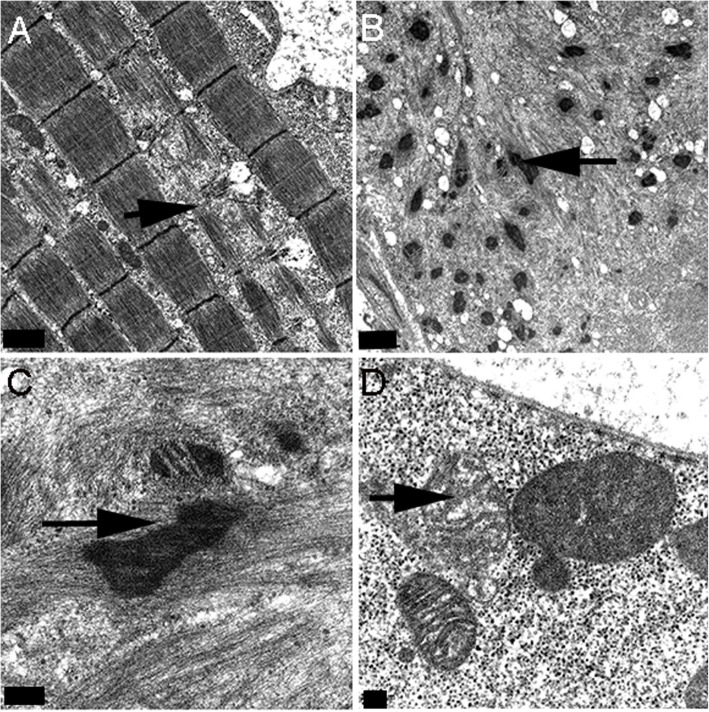
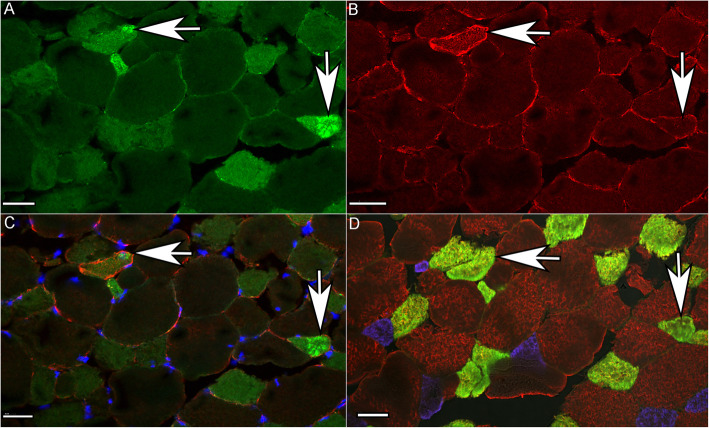
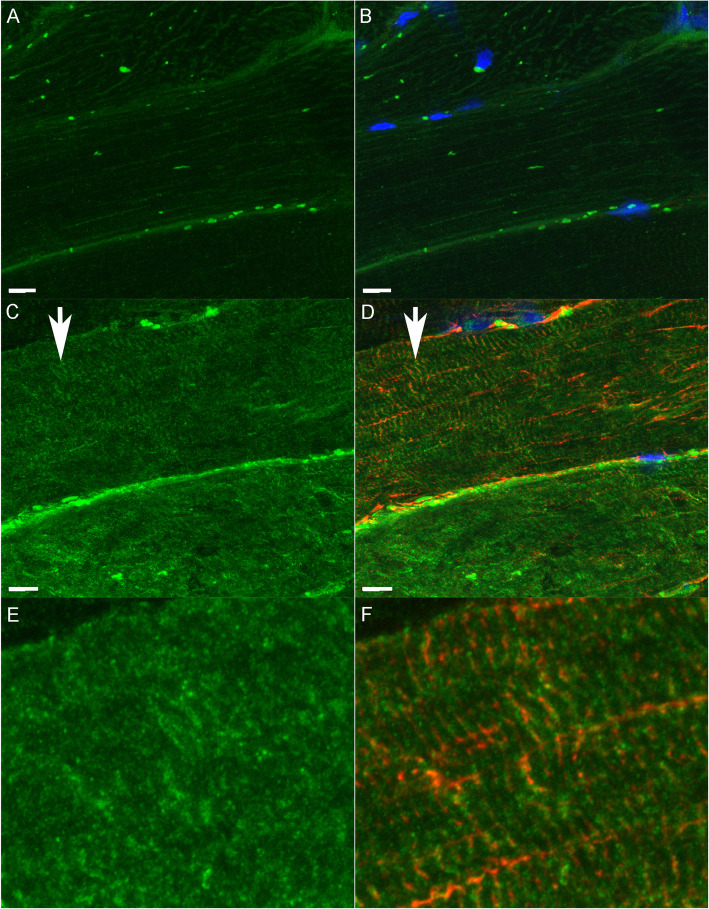
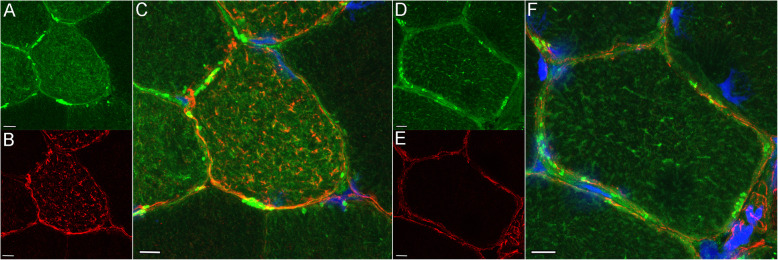
We identified 93/1533 proteins and 47/27,690 genes that were significantly differentially expressed. The top significantly differentially expressed protein CSRP3 and three other differentially expressed proteins, including, PDLIM3, SYNPO2, and SYNPOL2, are integrally involved in Z-disc signaling, gene transcription and subsequently sarcomere integrity. Through immunofluorescent staining, both desmin aggregates and CSRP3 were localized to type 2A fibers. The highest differentially expressed gene CHAC1, whose protein product degrades glutathione, is associated with oxidative stress and apoptosis. Amalgamated transcriptomic and proteomic gene ontology analyses identified 3 enriched cellular locations; the sarcomere (Z-disc & I-band), mitochondrial complex I and the extracellular matrix which corresponded to ultrastructural Z-disc disruption and mitochondrial cristae alterations found with electron microscopy.
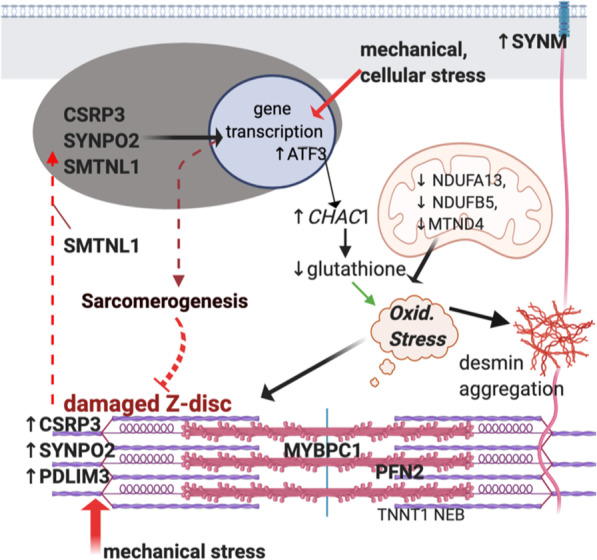
A combined proteomic and transcriptomic analysis highlighted three enriched cellular locations that correspond with MFM ultrastructural pathology in Warmblood horses. Aberrant Z-disc mechano-signaling, impaired Z-disc stability, decreased mitochondrial complex I expression, and a pro-oxidative cellular environment are hypothesized to contribute to the development of myofibrillar myopathy in Warmblood horses. These molecular signatures may provide further insight into diagnostic biomarkers, treatments, and the underlying pathophysiology of MFM.
人类的肌纤维病导致骨骼肌蛋白聚集、变性和衰弱。在马匹中,肌纤维病是一种病因不明的迟发性疾病,其特征是运动表现不佳、肌肉萎缩、肌纤维排列紊乱和结蛋白聚集。本研究通过臀肌串联质量标签定量蛋白质组学(5 例患病,4 例对照)、mRNA 测序(8 例患病,8 例对照)、综合基因本体分析以及免疫荧光和电子显微镜评估了温血马肌纤维病的分子和超微结构特征。
我们鉴定出 93/1533 种蛋白质和 47/27690 种基因存在显著差异表达。差异表达最显著的蛋白 CSRP3 以及另外 3 种差异表达蛋白,包括 PDLIM3、SYNPO2 和 SYNPOL2,都与 Z 盘信号、基因转录以及随后的肌节完整性密切相关。通过免疫荧光染色,结蛋白聚集物和 CSRP3 都定位于 2A 型纤维。差异表达最高的基因 CHAC1 编码的蛋白产物降解谷胱甘肽,与氧化应激和细胞凋亡有关。综合转录组学和蛋白质组学的基因本体分析确定了 3 个富含细胞的位置:肌节(Z 盘和 I 带)、线粒体复合物 I 和细胞外基质,这与电子显微镜下发现的 Z 盘破坏和线粒体嵴改变相对应。
蛋白质组学和转录组学的联合分析突出了三个富含细胞的位置,这些位置与温血马 MFM 的超微结构病理学相对应。异常的 Z 盘机械信号转导、Z 盘稳定性受损、线粒体复合物 I 表达降低以及细胞内氧化环境被认为是导致温血马肌纤维病发生的原因。这些分子特征可能为肌纤维病的诊断生物标志物、治疗方法以及潜在的病理生理学提供进一步的见解。