He Zhenyan, Tian Sidan, Gao Yuting, Meng Fanling, Luo Liang
National Engineering Research Center for Nanomedicine, College of Life Science and Technology, Huazhong University of Science and Technology, Wuhan, China.
Hubei Key Laboratory of Bioinorganic Chemistry and Materia Medica, School of Chemistry and Chemical Engineering, Huazhong University of Science and Technology, Wuhan, China.
Front Chem. 2021 May 25;9:672917. doi: 10.3389/fchem.2021.672917. eCollection 2021.
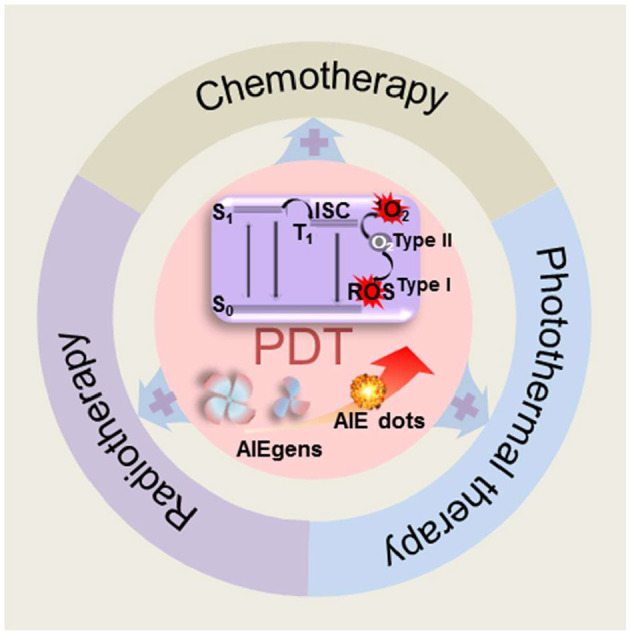
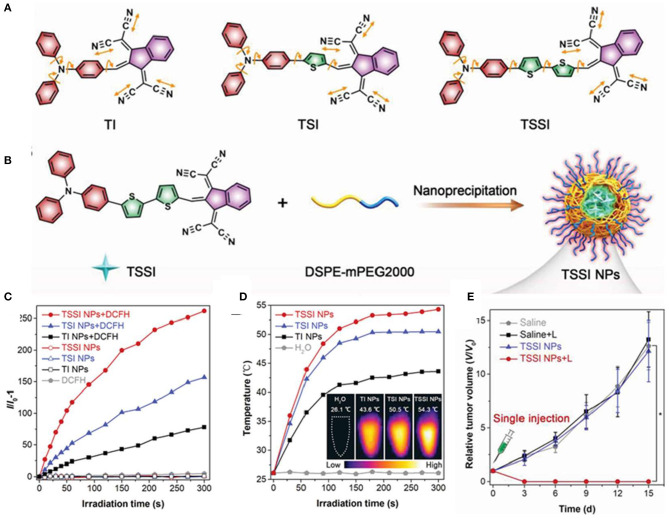
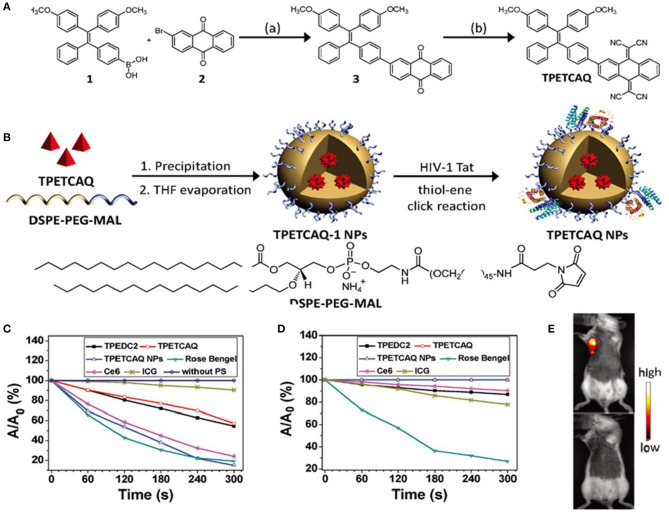
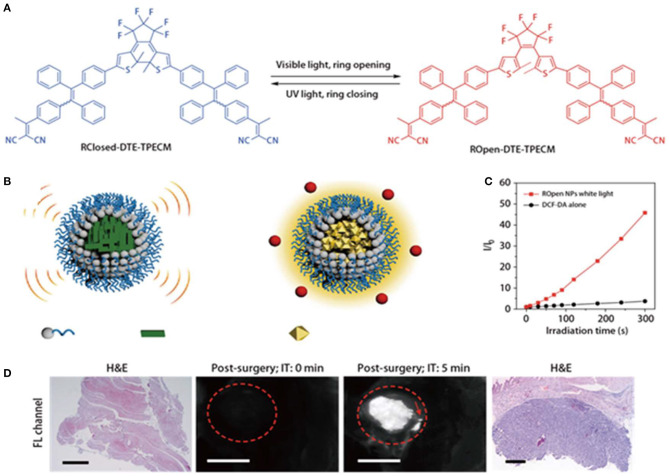
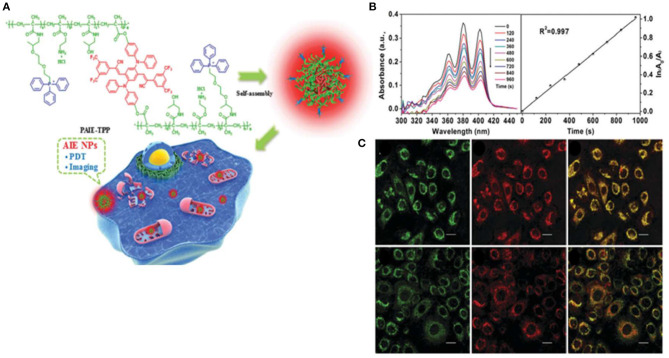
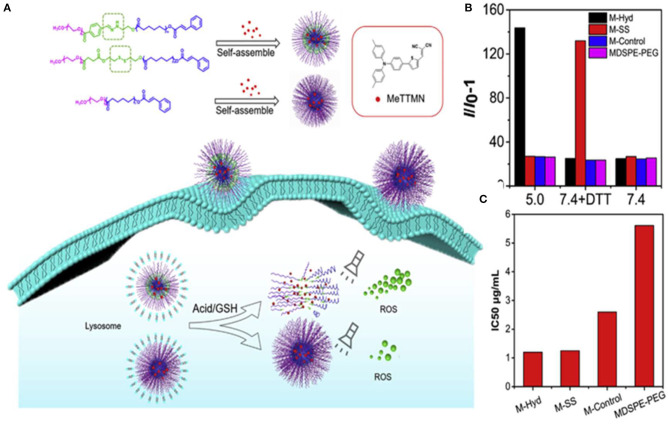
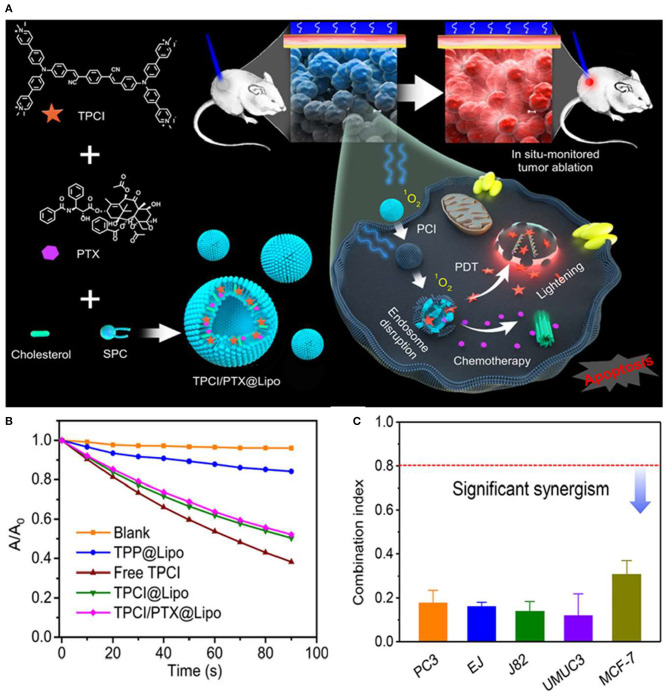
Photodynamic therapy (PDT) is an emerging effective strategy for cancer treatment. Compared with conventional cancer therapies, such as surgery, chemotherapy, and radiotherapy, PDT has shown great promise as a next-generation cancer therapeutic strategy owing to its many advantages such as non-invasiveness, negligible observed drug resistance, localized treatment, and fewer side effects. One of the key elements in photodynamic therapy is the photosensitizer (PS) which converts photons into active cytotoxic species, namely, reactive oxygen species (ROS). An ideal PS for photodynamic therapy requires the efficient generation of ROS, high stability against photo bleaching, and robust performance in different environments and concentrations. PSs with aggregation-induced emission (AIE) characteristics have drawn significant attention, in that they can overcome the aggregation- caused quenching effect that is commonly seen in the case of fluorescence dyes and provide excellent performance at high concentrations or in their condensed state. Moreover, organic nanomaterials with AIE characteristics, or AIE dots, have played an increasingly significant role in assisting PDT based on its excellent ROS generation efficiency and simultaneous imaging feature. This review summarizes the recent advances on the molecular design of AIE PSs and AIE dots-based probes, as well as their emerging applications for enhanced anticancer PDT theranostics.
光动力疗法(PDT)是一种新兴的癌症治疗有效策略。与传统的癌症治疗方法,如手术、化疗和放疗相比,PDT因其具有非侵入性、观察到的耐药性可忽略不计、局部治疗以及副作用较少等诸多优点,作为一种下一代癌症治疗策略展现出了巨大的前景。光动力疗法的关键要素之一是光敏剂(PS),它能将光子转化为活性细胞毒性物质,即活性氧(ROS)。用于光动力疗法的理想光敏剂需要高效产生活性氧、对光漂白具有高稳定性,并且在不同环境和浓度下具有良好的性能。具有聚集诱导发光(AIE)特性的光敏剂受到了广泛关注,因为它们可以克服荧光染料常见的聚集导致的猝灭效应,并在高浓度或凝聚状态下提供优异的性能。此外,具有AIE特性的有机纳米材料或AIE点,基于其优异的活性氧生成效率和同步成像功能,在辅助光动力疗法中发挥着越来越重要的作用。本综述总结了基于AIE光敏剂和AIE点的探针在分子设计方面的最新进展,以及它们在增强抗癌光动力治疗诊断中的新兴应用。