Tran Xuan Vinh, Tran Khanh Quang
Faculty of Odonto-stomatology, University of Medicine and Pharmacy at Ho Chi Minh City (UMP), Ho Chi Minh City, Vietnam.
Restor Dent Endod. 2021 May 18;46(2):e30. doi: 10.5395/rde.2021.46.e30. eCollection 2021 May.
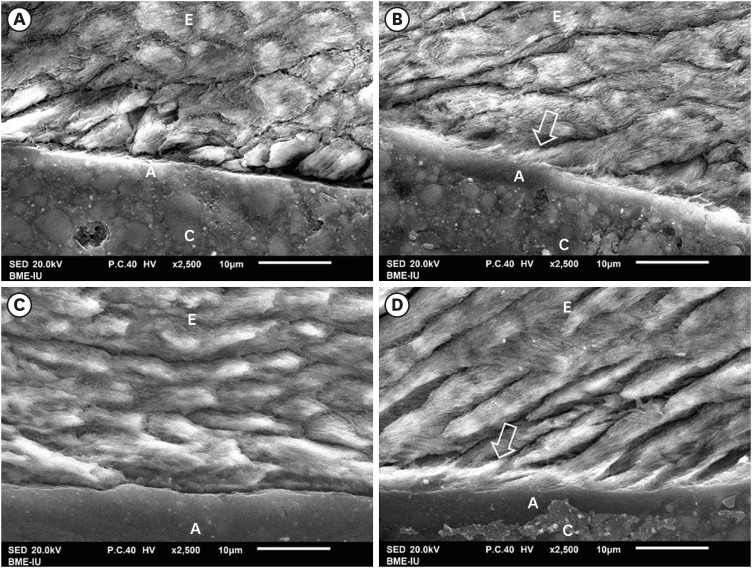
This study was conducted to compare the microleakage and characteristics of the resin-tooth tissue interface between self-etch and etch-and-rinse adhesive systems after 48 hours and 3 months.
40 extracted premolar teeth were randomly divided into 2 groups: 1-step self-etch adhesive system - Optibond™ All-In-One, and 2-step etch-and-rinse adhesive system - Adper™ Single Bond 2. Both groups were subjected to 500 thermocycles (5°C-55°C) before scanning electron microscope (SEM) analysis or microleakage trial at 48-hour and 3-month time periods.
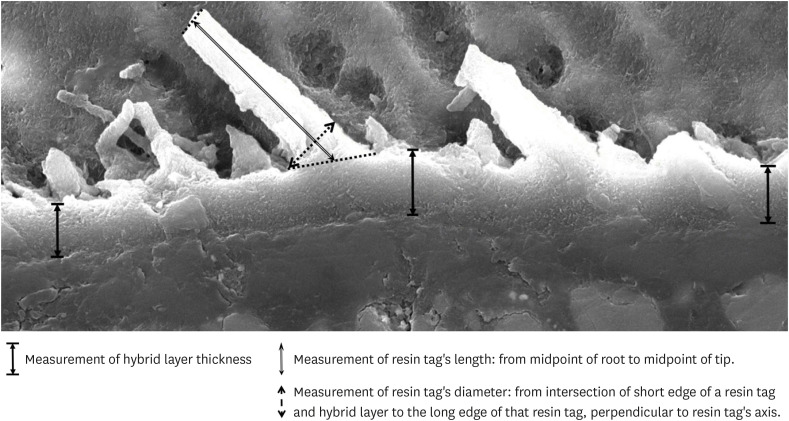
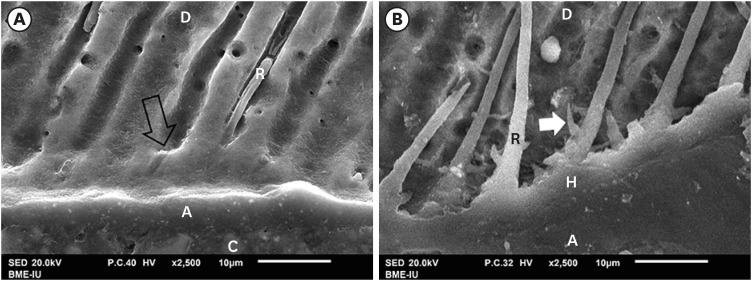
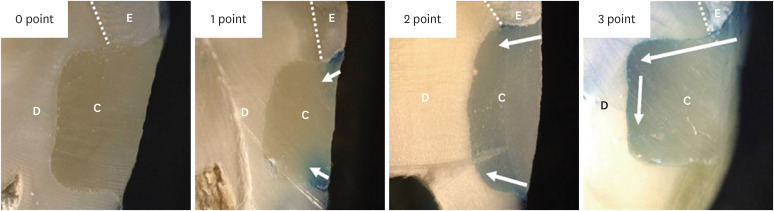
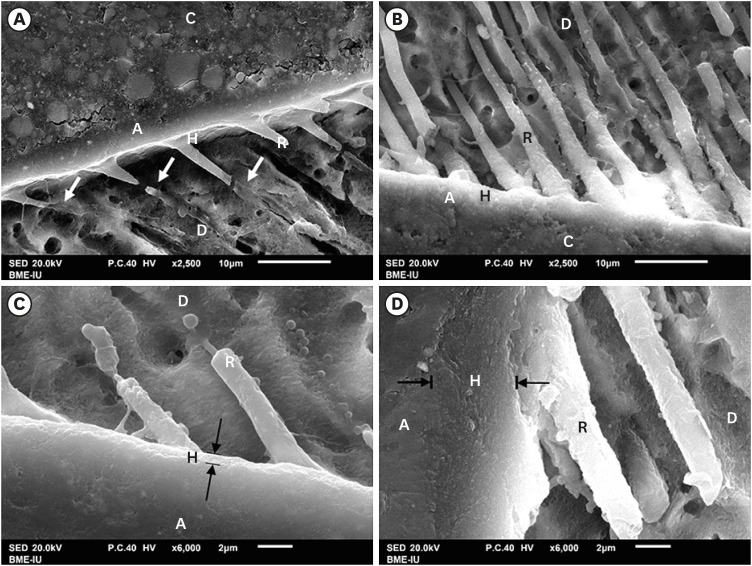
SEM images showed the hybrid layer thickness, diameter, and length of resin tags of the self-etch adhesive (0.42 ± 0.14 µm; 1.49 ± 0.45 µm; 16.35 ± 14.26 µm) were smaller than those of the etch-and-rinse adhesive (4.39 ± 1.52 µm; 3.49 ± 1 µm; 52.81 ± 35.81 µm). In dentin, the microleakage scores of the 2 adhesives were not different in both time periods (48 hours/3 months). However, the microleakage score of etch-and-rinse adhesive increased significantly after 3 months (0.8 ± 0.63 and 1.9 ± 0.88, < 0.05).
The self-etch adhesive exhibited better long-term sealing ability in dentin when compared to that of the etch-and-rinse adhesive. The greater hybrid layer thickness and dimensions of resin tags did not guarantee reliable, long-lasting sealing in the bonding area.
本研究旨在比较自酸蚀和酸蚀冲洗粘结系统在48小时和3个月后树脂与牙体组织界面的微渗漏情况及特征。
40颗拔除的前磨牙随机分为2组:一步法自酸蚀粘结系统——Optibond™全效粘结剂,以及两步法酸蚀冲洗粘结系统——Adper™单键2粘结剂。两组在扫描电子显微镜(SEM)分析或48小时和3个月时间段的微渗漏试验前均经历500次热循环(5°C - 55°C)。
SEM图像显示,自酸蚀粘结剂的混合层厚度、树脂突直径和长度(0.42±0.14µm;1.49±0.45µm;16.35±14.26µm)小于酸蚀冲洗粘结剂(4.39±1.52µm;3.49±1µm;52.81±35.81µm)。在牙本质中,两种粘结剂在两个时间段(48小时/3个月)的微渗漏评分无差异。然而,酸蚀冲洗粘结剂在3个月后的微渗漏评分显著增加(0.8±0.63和1.9±0.88,P<0.05)。
与酸蚀冲洗粘结剂相比,自酸蚀粘结剂在牙本质中表现出更好的长期封闭能力。更大的混合层厚度和树脂突尺寸并不能保证粘结区域可靠、持久的封闭。