Department of Health Policy and Management, Center for Gun Violence Prevention and Policy, Johns Hopkins Bloomberg School of Public Health, Baltimore, MD, USA.
Int Rev Psychiatry. 2021 Nov;33(7):593-597. doi: 10.1080/09540261.2021.1901669. Epub 2021 Jun 24.
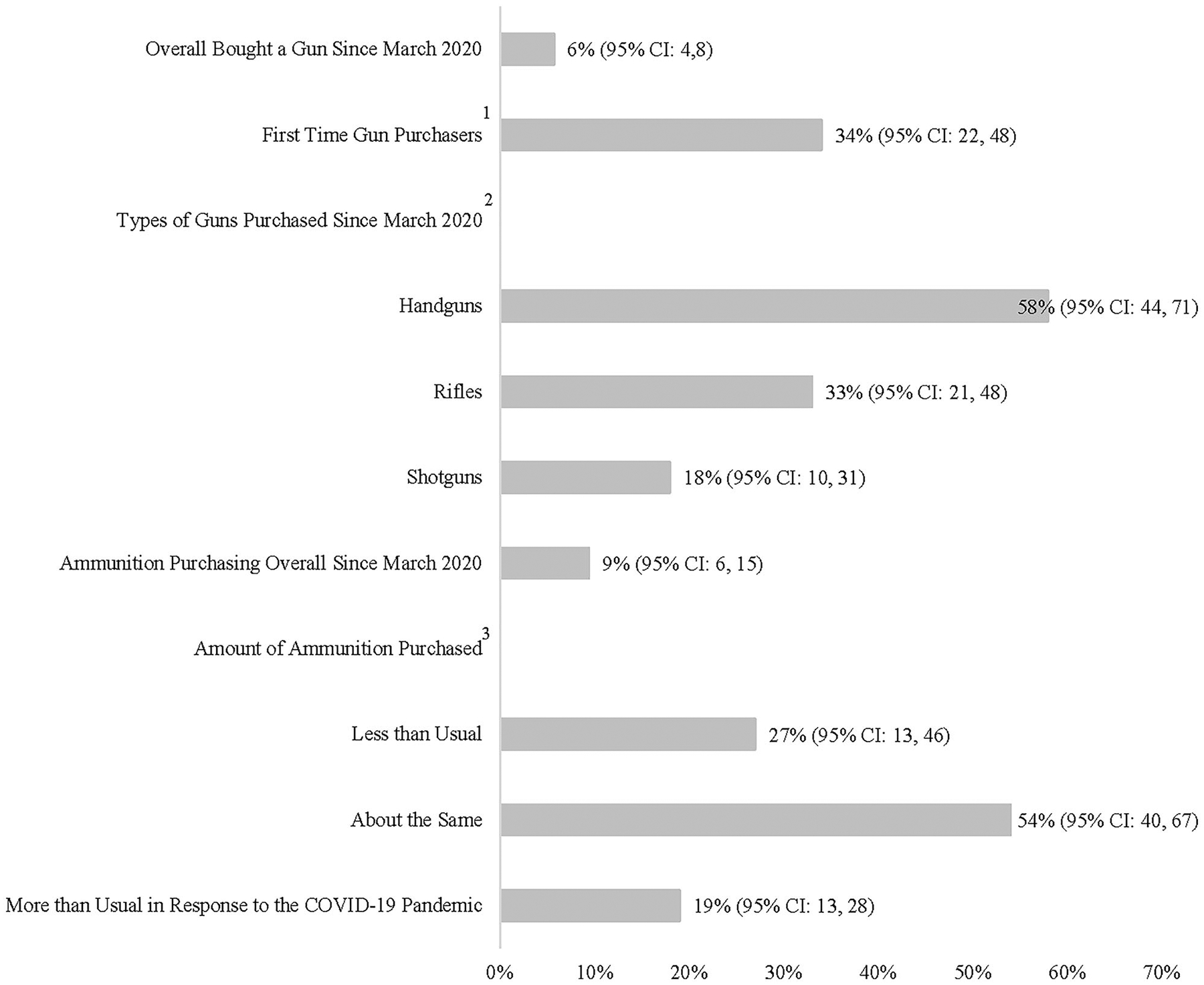
We sought to characterize gun and ammunition purchasing during the initial phase of the COVID-19 pandemic using a nationally representative sample of U.S. adults. We fielded a survey using NORC's Amerispeak Panel between 7 and 22 July 2020 (survey completion rate = 91.1%, = 1337). We used survey-weighted data to calculate the proportion of adults who purchased a gun during this time period and types of guns and amount of ammunition purchased. Between March and mid-July 2020, 6% of adults purchased a gun and 9% bought ammunition. Of those purchasing a gun, 34% were first-time purchasers. Among those purchasing ammunition, 19% reported purchasing more than usual in response to the COVID-19 pandemic while 27% purchased less than usual. An estimated 6,451,163 adults bought guns for the first time between March and mid-July 2020. Increases in gun purchasing, particularly among first-time gun owners, could pose significant short- and long-term implications for public health.
我们试图使用美国成年人的全国代表性样本来描述 COVID-19 大流行初期的枪支和弹药购买情况。我们于 2020 年 7 月 7 日至 22 日期间使用 NORC 的 Amerispeak 小组进行了一项调查(调查完成率=91.1%,n=1337)。我们使用调查加权数据来计算在此期间购买枪支的成年人比例以及购买的枪支类型和弹药数量。在 2020 年 3 月至 7 月中旬期间,有 6%的成年人购买了枪支,9%的成年人购买了弹药。在购买枪支的人群中,有 34%是首次购买者。在购买弹药的人群中,19%的人表示为应对 COVID-19 大流行而购买了超过平时的弹药,而 27%的人购买的弹药少于平时。估计有 645.1163 名成年人在 2020 年 3 月至 7 月中旬期间首次购买枪支。枪支购买量的增加,特别是首次购买枪支者的增加,可能会对公共健康造成重大的短期和长期影响。