Bates Jason S, Gounder Rajamani
Charles D. Davidson School of Chemical Engineering, Purdue University 480 Stadium Mall Drive West Lafayette IN 47907 USA
Chem Sci. 2021 Feb 24;12(13):4699-4708. doi: 10.1039/d1sc00151e.
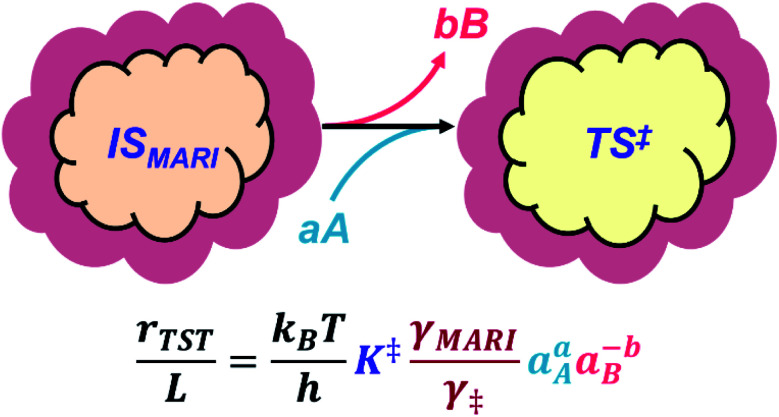
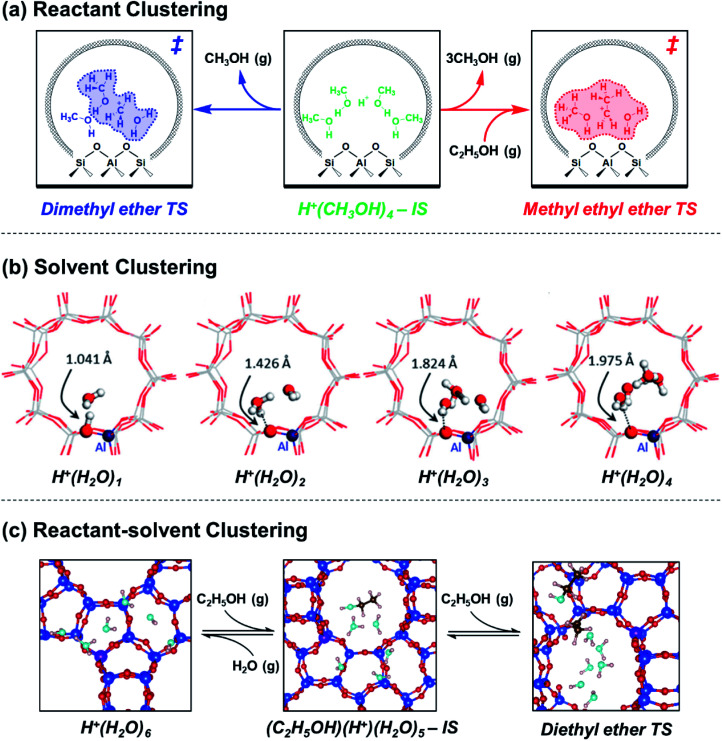
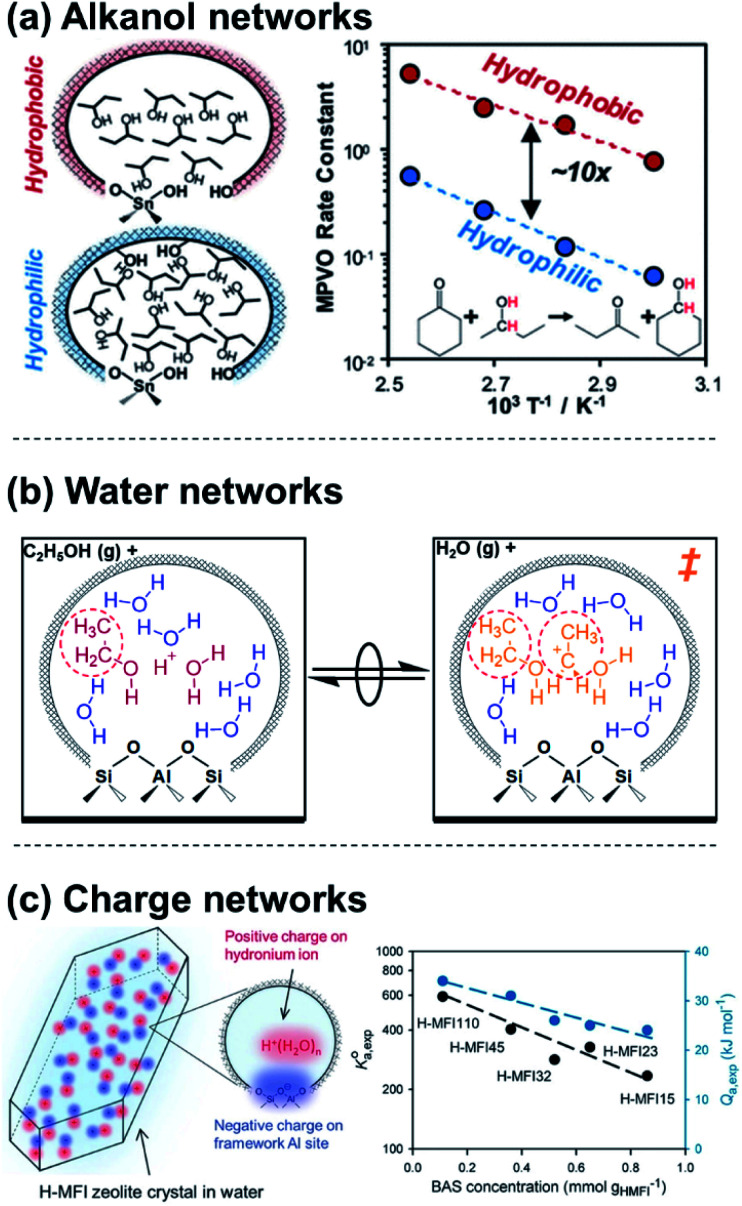
Reactions catalyzed within porous inorganic and organic materials and at electrochemical interfaces commonly occur at high coverage and in condensed media, causing turnover rates to depend strongly on interfacial structure and composition, collectively referred to as "solvent effects". Transition state theory treatments define how solvation phenomena enter kinetic rate expressions, and identify two distinct types of solvent effects that originate from molecular clustering and from the solvation of such clusters by extended solvent networks. We review examples from the recent literature that investigate reactions within microporous zeolite catalysts to illustrate these concepts, and provide a critical appraisal of open questions in the field where future research can aid in developing new chemistry and catalyst design principles.
在多孔无机和有机材料以及电化学界面内催化的反应通常在高覆盖率和凝聚介质中发生,导致周转率强烈依赖于界面结构和组成,这些统称为“溶剂效应”。过渡态理论处理定义了溶剂化现象如何进入动力学速率表达式,并识别出两种不同类型的溶剂效应,它们分别源于分子聚集以及此类聚集体被扩展溶剂网络的溶剂化。我们回顾了近期文献中研究微孔沸石催化剂内反应的例子以阐释这些概念,并对该领域中尚未解决的问题进行了批判性评估,未来的研究有助于在这些问题上开发新的化学和催化剂设计原则。