Department of Primary Care and Mental Health, Institute of Population Health, University of Liverpool, United Kingdom.
Department of Clinical Psychology, National Institute of Mental Health and Neurosciences, Bengaluru, India.
PLoS One. 2021 Jun 25;16(6):e0253790. doi: 10.1371/journal.pone.0253790. eCollection 2021.
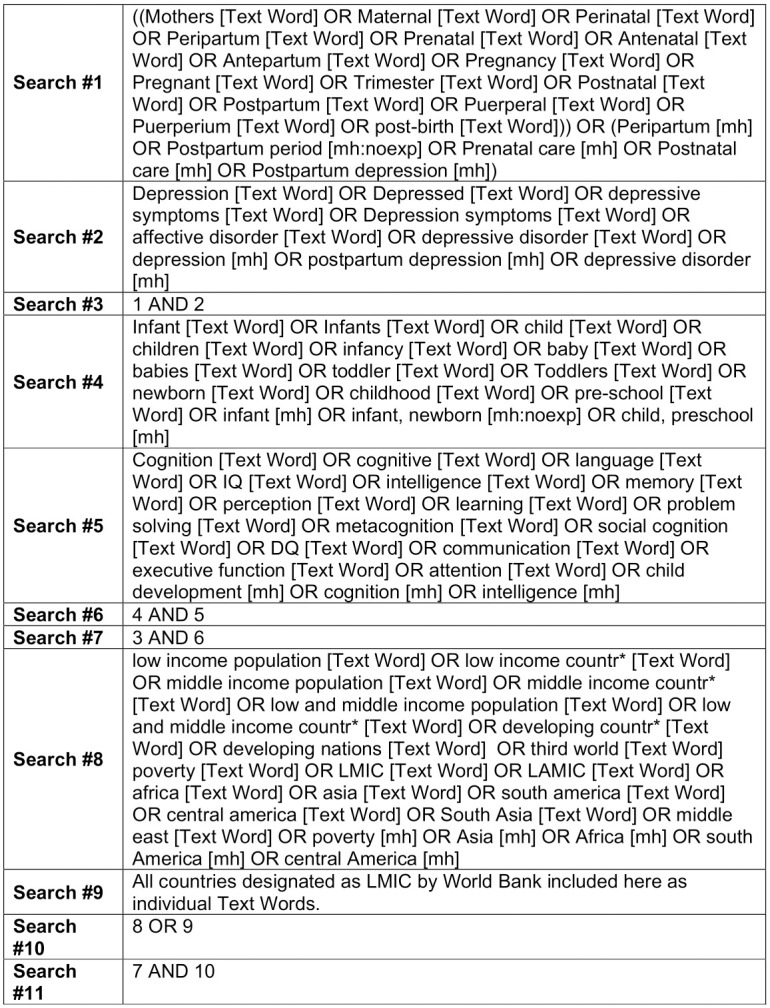
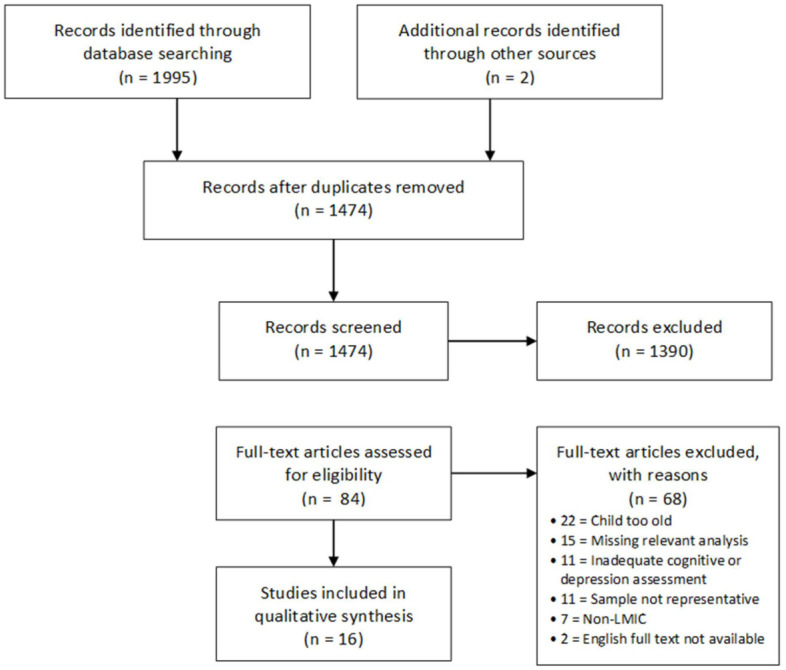
The association between perinatal depression and infant cognitive development has been well documented in research based in high-income contexts, but the literature regarding the same relationship in low and middle-income countries (LMICs) is less developed. The aim of this study is to systematically review what is known in this area in order to inform priorities for early intervention and future research in LMICs. The review protocol was pre-registered on Prospero (CRD42018108589) and relevant electronic databases were searched using a consistent set of keywords and 1473 articles were screened against the eligibility criteria. Sixteen articles were included in the review, seven focusing on the antenatal period, eight on the postnatal period, and one which included both. Five out of eight studies found a significant association between antenatal depression (d = .21-.93) and infant cognitive development, while four out of nine studies found a significant association with postnatal depression (d = .17-.47). Although the evidence suggests that LMICs should prioritise antenatal mental health care, many of the studies did not adequately isolate the effects of depression in each period. Furthermore, very few studies explored more complex interactions that may exist between perinatal depression and other relevant factors. More high-quality studies are needed in LMIC settings, driven by current theory, that test main effects and examine moderating or mediating pathways to cognitive development.
围产期抑郁与婴儿认知发展之间的关系在高收入背景下的研究中已有充分的记录,但关于中低收入国家(LMICs)中相同关系的文献却较少。本研究旨在系统地回顾这一领域的知识,以便为 LMICs 中的早期干预和未来研究确定优先事项。该综述方案已在 Prospero(CRD42018108589)上预先注册,并使用一致的关键词集对相关电子数据库进行了搜索,共筛选出 1473 篇文章以符合入选标准。本研究共纳入 16 篇文章,其中 7 篇聚焦于产前期,8 篇聚焦于产后期,1 篇同时包含两个时期。8 项研究中有 5 项发现产前抑郁(d =.21-.93)与婴儿认知发展之间存在显著关联,9 项研究中有 4 项发现产后抑郁(d =.17-.47)与婴儿认知发展之间存在显著关联。尽管有证据表明,LMICs 应优先重视产前心理健康保健,但许多研究并没有充分分离每个时期的抑郁影响。此外,很少有研究探讨围产期抑郁与其他相关因素之间可能存在的更复杂的相互作用。在 LMIC 环境中,需要更多由当前理论驱动的高质量研究来测试主要影响,并检验认知发展的调节或中介途径。