Department of Gastroenterology and Hepatology, Erasmus University Medical Center, Doctor Molewaterplein 40, 3015 GD, Rotterdam, The Netherlands.
Department of Rheumatology, Erasmus University Medical Centre, Rotterdam, The Netherlands.
Dig Dis Sci. 2022 Jul;67(7):2849-2856. doi: 10.1007/s10620-021-07118-8. Epub 2021 Jun 28.
To learn from the crisis caused by the coronavirus disease (COVID-19) pandemic and be prepared for future pandemics, it is important to investigate the impact of this period on the wellbeing of patients with inflammatory bowel disease (IBD).
To describe the health-related quality of life (HRQoL) and disease control of IBD patients during the first wave of the COVID-19 pandemic in The Netherlands.
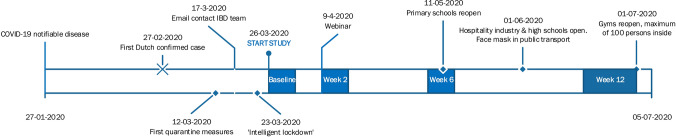
Between March 17 and July 1, 2020, patients aged 18 years and older with IBD from the Erasmus MC (Rotterdam, The Netherlands) were invited to complete online questionnaires at week 0, 2, 6 and 12. The Inflammatory Bowel Disease Questionnaire (IBDQ), the Inflammatory Bowel Disease Control-8 (IBD-control-8) and the numeric rating scale on fatigue were used. The evolution of the different outcomes over time was measured using mixed models.
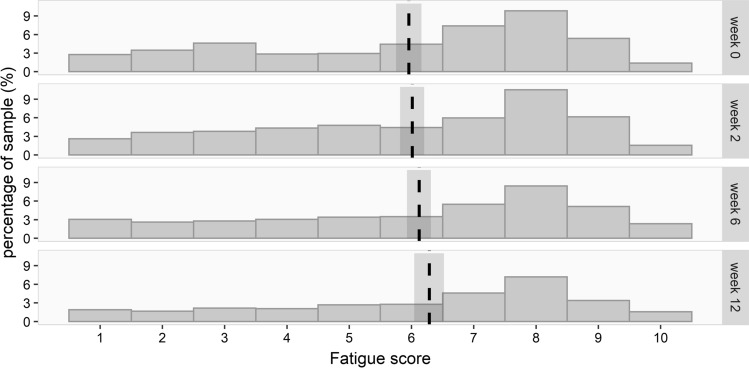
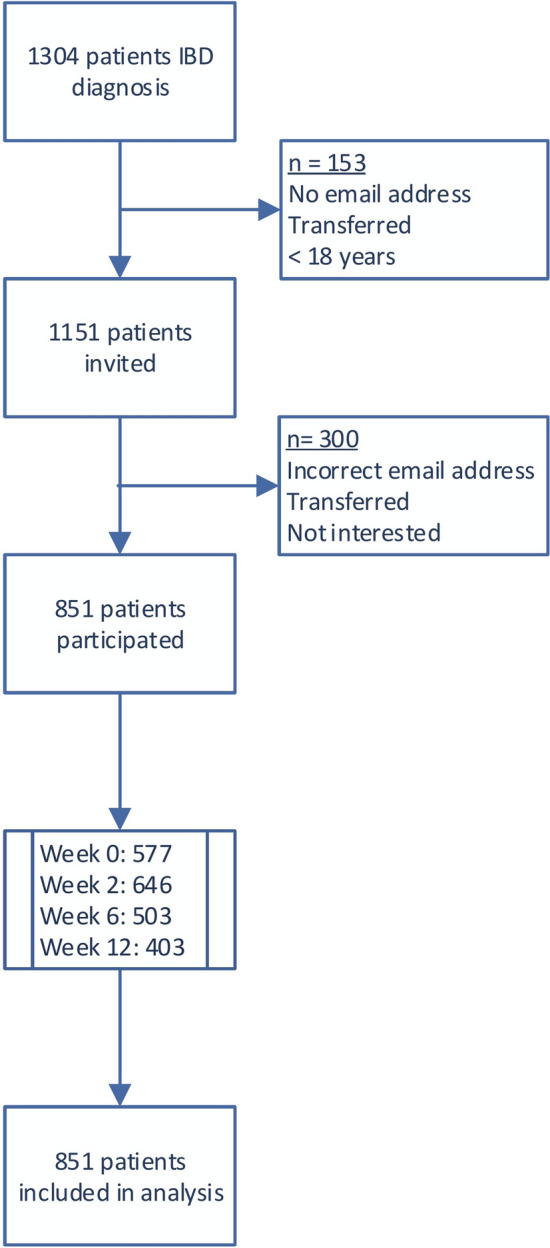
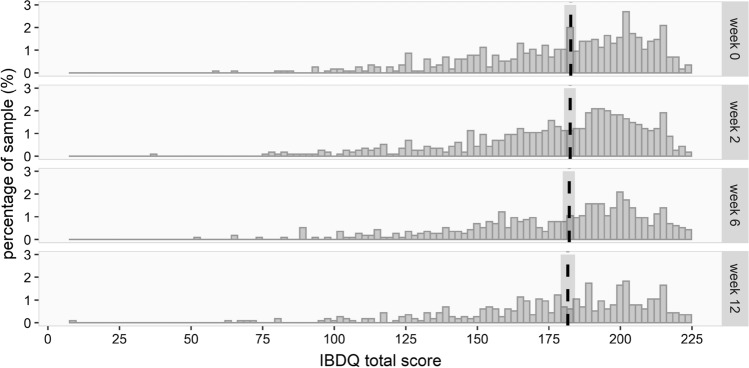
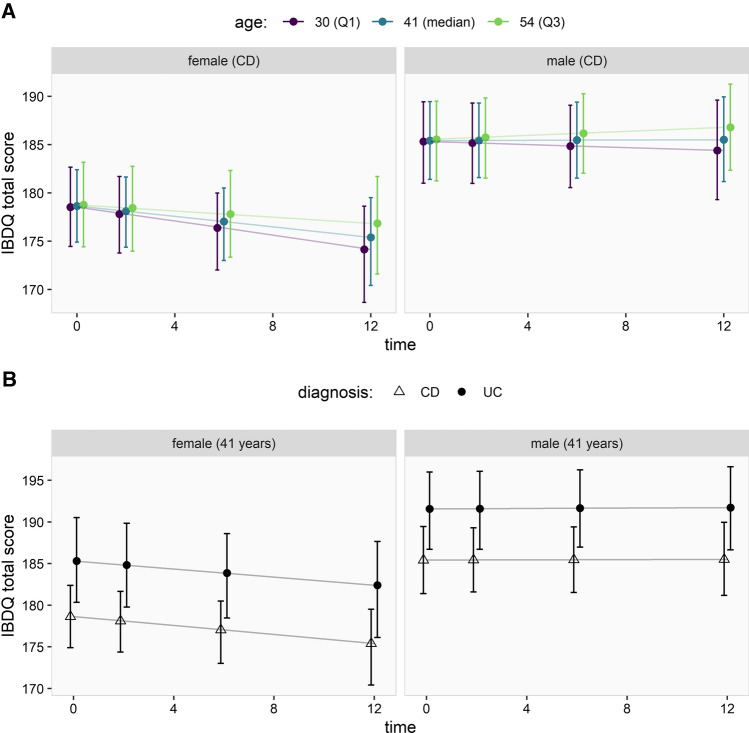
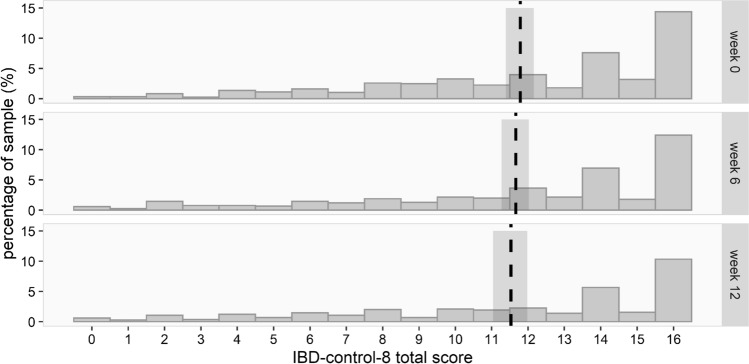
Of 1151 invited patients, 851 patients (67% CD and 33% UC or IBD-U) participated in the study (response rate 74%). No relevant changes in total scores were found over time for the IBDQ (effect estimate 0.006, 95% CI [- 0.003 to 0.015]) and IBD-control-8 (effect estimate 0.004, 95% CI [0.998-1.011]). There was a slight, increasing trend in fatigue scores over time (effect estimate 0.011, 95% CI [0.004, 0.019]).
This first lock down due to the COVID-19 pandemic in The Netherlands did not impact on the HRQoL and disease control of patients with IBD. Up to date information may have contributed to a stable HRQoL in IBD patients even in an extreme period with restrictions and insecurities.
为从新冠疫情大流行引发的危机中吸取教训并为未来的大流行做好准备,有必要调查这一时期对炎症性肠病(IBD)患者健康状况的影响。
描述 COVID-19 大流行期间荷兰 IBD 患者的健康相关生活质量(HRQoL)和疾病控制情况。
2020 年 3 月 17 日至 7 月 1 日期间,邀请年龄在 18 岁及以上的来自荷兰鹿特丹伊拉斯姆斯大学医学中心(Erasmus MC)的 IBD 患者在第 0、2、6 和 12 周时完成在线问卷。使用炎症性肠病问卷(IBDQ)、炎症性肠病控制-8(IBD-control-8)和疲劳数字评分量表来评估。使用混合模型测量不同结局在时间上的演变。
在 1151 名受邀患者中,有 851 名患者(67%为 CD,33%为 UC 或 IBD-U)参与了研究(应答率 74%)。IBDQ(效应估计 0.006,95%CI [-0.003 至 0.015])和 IBD-control-8(效应估计 0.004,95%CI [0.998-1.011])的总分在时间上没有明显变化。疲劳评分随时间呈轻微上升趋势(效应估计 0.011,95%CI [0.004,0.019])。
荷兰首次因 COVID-19 大流行而封锁并未影响 IBD 患者的 HRQoL 和疾病控制。最新信息可能有助于 IBD 患者在限制和不确定的极端时期保持稳定的 HRQoL。