Centre for Prions and Protein Folding Diseases, Edmonton, Alberta, Canada.
Department of Medicine, Division of Neurology, University of Alberta, Edmonton, Alberta, Canada.
PLoS Pathog. 2021 Jun 28;17(6):e1009703. doi: 10.1371/journal.ppat.1009703. eCollection 2021 Jun.
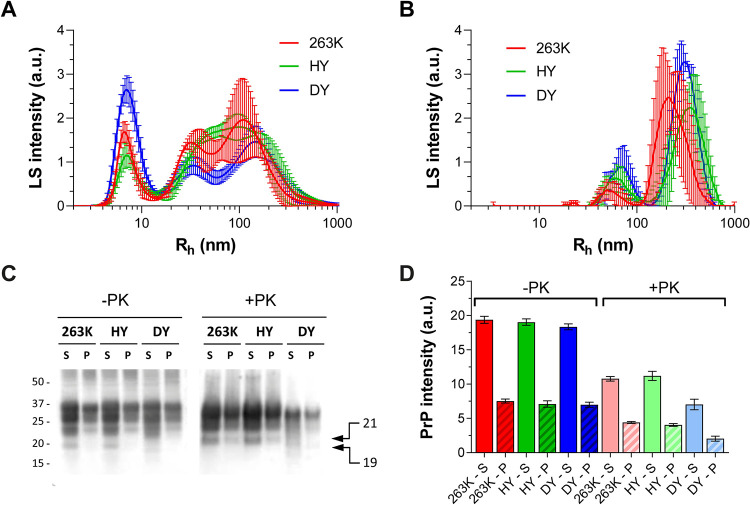
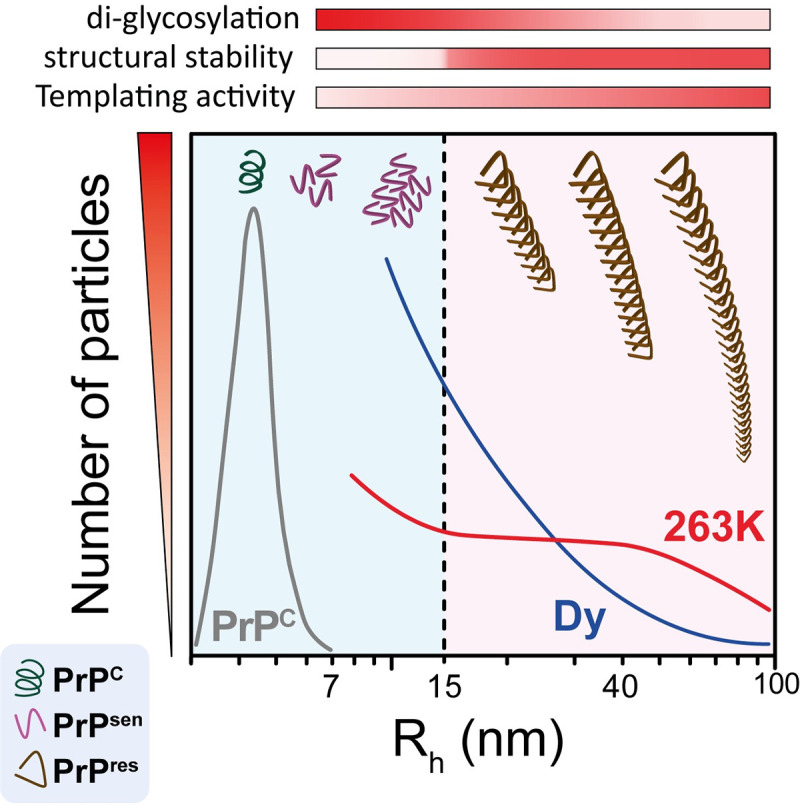
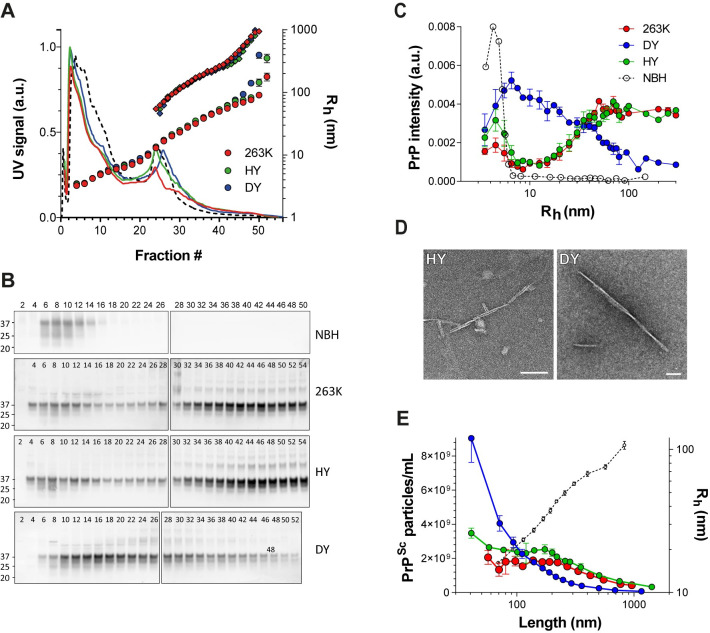
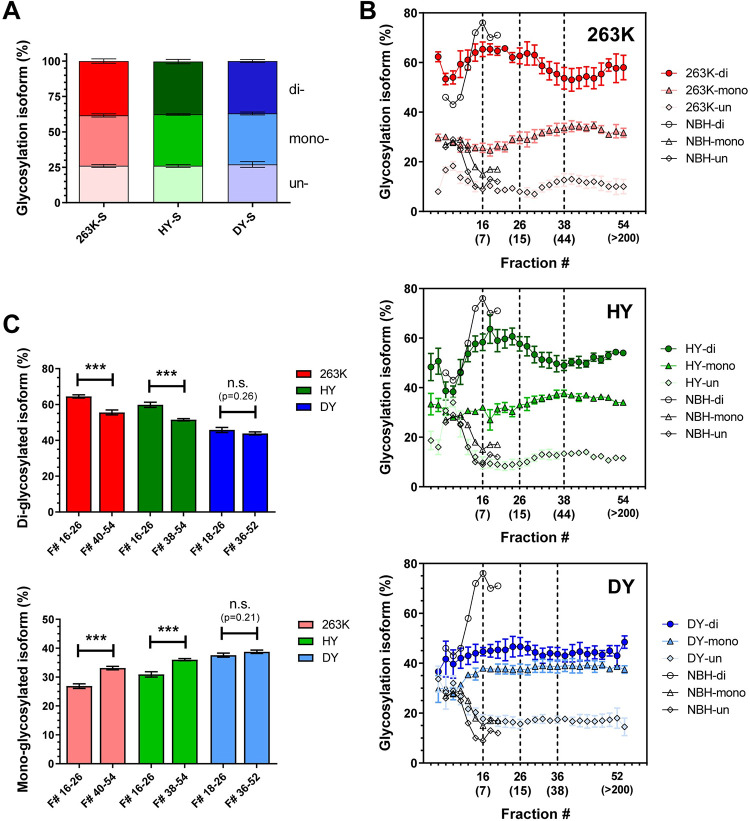
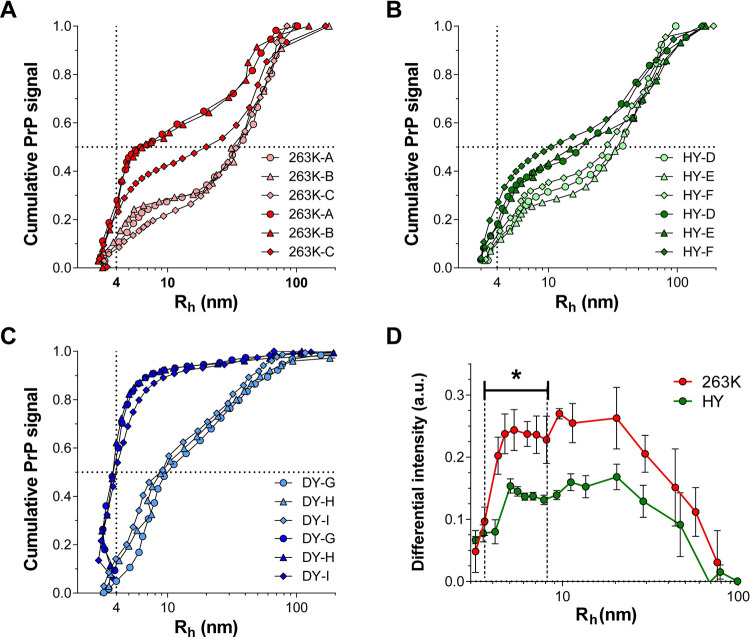
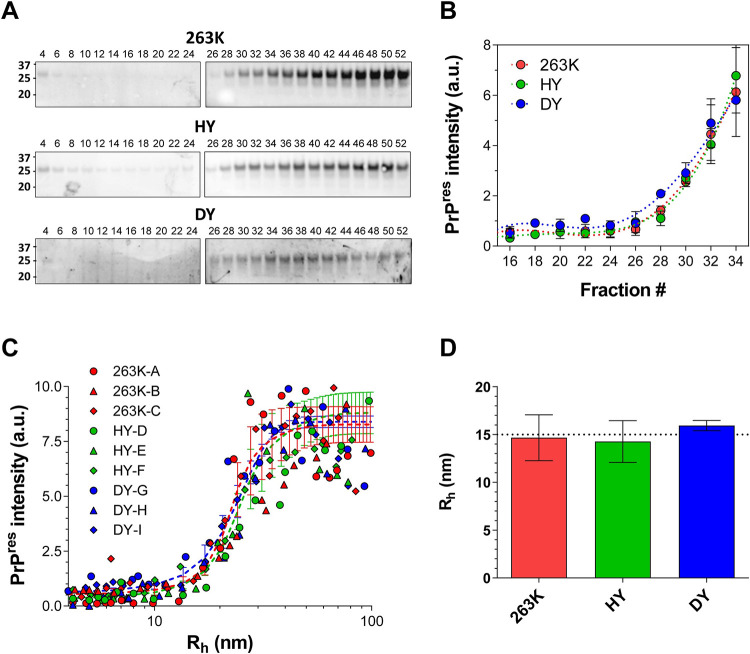
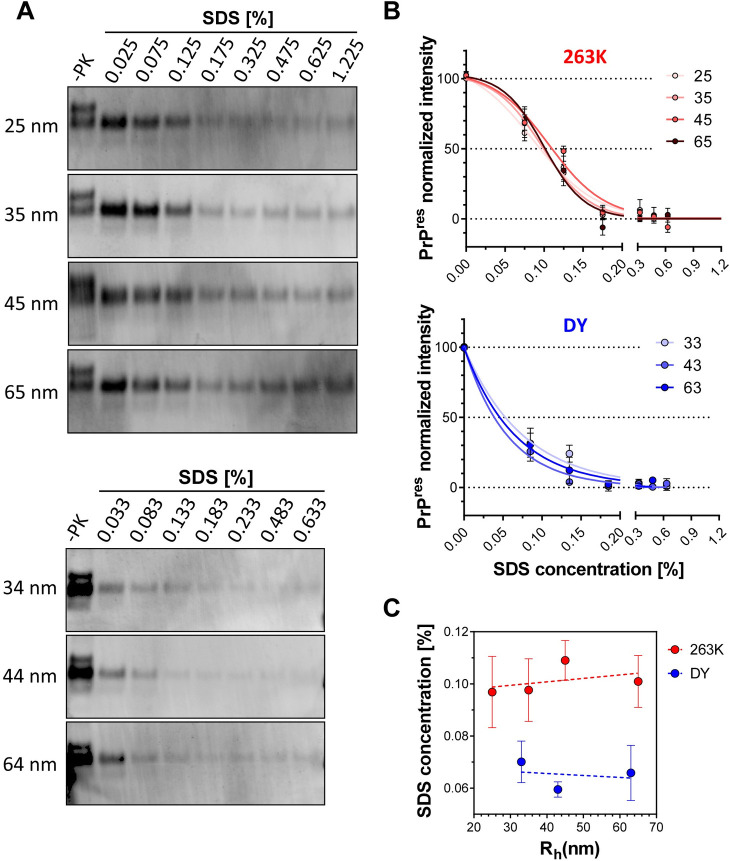
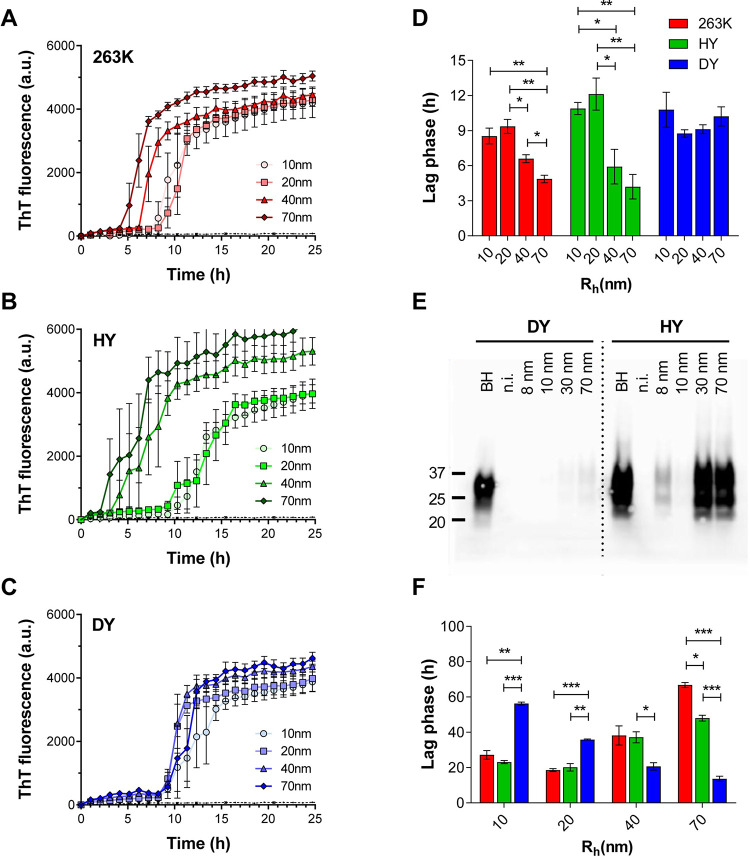
Prion diseases are transmissible neurodegenerative disorders that affect mammals, including humans. The central molecular event is the conversion of cellular prion glycoprotein, PrPC, into a plethora of assemblies, PrPSc, associated with disease. Distinct phenotypes of disease led to the concept of prion strains, which are associated with distinct PrPSc structures. However, the degree to which intra- and inter-strain PrPSc heterogeneity contributes to disease pathogenesis remains unclear. Addressing this question requires the precise isolation and characterization of all PrPSc subpopulations from the prion-infected brains. Until now, this has been challenging. We used asymmetric-flow field-flow fractionation (AF4) to isolate all PrPSc subpopulations from brains of hamsters infected with three prion strains: Hyper (HY) and 263K, which produce almost identical phenotypes, and Drowsy (DY), a strain with a distinct presentation. In-line dynamic and multi-angle light scattering (DLS/MALS) data provided accurate measurements of particle sizes and estimation of the shape and number of PrPSc particles. We found that each strain had a continuum of PrPSc assemblies, with strong correlation between PrPSc quaternary structure and phenotype. HY and 263K were enriched with large, protease-resistant PrPSc aggregates, whereas DY consisted primarily of smaller, more protease-sensitive aggregates. For all strains, a transition from protease-sensitive to protease-resistant PrPSc took place at a hydrodynamic radius (Rh) of 15 nm and was accompanied by a change in glycosylation and seeding activity. Our results show that the combination of AF4 with in-line MALS/DLS is a powerful tool for analyzing PrPSc subpopulations and demonstrate that while PrPSc quaternary structure is a major contributor to PrPSc structural heterogeneity, a fundamental change, likely in secondary/tertiary structure, prevents PrPSc particles from maintaining proteinase K resistance below an Rh of 15 nm, regardless of strain. This results in two biochemically distinctive subpopulations, the proportion, seeding activity, and stability of which correlate with prion strain phenotype.
朊病毒病是一种可传播的神经退行性疾病,影响哺乳动物,包括人类。中心分子事件是细胞朊病毒糖蛋白 PrPC 转化为大量与疾病相关的 PrPSc 组装体。不同疾病表型导致了朊病毒株的概念,它与不同的 PrPSc 结构有关。然而,不同的 PrPSc 异质性在多大程度上导致疾病发病机制仍不清楚。要解决这个问题,需要从感染朊病毒的大脑中精确分离和表征所有 PrPSc 亚群。到目前为止,这一直是具有挑战性的。我们使用不对称流场流分离 (AF4) 从感染三种朊病毒株的仓鼠大脑中分离所有 PrPSc 亚群:高传染性 (HY) 和 263K,它们产生几乎相同的表型,以及昏睡性 (DY),一种具有独特表现的毒株。在线动态和多角度光散射 (DLS/MALS) 数据提供了颗粒大小的准确测量和对 PrPSc 颗粒形状和数量的估计。我们发现,每个菌株都有一个连续的 PrPSc 组装体,PrPSc 四级结构与表型之间存在很强的相关性。HY 和 263K 富含大的、抗蛋白酶的 PrPSc 聚集体,而 DY 主要由较小的、更易被蛋白酶降解的聚集体组成。对于所有菌株,从蛋白酶敏感到抗蛋白酶的 PrPSc 转变发生在水动力半径 (Rh) 为 15nm 处,并伴随着糖基化和接种活性的变化。我们的结果表明,AF4 与在线 MALS/DLS 的结合是分析 PrPSc 亚群的有力工具,并表明尽管 PrPSc 四级结构是 PrPSc 结构异质性的主要贡献者,但根本变化,可能是二级/三级结构的变化,阻止 PrPSc 颗粒在 Rh 小于 15nm 时保持对蛋白酶 K 的抗性,无论菌株如何。这导致了两种具有不同生化特征的亚群,其比例、接种活性和稳定性与朊病毒株表型相关。