Cardiology Department, Stavanger University Hospital, PO 8400, 4068, Stavanger, Norway.
Department of Electrical Engineering and Computer Science, University of Stavanger, Stavanger, Norway.
J Int Soc Sports Nutr. 2021 Jun 28;18(1):51. doi: 10.1186/s12970-021-00437-1.
Dietary supplement use among recreational athletes is common, with the intention of reducing inflammation and improving recovery. We aimed to describe the relationship between omega-3 fatty acid supplement use and inflammation induced by strenuous exercise.
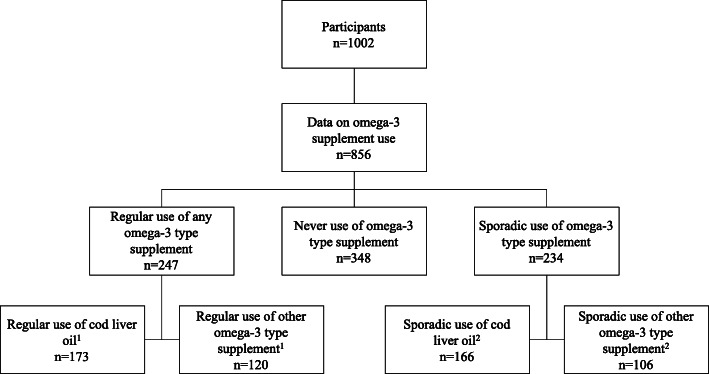
C-reactive protein (CRP) concentrations were measured in 1002 healthy recreational athletes before and 24 h after a 91-km bicycle race. The use of omega-3 fatty acid supplements was reported in 856 out of 1002 recreational athletes, and the association between supplement use and the exercise-induced CRP response was assessed.
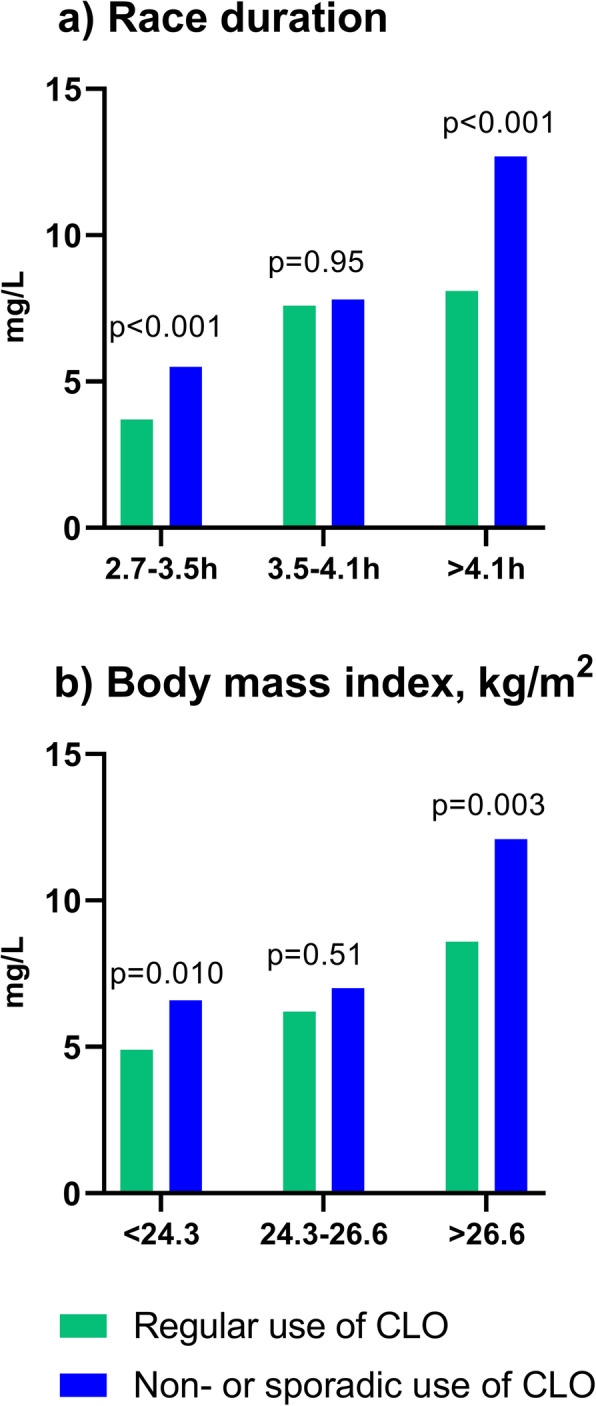
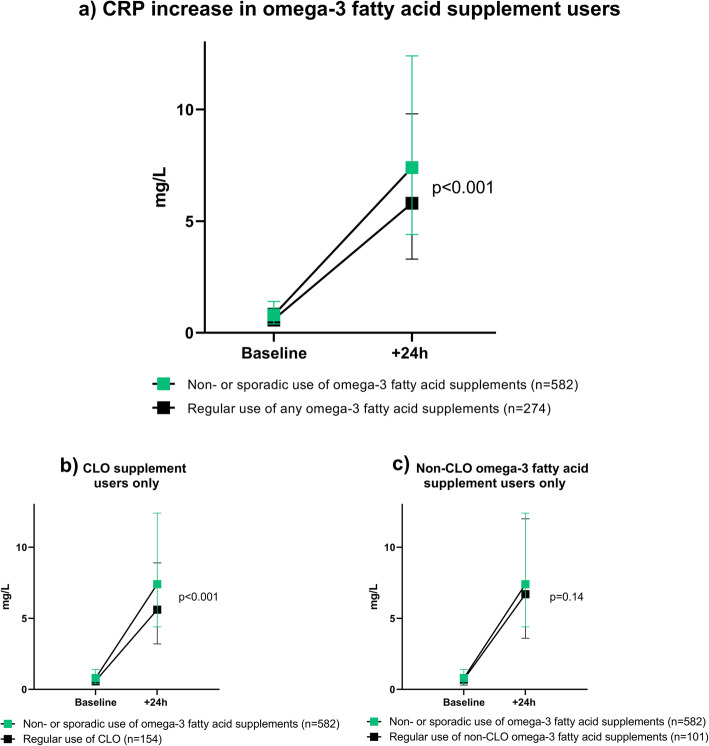
Two hundred seventy-four subjects reported regular use of omega-3 fatty acid supplements. One hundred seventy-three of these used cod liver oil (CLO). Regular users of omega-3 fatty acid supplements had significantly lower basal and exercise-induced CRP levels as compared to non-users (n = 348, p < 0.001). Compared to non-users, regular users had a 27% (95% confidence interval (CI): 14-40) reduction in Ln CRP response (unadjusted model, p < 0.001) and 16% (95% CI: 5-28, p = 0.006) reduction after adjusting for age, sex, race duration, body mass index, delta creatine kinase, MET hours per week, resting heart rate and higher education. CLO was the primary driver of this response with a 34% (95% CI: 19-49) reduction (unadjusted model, p < 0.001) compared to non-users. Corresponding numbers in the adjusted model were 24% (95% CI: 11-38, p < 0.001).
Basal CRP levels were reduced, and the exercise-induced CRP response was attenuated in healthy recreational cyclists who used omega-3 fatty acid supplements regularly. This effect was only present in regular users of CLO.
NCT02166216 , registered June 18, 2014 - Retrospectively registered.
在娱乐运动员中,使用膳食补充剂很常见,其目的是减少炎症并改善恢复。我们旨在描述ω-3 脂肪酸补充剂的使用与剧烈运动引起的炎症之间的关系。
在 1002 名健康的娱乐运动员进行 91 公里自行车赛后的 24 小时内,测量了 C 反应蛋白(CRP)浓度。在 1002 名娱乐运动员中有 856 名报告了 ω-3 脂肪酸补充剂的使用情况,并评估了补充剂的使用与运动引起的 CRP 反应之间的关系。
274 名受试者报告定期使用 ω-3 脂肪酸补充剂。其中 173 名使用鱼肝油(CLO)。与非使用者(n=348,p<0.001)相比,定期使用 ω-3 脂肪酸补充剂的人的基础和运动后 CRP 水平明显较低。与非使用者相比,未经调整模型中,常规使用者的 Ln CRP 反应降低了 27%(95%置信区间(CI):14-40)(p<0.001),调整年龄,性别,种族持续时间,体重指数,肌酸激酶差值,每周 MET 小时数,静息心率和更高的教育程度后,降低了 16%(95%CI:5-28,p=0.006)。CLO 是这种反应的主要驱动因素,与非使用者相比,降低了 34%(95%CI:19-49)(未调整模型,p<0.001)。调整模型中的相应数字为 24%(95%CI:11-38,p<0.001)。
在定期使用 ω-3 脂肪酸补充剂的健康娱乐自行车运动员中,基础 CRP 水平降低,运动引起的 CRP 反应减弱。这种作用仅在 CLO 的常规使用者中存在。
NCT02166216,于 2014 年 6 月 18 日注册-回顾性注册。