Department of Biotechnology, Delft University of Technology, Delft, The Netherlands.
Microbial Systems Technology Excellence Centre, University of Antwerp, Wilrijk, Belgium.
Nat Commun. 2021 Jun 28;12(1):3996. doi: 10.1038/s41467-021-24312-4.
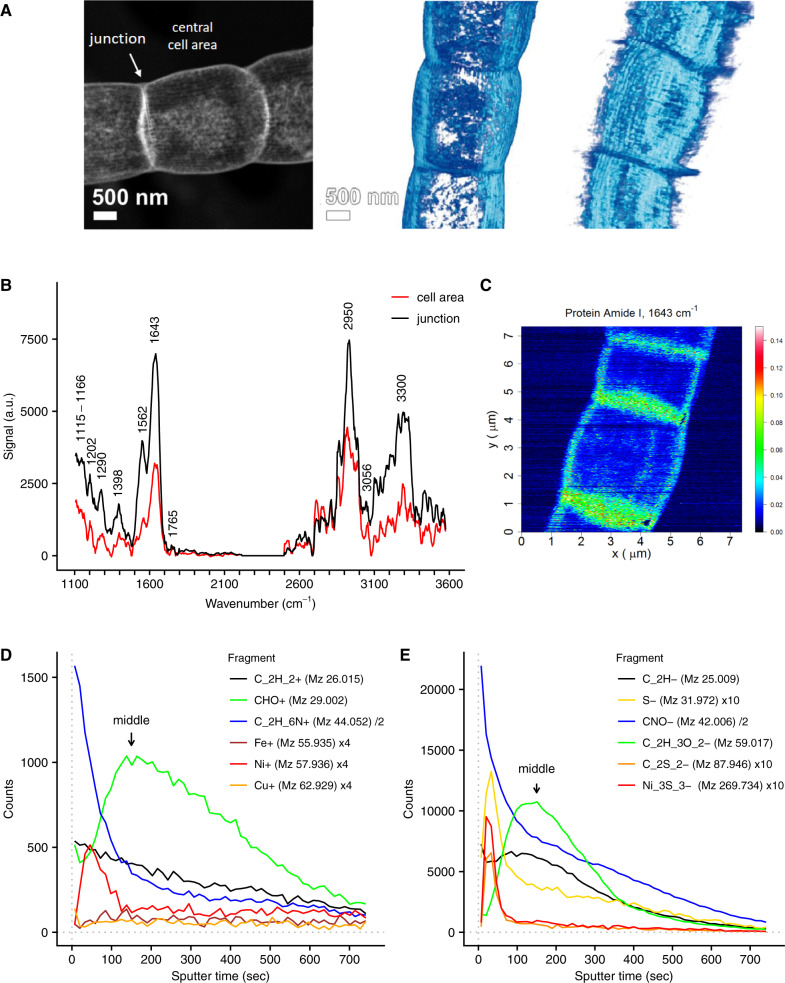
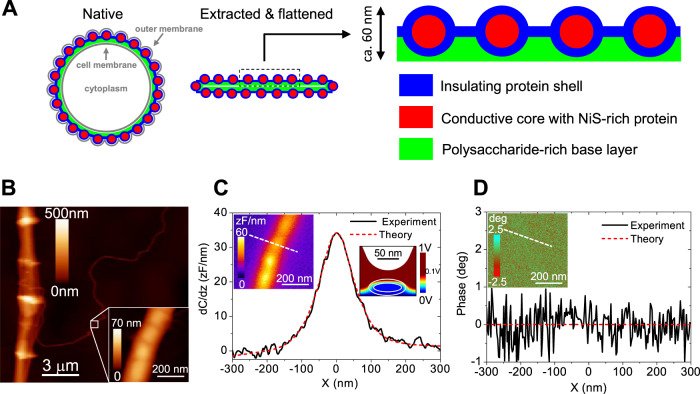
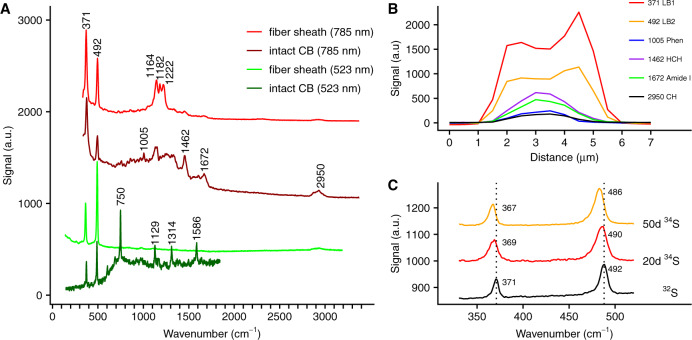
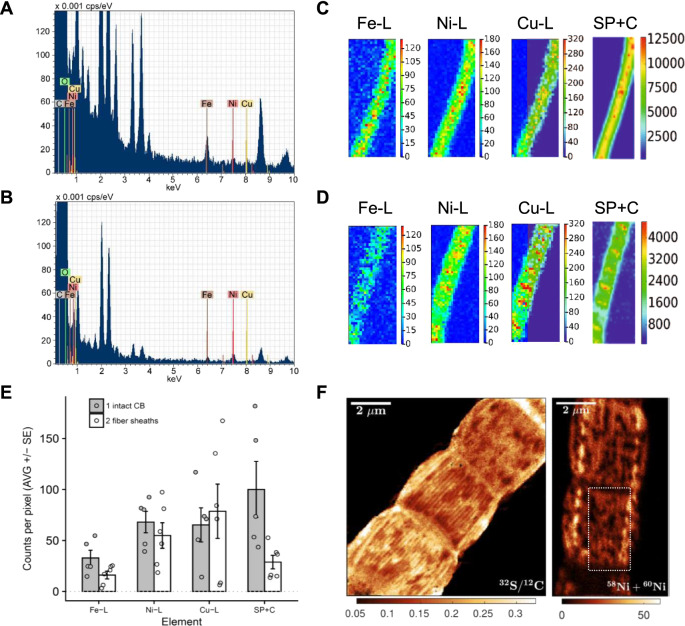
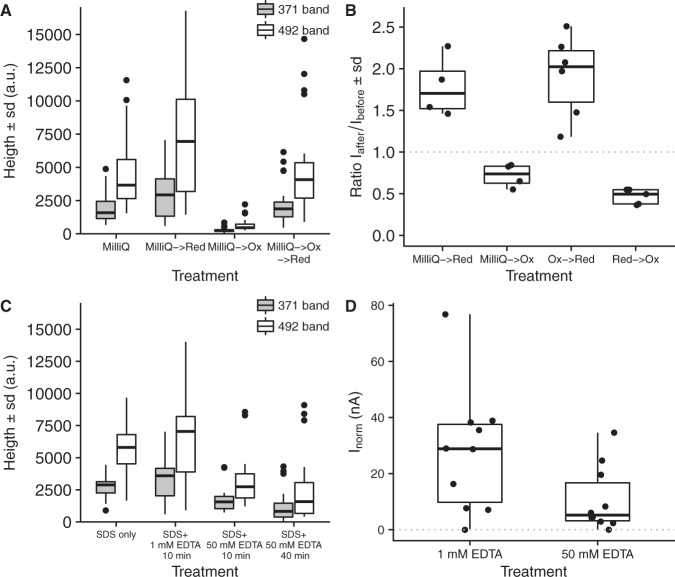
Filamentous cable bacteria display long-range electron transport, generating electrical currents over centimeter distances through a highly ordered network of fibers embedded in their cell envelope. The conductivity of these periplasmic wires is exceptionally high for a biological material, but their chemical structure and underlying electron transport mechanism remain unresolved. Here, we combine high-resolution microscopy, spectroscopy, and chemical imaging on individual cable bacterium filaments to demonstrate that the periplasmic wires consist of a conductive protein core surrounded by an insulating protein shell layer. The core proteins contain a sulfur-ligated nickel cofactor, and conductivity decreases when nickel is oxidized or selectively removed. The involvement of nickel as the active metal in biological conduction is remarkable, and suggests a hitherto unknown form of electron transport that enables efficient conduction in centimeter-long protein structures.
丝状电缆细菌展示了长程电子传递,通过其细胞包膜中嵌入的高度有序纤维网络,在厘米距离上产生电流。与生物材料相比,这种胞外丝的导电性非常高,但它们的化学结构和潜在的电子传递机制仍未解决。在这里,我们结合高分辨率显微镜、光谱和化学成像技术,对单个电缆细菌丝进行研究,证明胞外丝由一个导电蛋白核心和一个绝缘蛋白壳层组成。核心蛋白含有一个硫配位的镍辅因子,当镍被氧化或选择性去除时,导电性会降低。镍作为生物传导中的活性金属的参与是显著的,这表明存在一种未知的电子传递形式,使厘米长的蛋白质结构能够有效地进行传导。