Institute of Biomedicine and Translational Medicine, University of Tartu, Tartu, Estonia.
School of Medicine and Public Health University of Wisconsin-Madison, Madison, Wisconsin, USA.
Clin Transl Med. 2021 Jun;11(6):e427. doi: 10.1002/ctm2.427.
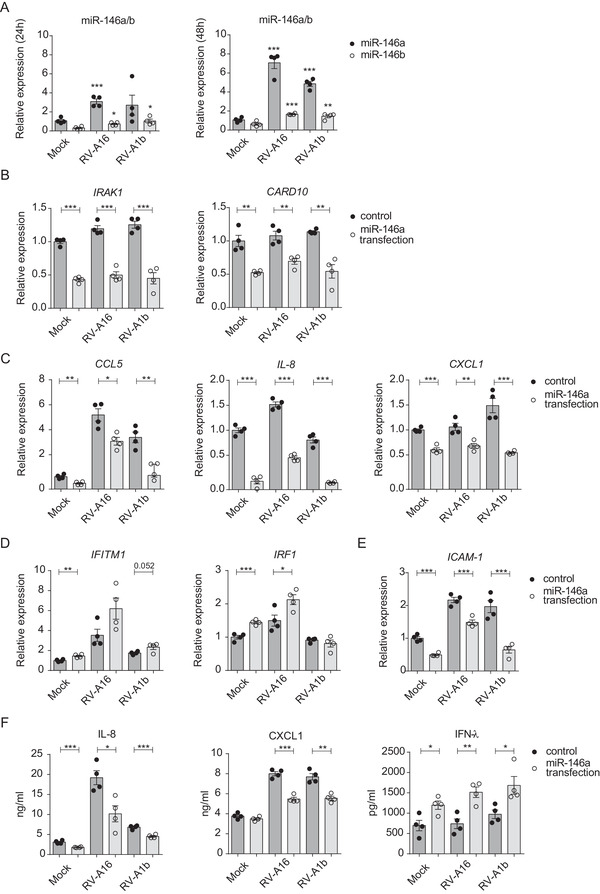
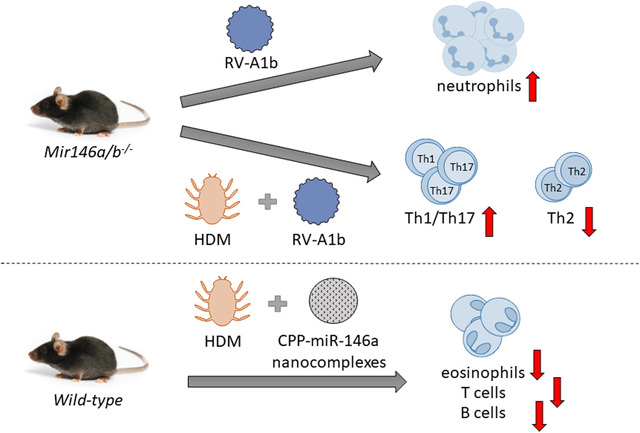
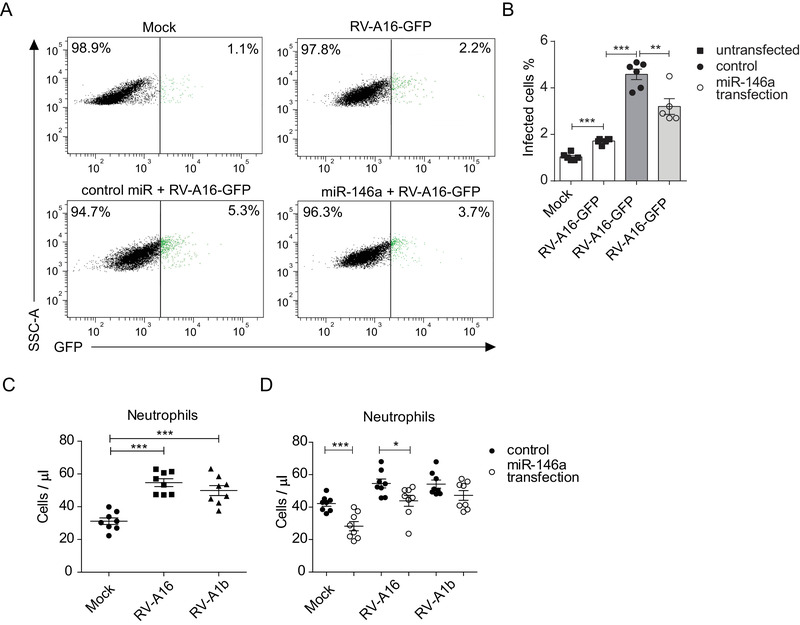
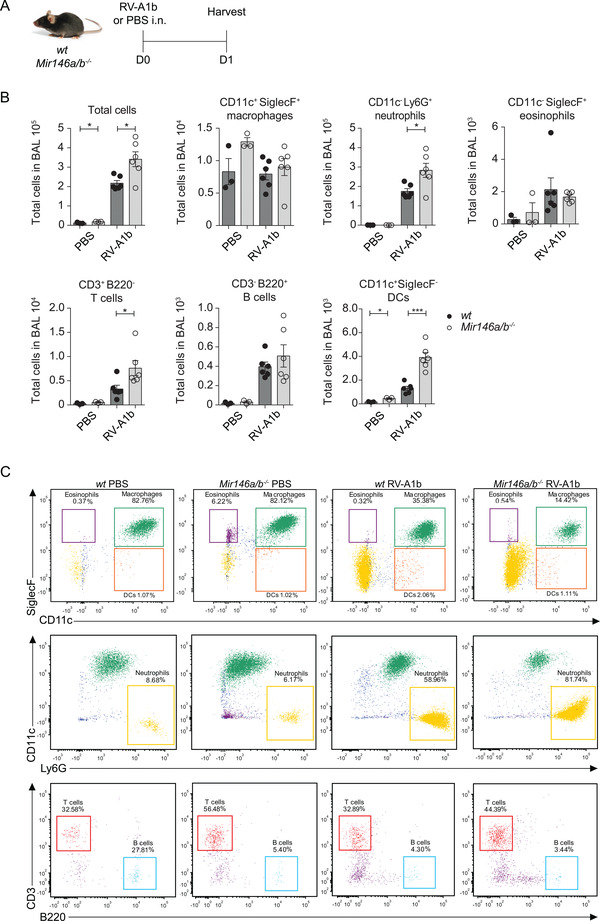
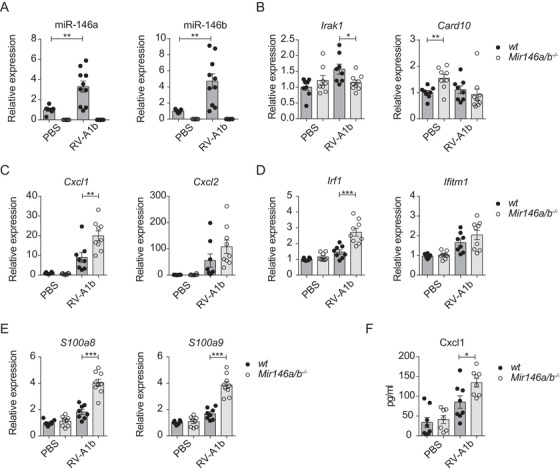
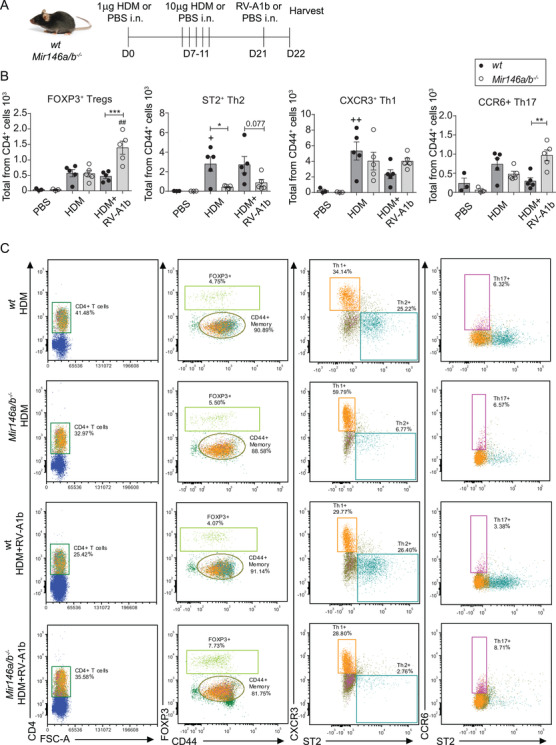
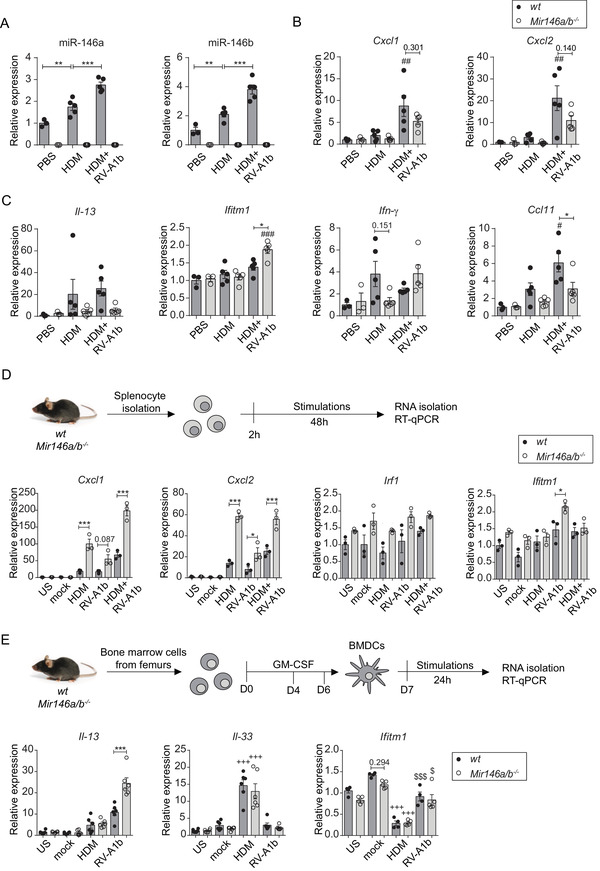
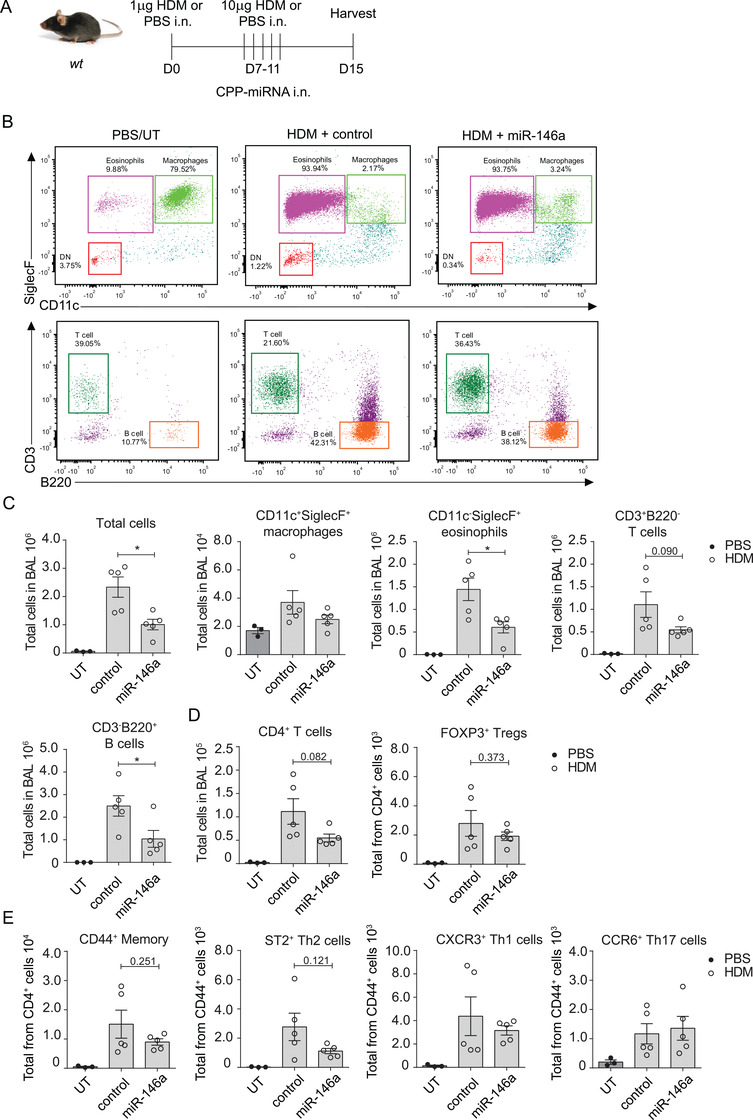
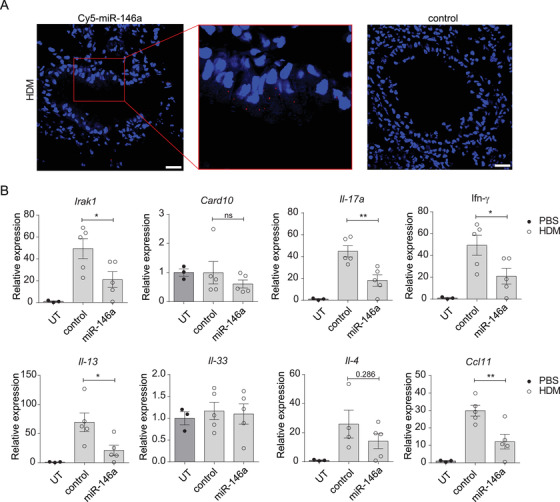
Rhinovirus (RV) infections are associated with asthma exacerbations. MicroRNA-146a and microRNA-146b (miR-146a/b) are anti-inflammatory miRNAs that suppress signaling through the nuclear factor kappa B (NF-κB) pathway and inhibit pro-inflammatory chemokine production in primary human bronchial epithelial cells (HBECs). In the current study, we aimed to explore whether miR-146a/b could regulate cellular responses to RVs in HBECs and airways during RV-induced asthma exacerbation. We demonstrated that expression of miR-146a/b and pro-inflammatory chemokines was increased in HBECs and mouse airways during RV infection. However, transfection with cell-penetrating peptide (CPP)-miR-146a nanocomplexes before infection with RV significantly reduced the expression of the pro-inflammatory chemokines CCL5, IL-8 and CXCL1, increased interferon-λ production, and attenuated infection with the green fluorescent protein (GFP)-expressing RV-A16 in HBECs. Concordantly, compared to wild-type (wt) mice, Mir146a/b mice exhibited more severe airway neutrophilia and increased T helper (Th)1 and Th17 cell infiltration in response to RV-A1b infection and a stronger Th17 response with a less prominent Th2 response in house dust mite extract (HDM)-induced allergic airway inflammation and RV-induced exacerbation models. Interestingly, intranasal administration of CPP-miR-146a nanocomplexes reduced HDM-induced allergic airway inflammation without a significant effect on the Th2/Th1/Th17 balance in wild-type mice. In conclusion, the overexpression of miR-146a has a strong anti-inflammatory effect on RV infection in HBECs and a mouse model of allergic airway inflammation, while a lack of miR-146a/b leads to attenuated type 2 cell responses in mouse models of allergic airway inflammation and RV-induced exacerbation of allergic airway inflammation. Furthermore, our data indicate that the application of CPP-miR-146a nanocomplexes has therapeutic potential for targeting airway inflammation.
鼻病毒 (RV) 感染与哮喘加重有关。微小 RNA-146a 和微小 RNA-146b(miR-146a/b)是抗炎性微小 RNA,可抑制核因子 kappa B(NF-κB)途径的信号传导,并抑制原发性人支气管上皮细胞 (HBEC) 中促炎趋化因子的产生。在本研究中,我们旨在探讨 miR-146a/b 是否可以调节 HBEC 中 RV 诱导的哮喘加重期间对 RV 的细胞反应和气道反应。我们证明,在 RV 感染期间,miR-146a/b 和促炎趋化因子在 HBEC 和小鼠气道中的表达增加。然而,在感染 RV 之前用穿透肽 (CPP)-miR-146a 纳米复合物转染可显著降低促炎趋化因子 CCL5、IL-8 和 CXCL1 的表达,增加干扰素-λ 的产生,并减轻 HBEC 中表达绿色荧光蛋白 (GFP) 的 RV-A16 的感染。与此一致,与野生型 (wt) 小鼠相比,Mir146a/b 小鼠在感染 RV-A1b 时表现出更严重的气道中性粒细胞增多和增加的 T 辅助 (Th)1 和 Th17 细胞浸润,并且在屋尘螨提取物 (HDM) 诱导的变应性气道炎症和 RV 诱导的加重模型中表现出更强的 Th17 反应和不太明显的 Th2 反应。有趣的是,鼻内给予 CPP-miR-146a 纳米复合物可减轻 HDM 诱导的变应性气道炎症,而对野生型小鼠的 Th2/Th1/Th17 平衡无显著影响。总之,miR-146a 的过表达对 HBEC 中的 RV 感染和变应性气道炎症的小鼠模型具有很强的抗炎作用,而 miR-146a/b 的缺乏导致变应性气道炎症的小鼠模型中 2 型细胞反应减弱和 RV 诱导的变应性气道炎症加重。此外,我们的数据表明,应用 CPP-miR-146a 纳米复合物具有针对气道炎症的治疗潜力。