Walter Reed National Military Medical Center, Bethesda, MD 20889-5600, USA.
Uniformed Services University of the Health Sciences, Bethesda, MD 20814, USA.
J Clin Endocrinol Metab. 2021 Oct 21;106(11):e4400-e4413. doi: 10.1210/clinem/dgab478.
Studies comparing levothyroxine (LT4) therapy with LT4 + liothyronine (LT3) or desiccated thyroid extract (DTE) did not detect consistent superiority of either treatment. Here, we investigated these therapies, focusing on the whole group of LT4-treated hypothyroid patients, while also exploring the most symptomatic patients.
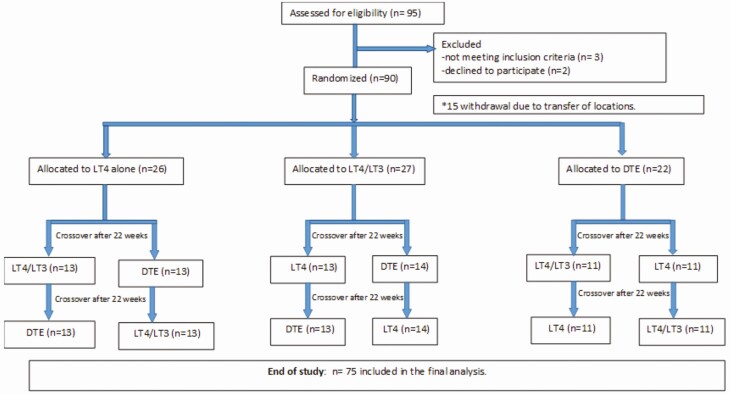
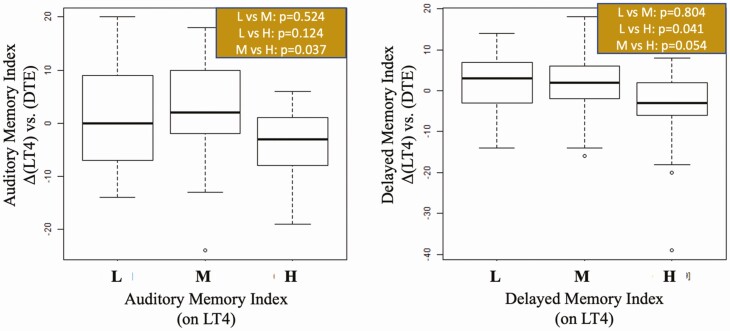
Prospective, randomized, double-blind, crossover study of 75 hypothyroid patients randomly allocated to 1 of 3 treatment arms, LT4, LT4 + LT3, and DTE, for 22 weeks. The primary outcomes were posttreatment scores on the 36-point thyroid symptom questionnaire (TSQ-36), 12-point quality of life general health questionnaire (GHQ-12), the Wechsler memory scale-version IV (VMS-IV), and the Beck Depression Inventory (BDI). Secondary endpoints included treatment preference, biochemical and metabolic parameters, etiology of hypothyroidism, and Thr92Ala-DIO2 gene polymorphism. Analyses were performed with a linear mixed model using subject as a random factor and group as a fixed effect.
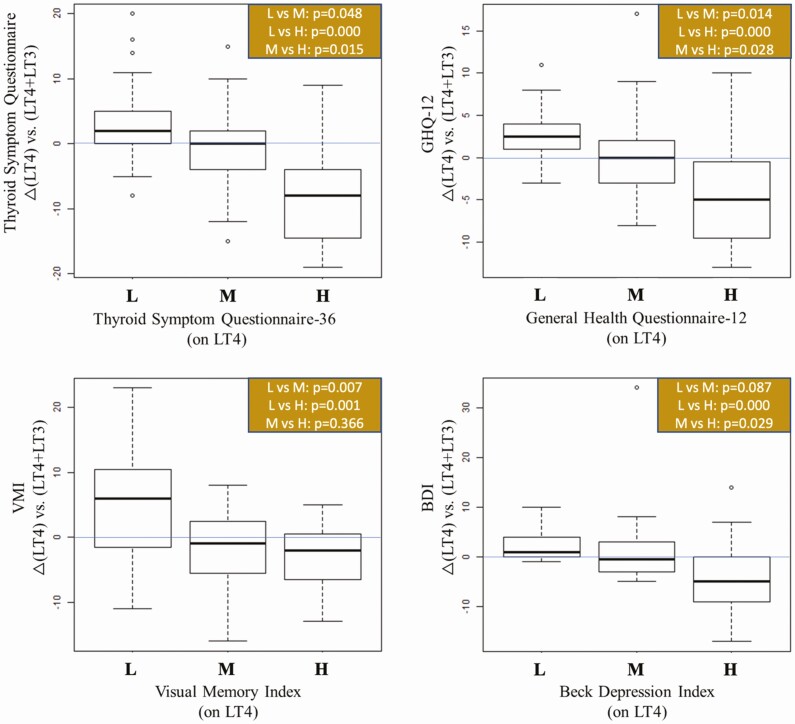
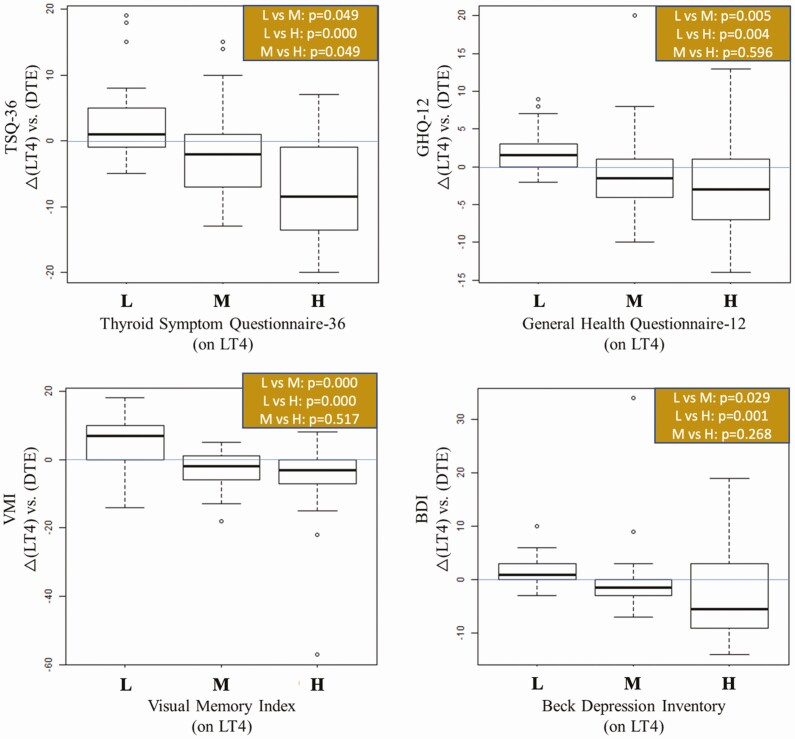
Serum TSH remained within reference range across all treatment arms. There were no differences for primary and secondary outcomes, except for a minor increase in heart rate caused by DTE. Treatment preference was not different and there were no interferences of the etiology of hypothyroidism or Thr92Ala-DIO2 gene polymorphism in the outcomes. Subgroup analyses of the 1/3 most symptomatic patients on LT4 revealed strong preference for treatment containing T3, which improved performance on TSQ-36, GHQ-12, BDI, and visual memory index (VMS-IV component).
As a group, outcomes were similar among hypothyroid patients taking DTE vs LT4 + T3 vs LT4. However, those patients that were most symptomatic on LT4 preferred and responded positively to therapy with LT4 + LT3 or DTE.
比较左甲状腺素(LT4)治疗与 LT4+三碘甲状腺原氨酸(LT3)或甲状腺干制剂(DTE)的研究并未发现任何一种治疗方法具有明显优势。在此,我们研究了这些治疗方法,重点关注 LT4 治疗的甲状腺功能减退症患者群体,同时也对症状最明显的患者进行了研究。
对 75 名甲状腺功能减退症患者进行前瞻性、随机、双盲、交叉研究,将患者随机分为 3 组治疗,分别为 LT4 组、LT4+LT3 组和 DTE 组,每组治疗 22 周。主要结局指标为治疗后 36 项甲状腺症状问卷(TSQ-36)、12 项一般健康问卷(GHQ-12)、威斯康星卡片分类测试第四版(VMS-IV)和贝克抑郁量表(BDI)的评分。次要终点包括治疗偏好、生化和代谢参数、甲状腺功能减退症的病因以及 Thr92Ala-DIO2 基因多态性。使用线性混合模型分析,采用受试者为随机因素,组为固定效应。
所有治疗组的血清 TSH 均保持在参考范围内。除 DTE 引起的心率轻微增加外,主要和次要结局均无差异。治疗偏好无差异,甲状腺功能减退症的病因或 Thr92Ala-DIO2 基因多态性对结果无干扰。在 LT4 治疗的 1/3 最症状患者亚组分析中,发现含有 T3 的治疗方法具有强烈的偏好,可改善 TSQ-36、GHQ-12、BDI 和视觉记忆指数(VMS-IV 成分)的评分。
作为一个整体,接受 DTE 治疗的甲状腺功能减退症患者与接受 LT4+T3 或 LT4 治疗的患者相比,结局相似。然而,那些在 LT4 治疗时症状最明显的患者对 LT4+LT3 或 DTE 治疗有偏好,并对其有积极的反应。