Zhang Xiangxue, Nie Juan, Cheng Changxiu, Xu Chengdong, Xu Xiaojun, Yan Bin
Key Laboratory of Environmental Change and Natural Disaster, Ministry of Education, Beijing Normal University, Beijing, 100875, China.
State Key Laboratory of Resources and Environmental Information System, Institute of Geographic Sciences and Natural Resources Research, Chinese Academy of Sciences, Beijing, 100101, China.
BMC Public Health. 2021 Jun 29;21(1):1260. doi: 10.1186/s12889-021-11281-y.
Typhoons greatly threaten human life and property, especially in China. Therefore, it is important to make effective policy decisions to minimize losses associated with typhoons.
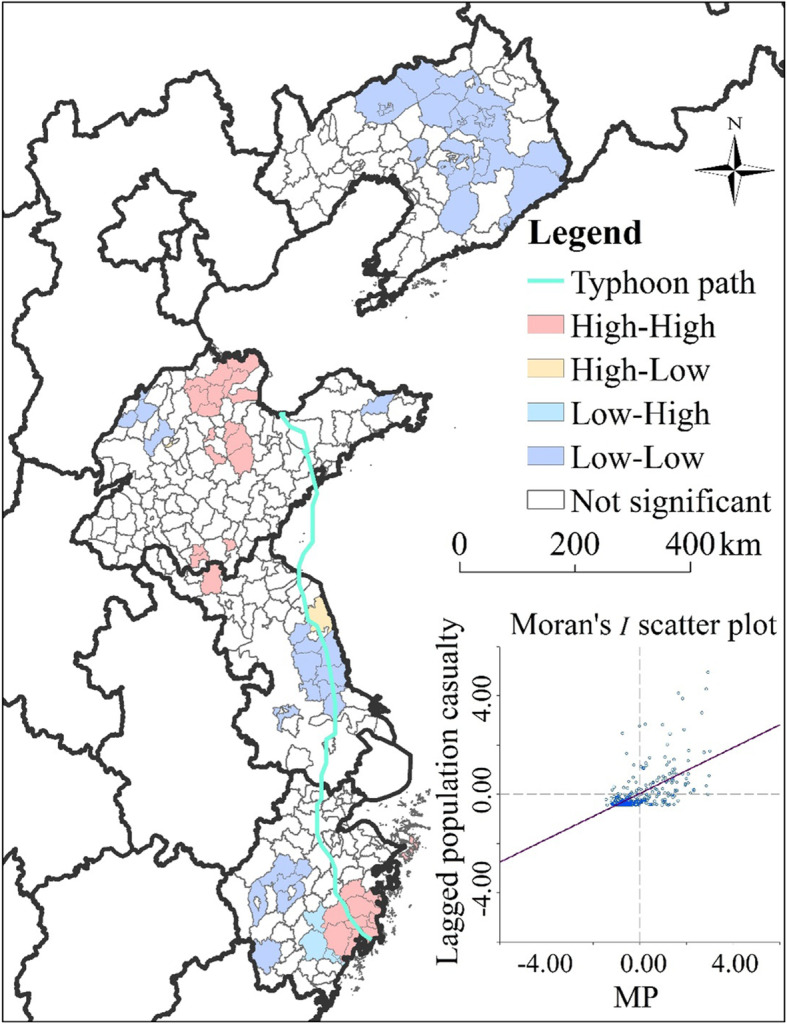
In this study, the GeoDetector method was used to quantify the determinant powers of natural and socioeconomic factors, and their interactions, on the population casualty rate of super typhoon Lekima. The local indicator of spatial association (LISA) method was followed to explore the spatial pattern of the population casualty rate under the influence of the identified dominant factors.
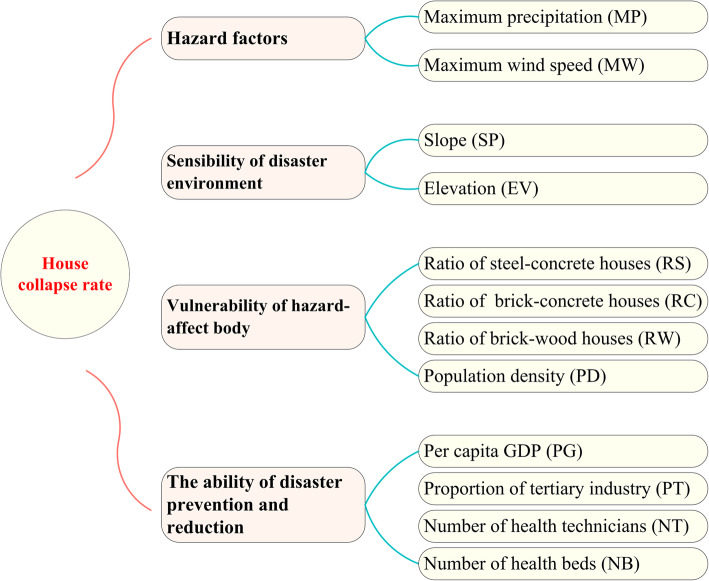
Both natural and socioeconomic factors were found to have significantly impacted the population casualty rate due to super typhoon Lekima. Among the selected factors, maximum precipitation was dominant factor (q = 0.56), followed by maximum wind speed (q = 0.45). In addition, number of health technicians (q = 0.35) and number of health beds (q = 0.27) have a strong influence on the population casualty rate. Among the interactive effects of 12 influencing factors, the combined effects of maximum precipitation and ratio of brick-wood houses, the maximum precipitation and ratio of steel-concrete houses, maximum precipitation and number of health technicians were highest (q = 0.72). Furthermore, high-risk areas with very high casualty rates were concentrated in the southeastern part of Zhejiang and northern Shandong Provinces, while lower-risk areas were mainly distributed in northern Liaoning and eastern Jiangsu provinces.
These results contribute to the development of more specific policies aimed at safety and successful property protection according to the regional differences during typhoons.
台风对人类生命和财产构成巨大威胁,在中国尤为如此。因此,做出有效的政策决策以尽量减少与台风相关的损失非常重要。
在本研究中,运用地理探测器方法量化自然和社会经济因素及其相互作用对超强台风利奇马造成的人口伤亡率的决定力。随后采用局部空间自相关(LISA)方法探究在已识别的主导因素影响下人口伤亡率的空间格局。
发现自然和社会经济因素均对超强台风利奇马造成的人口伤亡率有显著影响。在所选因素中,最大降水量是主导因素(q = 0.56),其次是最大风速(q = 0.45)。此外,卫生技术人员数量(q = 0.35)和卫生床位数(q = 0.27)对人口伤亡率有很大影响。在12个影响因素的交互作用中,最大降水量与砖木房屋比例、最大降水量与钢筋混凝土房屋比例、最大降水量与卫生技术人员数量的组合效应最高(q = 0.72)。此外,伤亡率极高的高风险地区集中在浙江东南部和山东北部,而低风险地区主要分布在辽宁北部和江苏东部。
这些结果有助于制定更具针对性的政策,以便在台风期间根据区域差异实现安全和成功的财产保护。