Masaebi Fatemeh, Salehi Masoud, Kazemi Maryam, Vahabi Nasim, Azizmohammad Looha Mehdi, Zayeri Farid
Department of Biostatistics, School of Allied Medical Sciences, Shahid Beheshti University of Medical Sciences, Tehran, Iran.
Health Management and Economics Research Center and Department of Biostatistics, School of Public Health, Iran University of Medical Sciences, Tehran, Iran.
BMC Public Health. 2021 Jun 29;21(1):1268. doi: 10.1186/s12889-021-11348-w.
Cardiovascular diseases (CVDs) are the number one cause of global mortality representing about one third of all deaths across the world. The objective of the present study was to model the global trend in disability-adjusted life years (DALY) and its components due to CVD over the past three decades. We also aimed to evaluate the longitudinal relationship between CVD DALY and Human Development Index (HDI) in this period of time.
The age-standardized rates of years lost due to disability (YLD), years of life lost (YLL) and DALY were extracted for cardiovascular diseases from the Global Burden of Disease (GBD) Study 2019 in years 1990 to 2019. Additionally, the United Nations Development Programme (UNDP) database was used to retrieve HDI values for all world countries at the same period time. The trend analysis was performed using the joinpoint regression model.
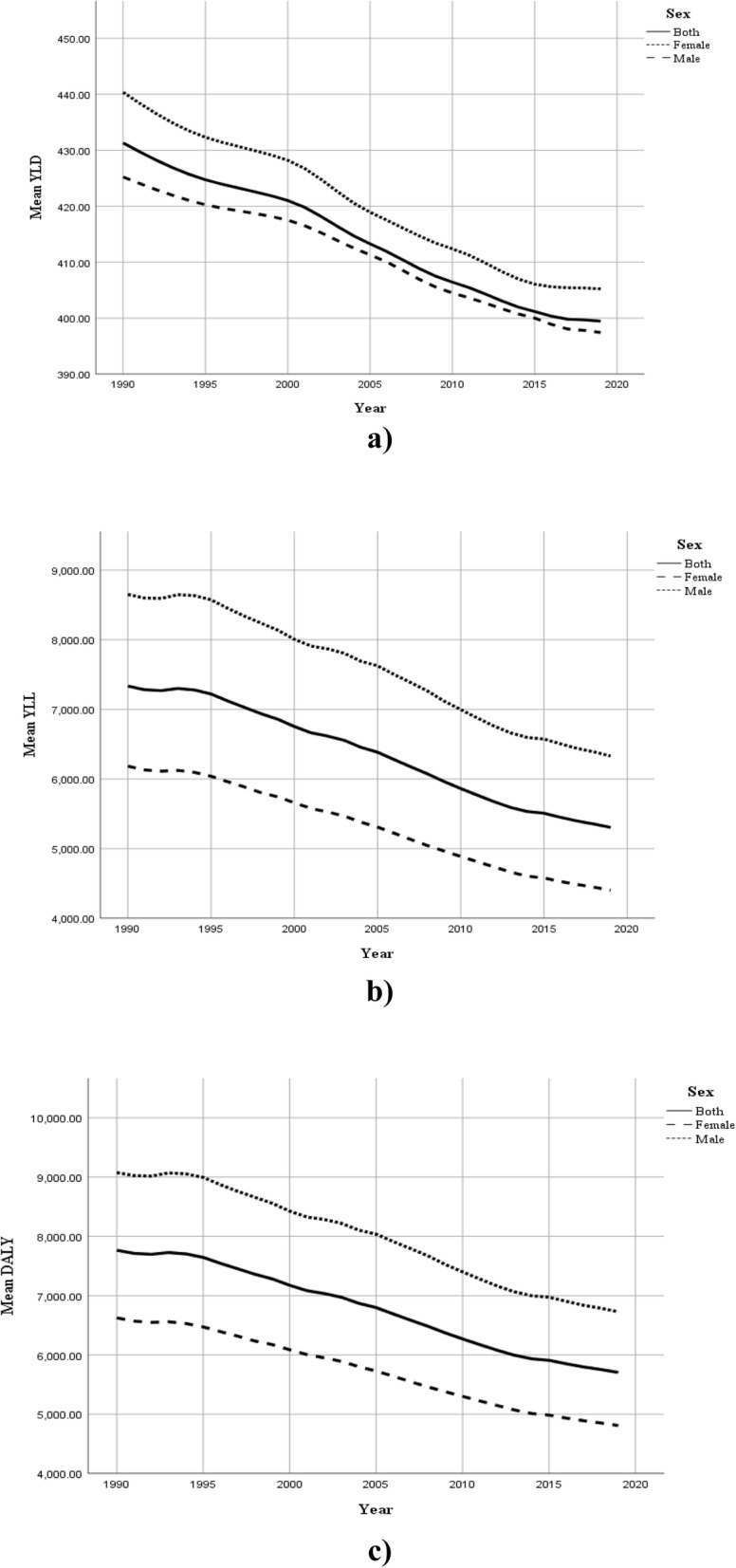
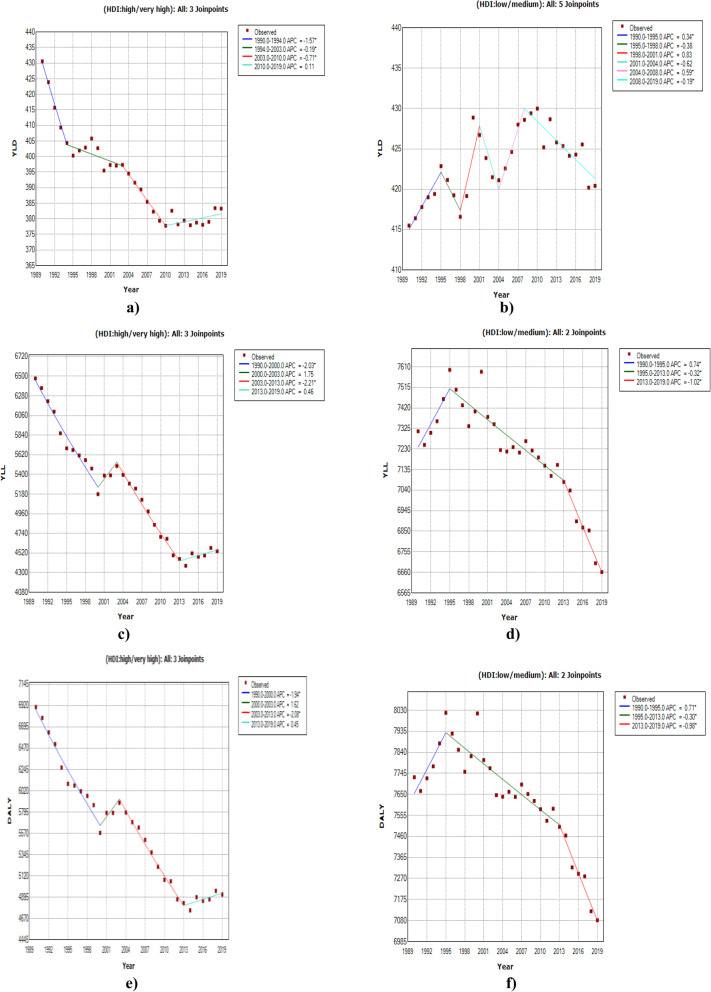
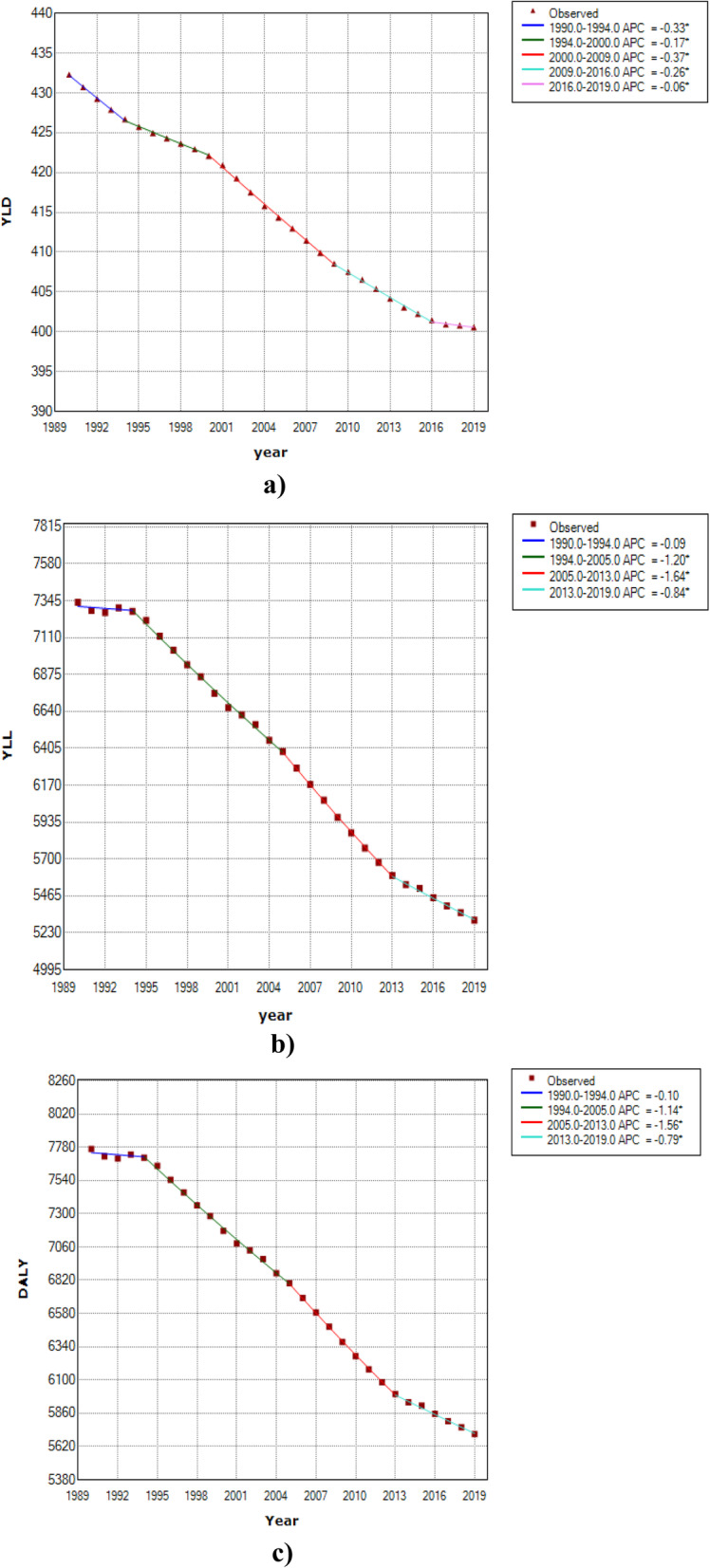
The obtained revealed a significant downward trend for DALY and its components with the average annual percent change of - 1.0, - 0.3 and - 1.1 per 100,000 population, respectively for DALY, YLD and YLL. We also found that countries with high/very high levels of HDI have remarkably experienced steeper declining slope of trend than those in lower levels of HDI over the study period.
Although the observed decreasing trend of CVD burden is a hopeful message for all world countries, the considerable gap in slope of trend between richer and poorer parts of the world is a serious alarm for health policy makers. Regarding this, there is an urgent need to put more efforts on implementing preventive programs, improving the level of patients' care and providing efficient treatment, especially in regions with lower levels of HDI.
心血管疾病(CVDs)是全球死亡的首要原因,约占全球总死亡人数的三分之一。本研究的目的是模拟过去三十年中因心血管疾病导致的伤残调整生命年(DALY)及其组成部分的全球趋势。我们还旨在评估这段时间内心血管疾病DALY与人类发展指数(HDI)之间的纵向关系。
从《2019年全球疾病负担(GBD)研究》中提取1990年至2019年心血管疾病导致的残疾损失年率(YLD)、生命损失年数(YLL)和DALY的年龄标准化率。此外,利用联合国开发计划署(UNDP)数据库检索同期所有世界国家的HDI值。使用连接点回归模型进行趋势分析。
结果显示,DALY及其组成部分呈显著下降趋势,每10万人口中DALY、YLD和YLL的平均年变化率分别为-1.0、-0.3和-1.1。我们还发现,在研究期间,HDI水平高/非常高的国家的趋势下降斜率明显比HDI水平低的国家更陡。
尽管观察到的心血管疾病负担下降趋势对所有世界国家来说是一个充满希望的信息,但世界贫富地区之间趋势斜率的巨大差距对卫生政策制定者来说是一个严重警报。鉴于此,迫切需要加大力度实施预防计划、提高患者护理水平并提供有效治疗,特别是在HDI水平较低的地区。