Department of Clinical Medicine, Zhongshan School of Medicine, Sun Yat-sen University, Guangzhou, Guangdong, 510080, People's Republic of China.
Department of Parasitology, Zhongshan School of Medicine, Sun Yat-sen University, Guangzhou, Guangdong, 510080, People's Republic of China.
Drug Des Devel Ther. 2021 Jun 22;15:2747-2767. doi: 10.2147/DDDT.S308973. eCollection 2021.
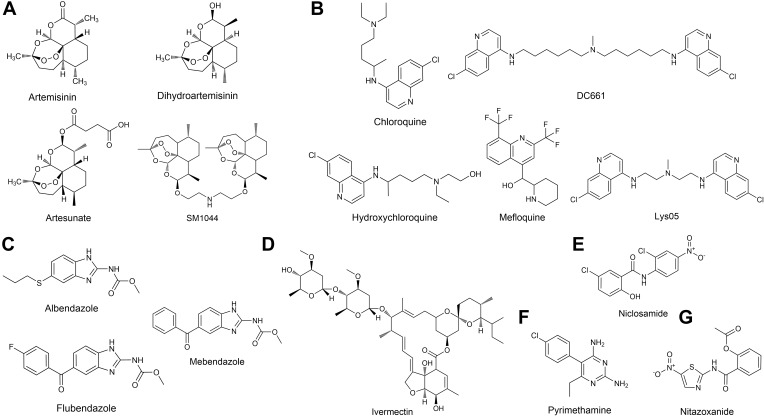
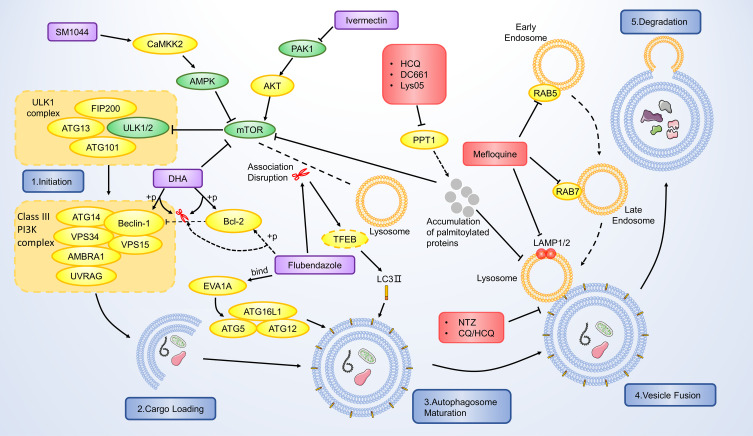
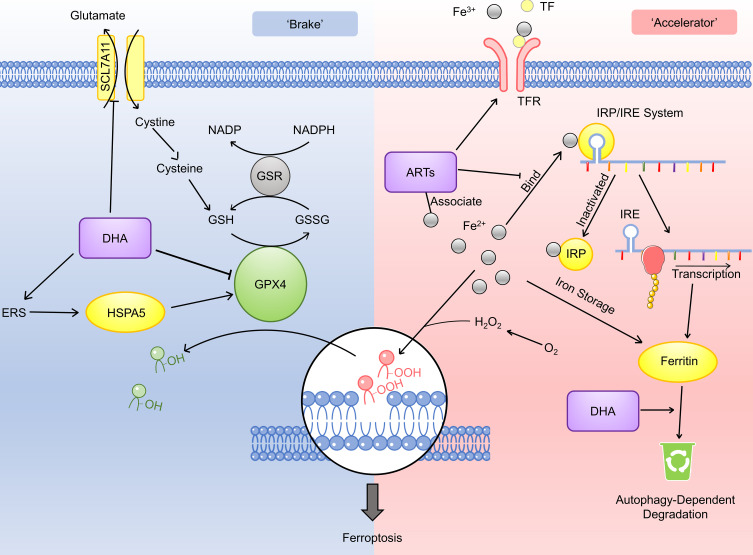
Drug repurposing is a feasible strategy in developing novel medications. Regarding the cancer field, scientists are continuously making efforts to redirect conventional drugs into cancer treatment. This approach aims at exploring new applications in the existing agents. Antiparasitic medications, including artemisinin derivatives (ARTs), quinine-related compounds, niclosamide, ivermectin, albendazole derivatives, nitazoxanide and pyrimethamine, have been deeply investigated and widely applied in treating various parasitic diseases for a long time. Generally, their pharmacokinetic and pharmacodynamic properties are well understood, while the side effects are roughly acceptable. Scientists noticed that some of these agents have anticancer potentials and explored the underlying mechanisms to achieve drug repurposing. Recent studies show that these agents inhibit cancer progression via multiple interesting ways, inducing ferroptosis induction, autophagy regulation, mitochondrial disturbance, immunoregulation, and metabolic disruption. In this review, we summarize the recent advancement in uncovering antiparasitic drugs' anticancer properties from the perspective of their pharmacological targets. Instead of paying attention to the previously discovered mechanisms, we focus more on newly emerging ones that are worth noticing. While most investigations are focusing on the mechanisms of their antiparasitic effect, more in vivo exploration in clinical trials in the future is necessary. Moreover, we also paid attention to what limits the clinical application of these agents. For some of these agents like ARTs and niclosamide, drug modification, novel delivery system invention, or drug combination are strongly recommended for future exploration.
药物重定位是开发新型药物的可行策略。在癌症领域,科学家们一直在努力将传统药物重新用于癌症治疗。这种方法旨在探索现有药物的新应用。抗寄生虫药物,包括青蒿素衍生物(ARTs)、奎宁相关化合物、硝氯酚、伊维菌素、阿苯达唑衍生物、硝唑尼特和乙胺嘧啶,长期以来一直被深入研究和广泛用于治疗各种寄生虫病。一般来说,它们的药代动力学和药效学特性已经得到很好的理解,而副作用也大致可以接受。科学家们注意到,这些药物中的一些具有抗癌潜力,并探索了潜在的机制来实现药物重定位。最近的研究表明,这些药物通过多种有趣的方式抑制癌症进展,诱导铁死亡诱导、自噬调节、线粒体紊乱、免疫调节和代谢破坏。在这篇综述中,我们从药理学靶点的角度总结了最近对抗寄生虫药物抗癌特性的研究进展。我们不仅关注以前发现的机制,还更关注新出现的值得关注的机制。虽然大多数研究都集中在它们的抗寄生虫作用机制上,但未来在临床试验中进行更多的体内探索是必要的。此外,我们还关注了这些药物临床应用的限制因素。对于某些药物,如 ARTs 和硝氯酚,强烈建议在未来进行药物修饰、新型给药系统发明或药物联合治疗等方面的探索。