Department of Bioengineering, University of Pennsylvania, Philadelphia, Pennsylvania 19104, United States.
Gene Therapy Program, Perelman School of Medicine, University of Pennsylvania, Philadelphia, Pennsylvania 19104, United States.
Nano Lett. 2021 Jul 14;21(13):5671-5680. doi: 10.1021/acs.nanolett.1c01353. Epub 2021 Jun 30.
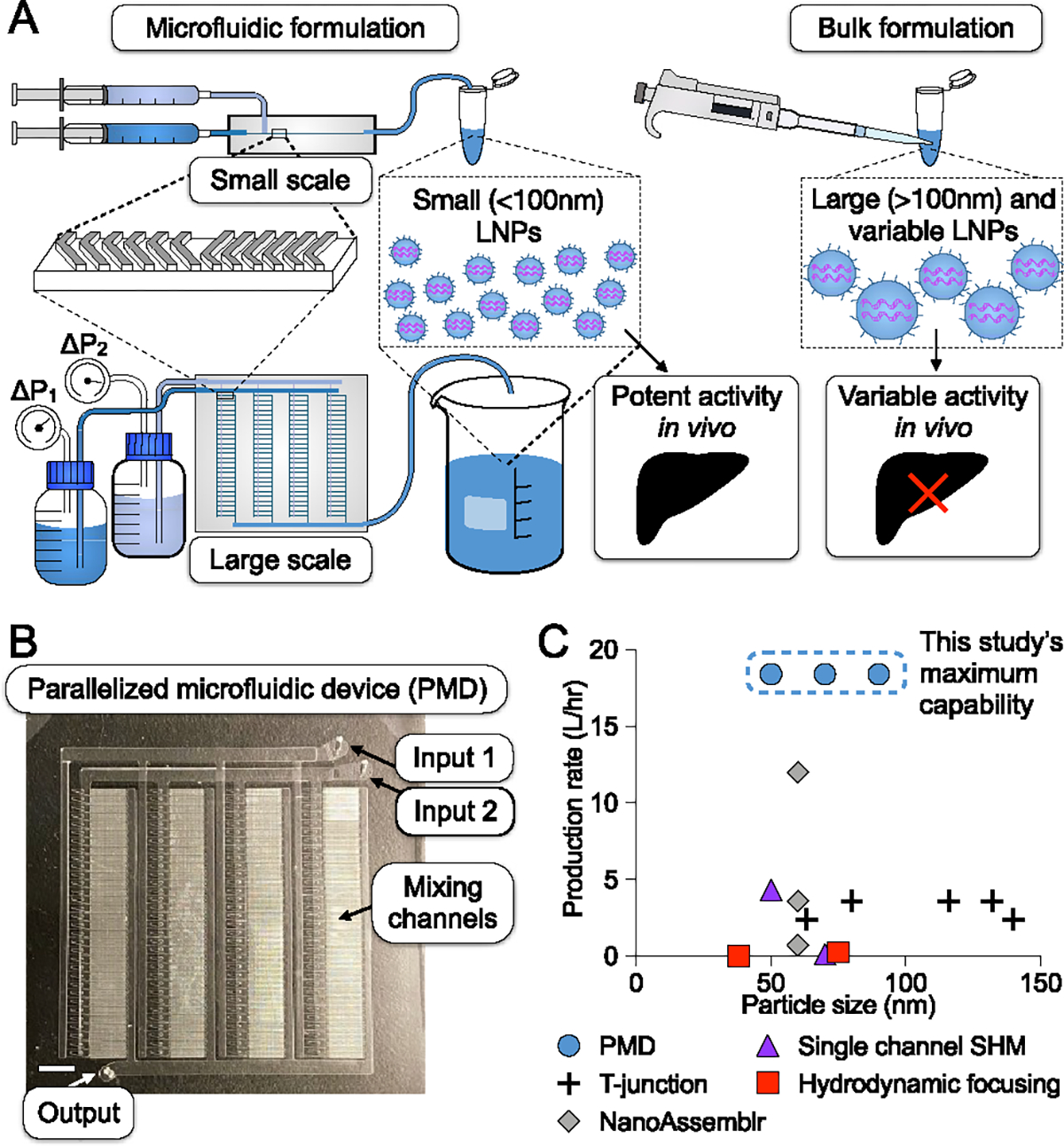
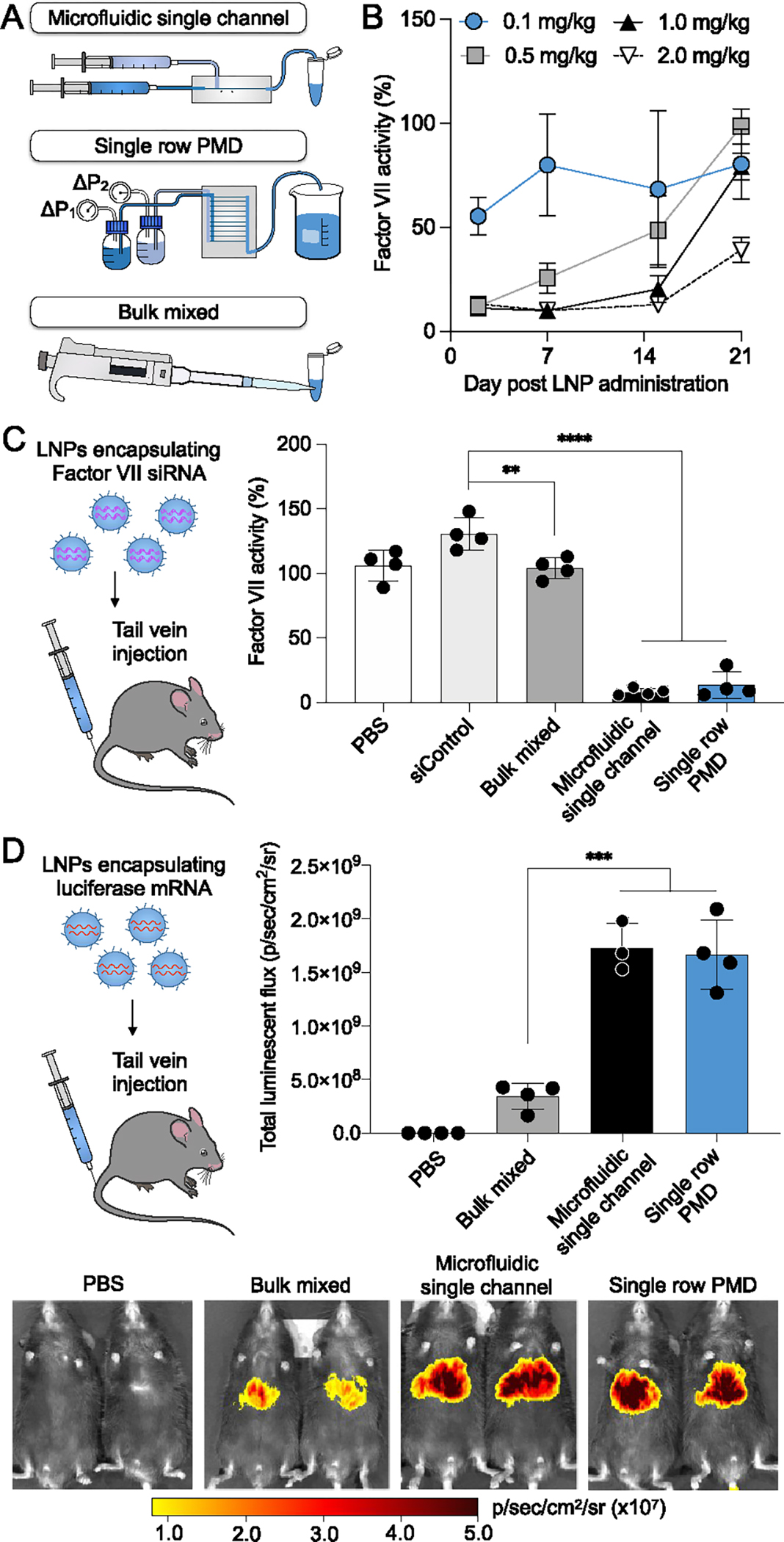
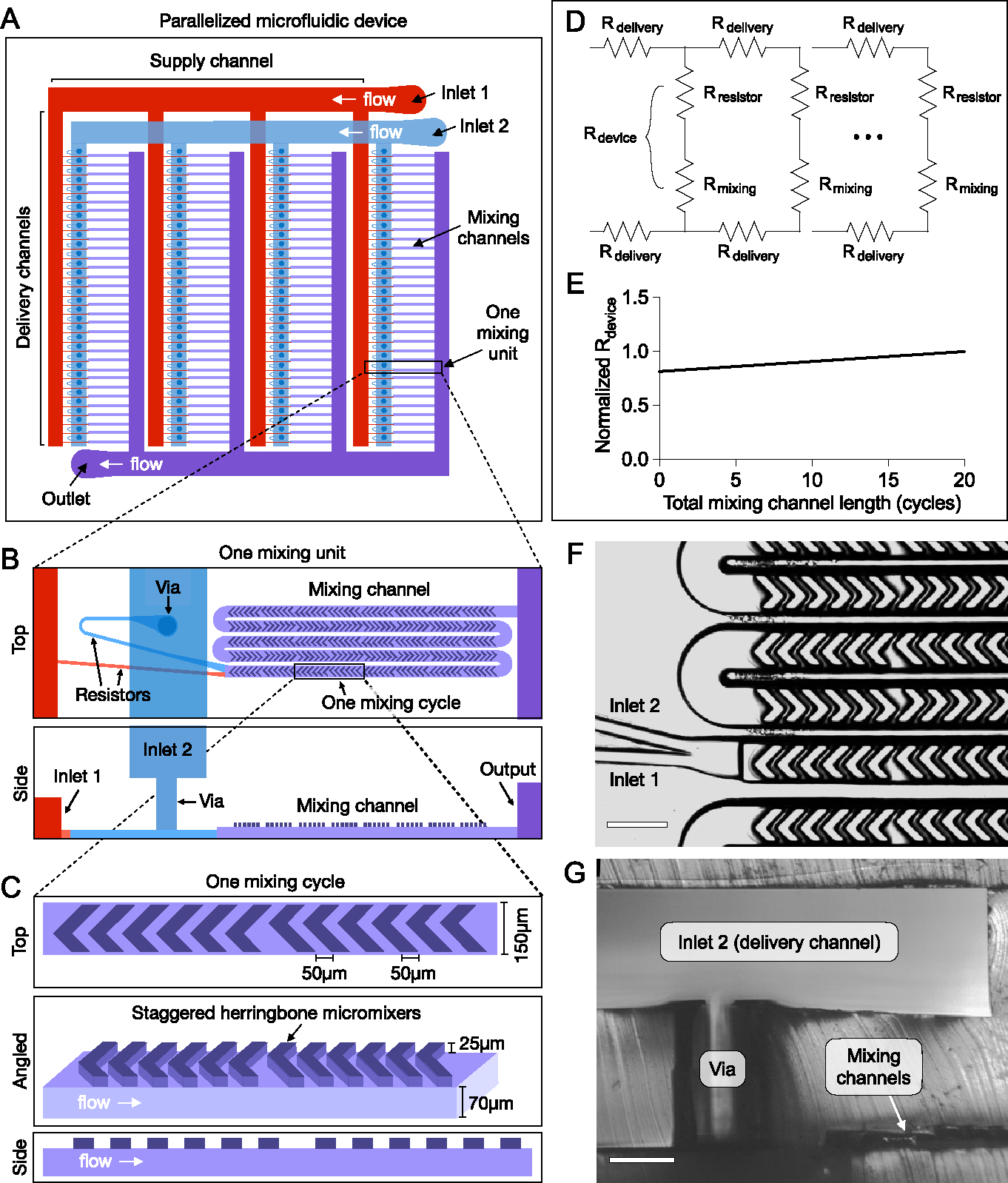
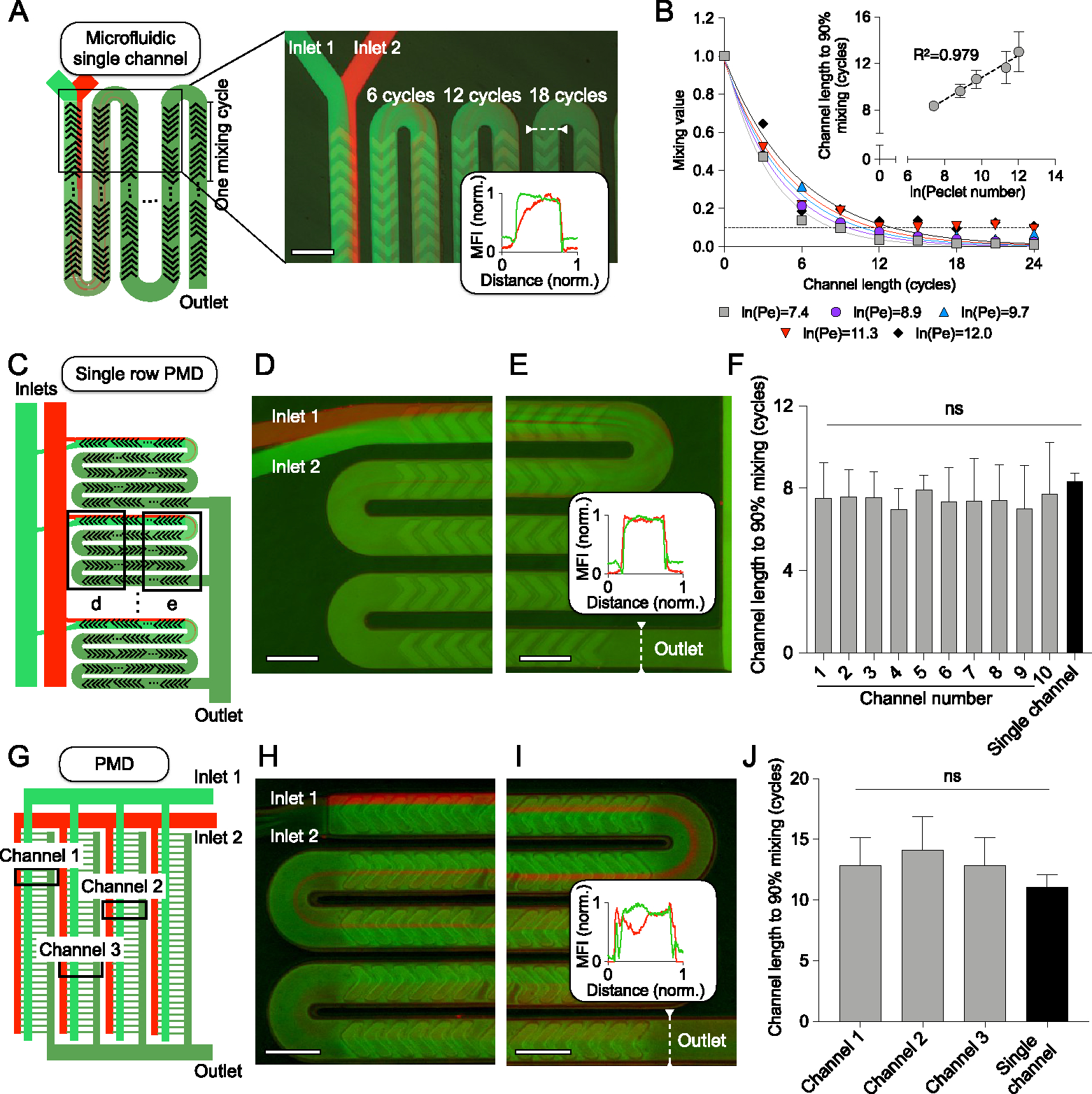
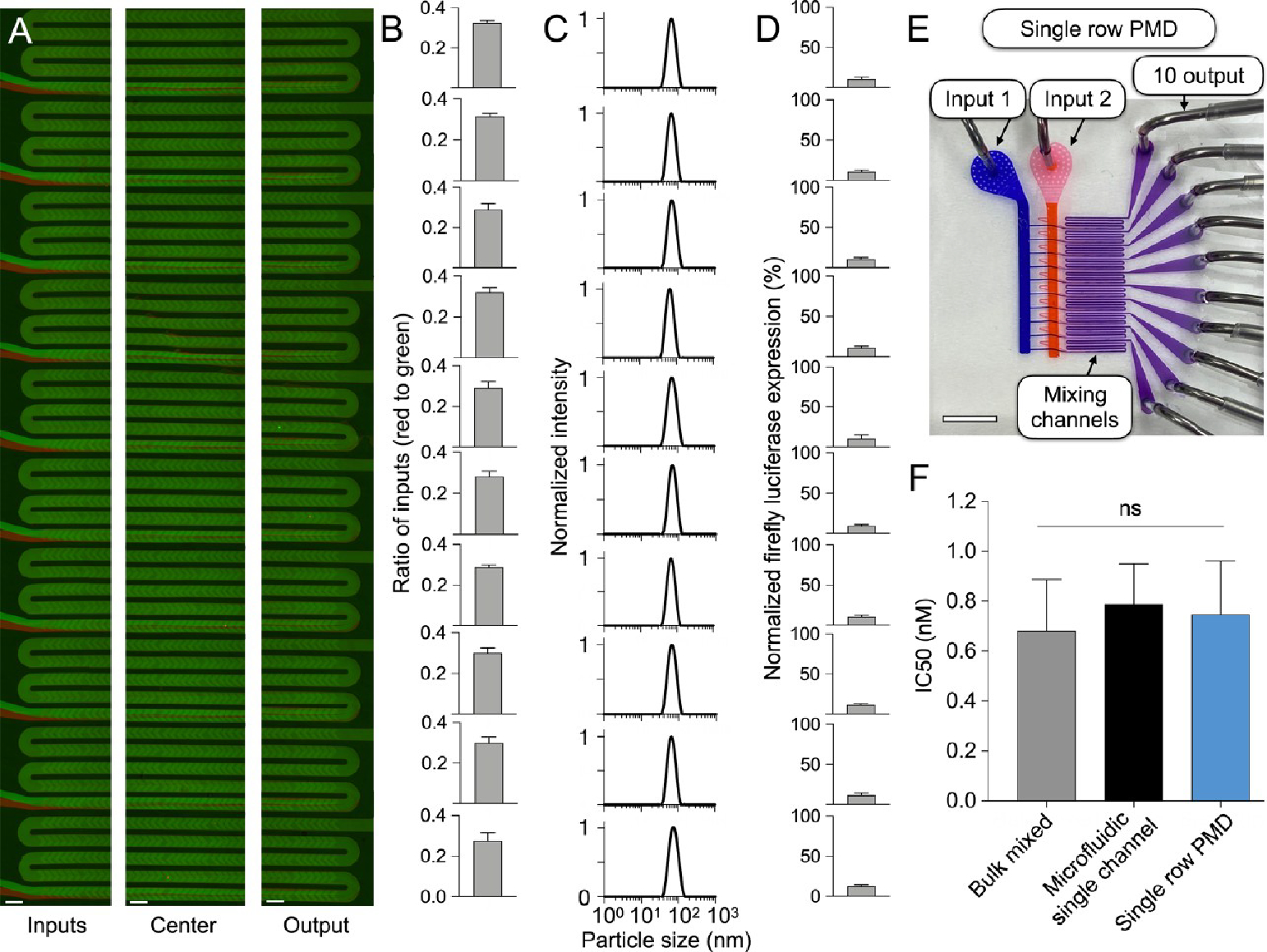
A major challenge to advance lipid nanoparticles (LNPs) for RNA therapeutics is the development of formulations that can be produced reliably across the various scales of drug development. Microfluidics can generate LNPs with precisely defined properties, but have been limited by challenges in scaling throughput. To address this challenge, we present a scalable, parallelized microfluidic device (PMD) that incorporates an array of 128 mixing channels that operate simultaneously. The PMD achieves a >100× production rate compared to single microfluidic channels, without sacrificing desirable LNP physical properties and potency typical of microfluidic-generated LNPs. In mice, we show superior delivery of LNPs encapsulating either Factor VII siRNA or luciferase-encoding mRNA generated using a PMD compared to conventional mixing, with a 4-fold increase in hepatic gene silencing and 5-fold increase in luciferase expression, respectively. These results suggest that this PMD can generate scalable and reproducible LNP formulations needed for emerging clinical applications, including RNA therapeutics and vaccines.
推进用于 RNA 治疗的脂质纳米颗粒 (LNP) 的主要挑战是开发可在药物开发的各种规模上可靠生产的制剂。微流控技术可以生成具有精确定义特性的 LNPs,但由于通量扩展方面的挑战而受到限制。为了解决这一挑战,我们提出了一种可扩展的、并行的微流控设备 (PMD),该设备包含一个 128 个混合通道的阵列,这些通道可以同时运行。与单个微流控通道相比,PMD 的产量提高了 >100 倍,而不会牺牲微流控生成的 LNPs 典型的理想 LNP 物理性质和效力。在小鼠中,我们发现使用 PMD 包封的 Factor VII siRNA 或编码 luciferase 的 mRNA 的 LNP 的递呈优于常规混合,分别导致肝基因沉默增加 4 倍和 luciferase 表达增加 5 倍。这些结果表明,这种 PMD 可以生成用于新兴临床应用(包括 RNA 治疗和疫苗)的可扩展且可重复的 LNP 制剂。