Department of Molecular and Cellular Physiology, Stanford University School of Medicine, Stanford, CA, USA.
Department of Structural Biology, Stanford University School of Medicine, Stanford, CA, USA.
Nature. 2021 Jul;595(7867):455-459. doi: 10.1038/s41586-021-03691-0. Epub 2021 Jun 30.
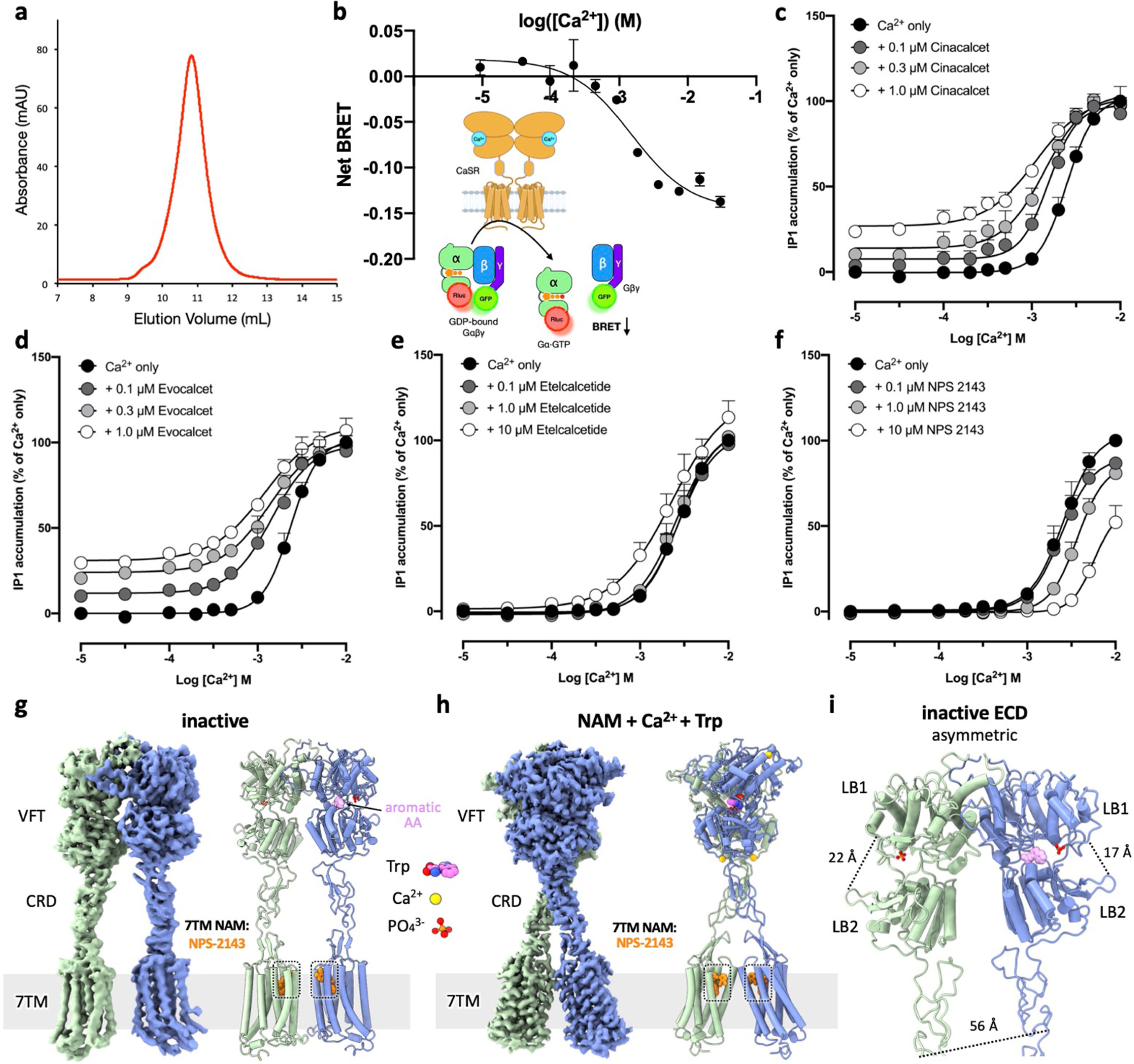
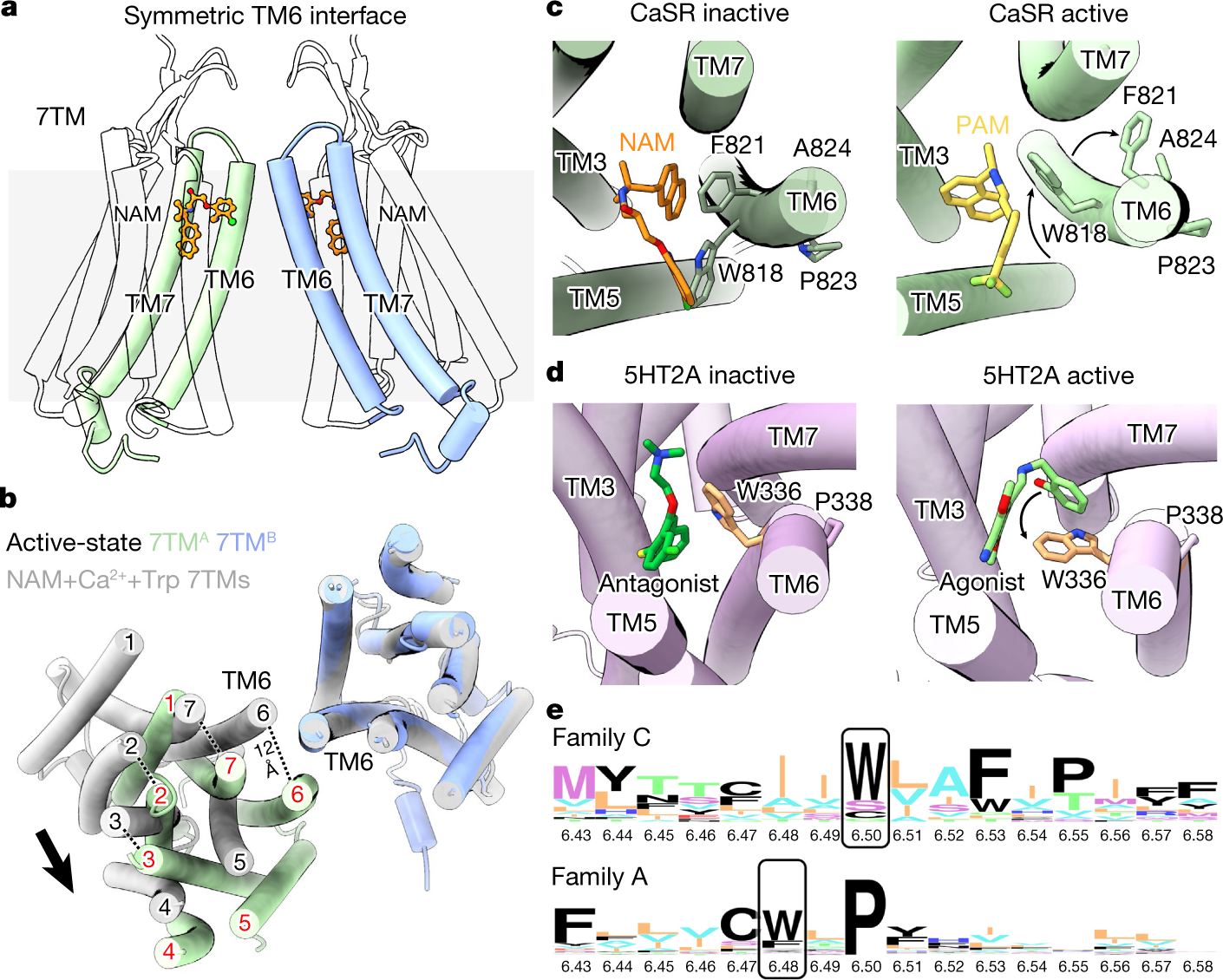
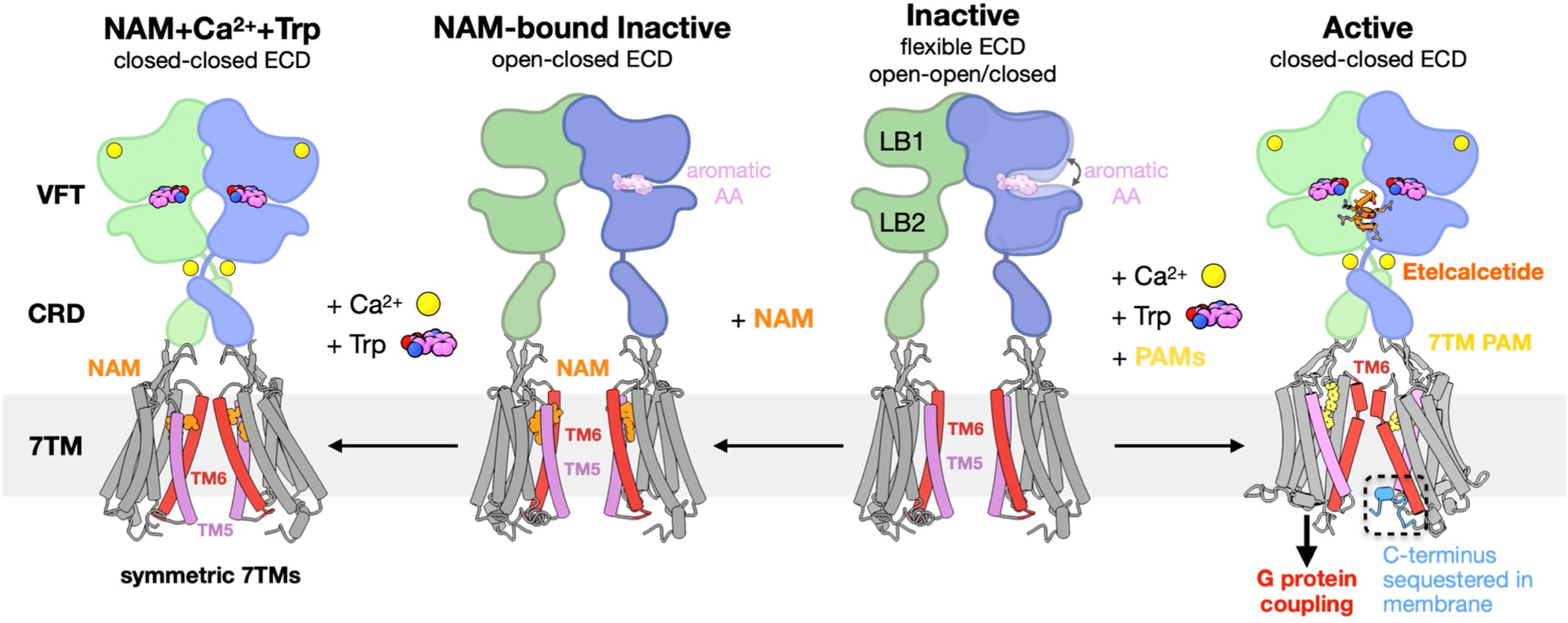
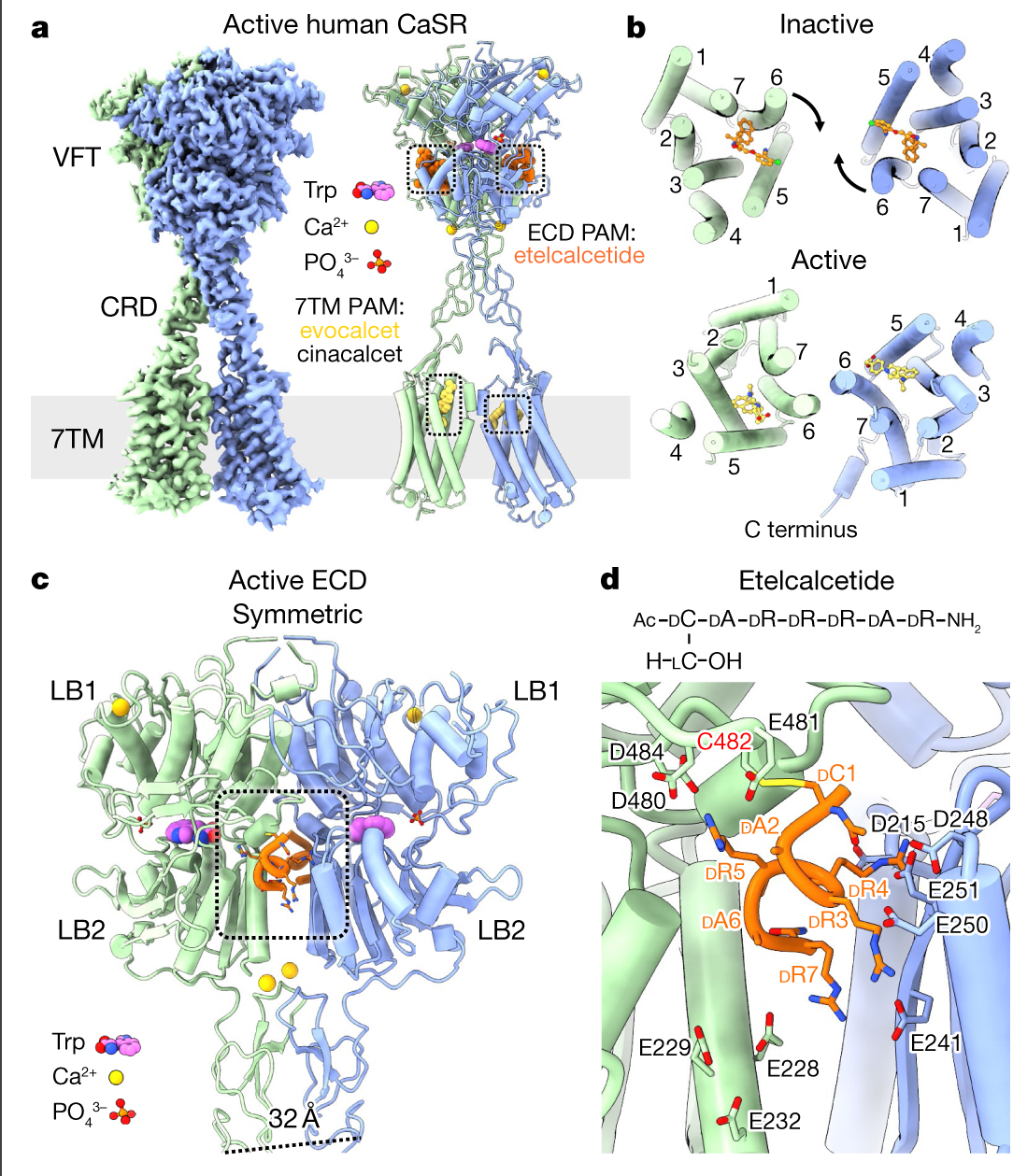
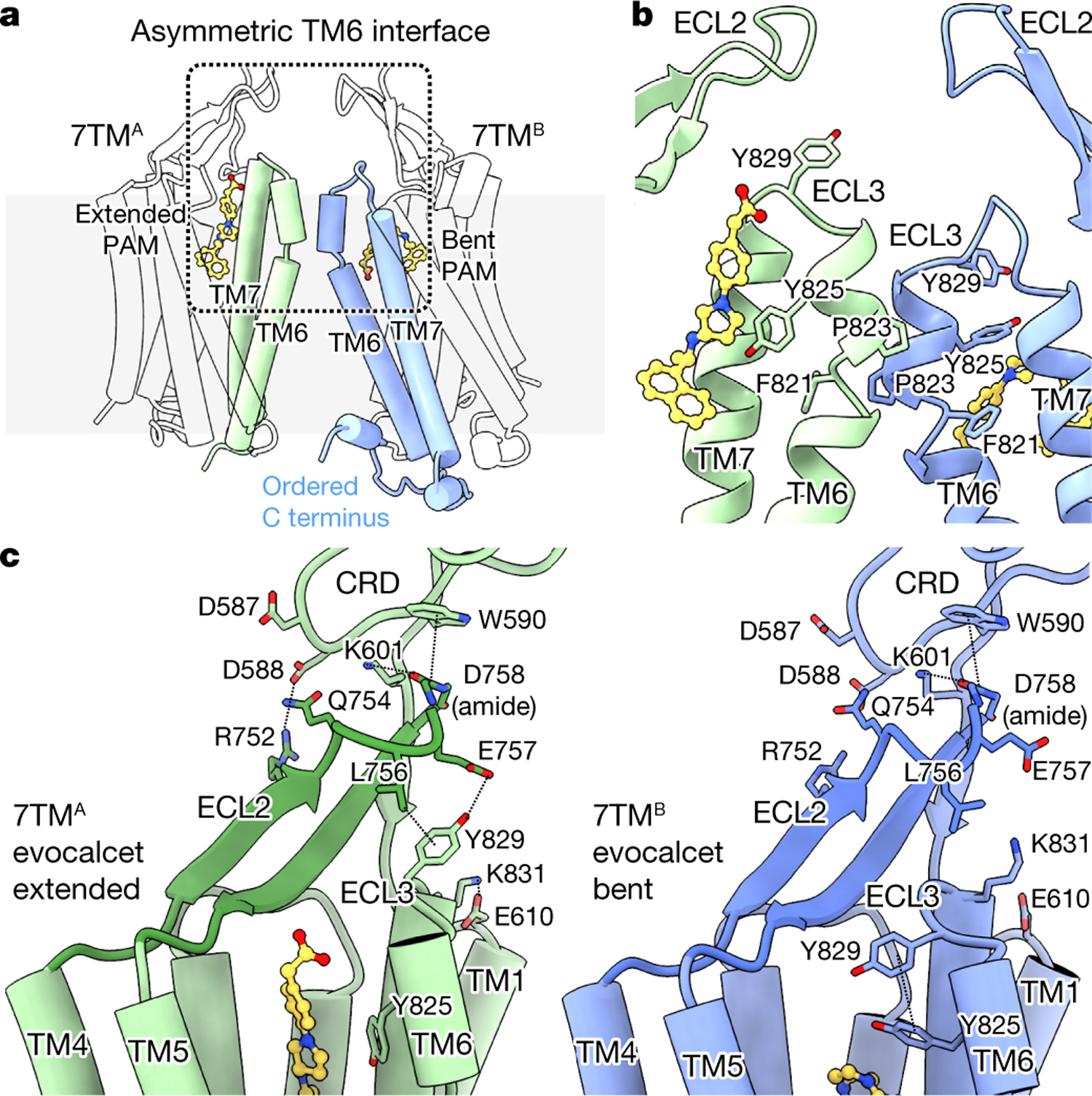
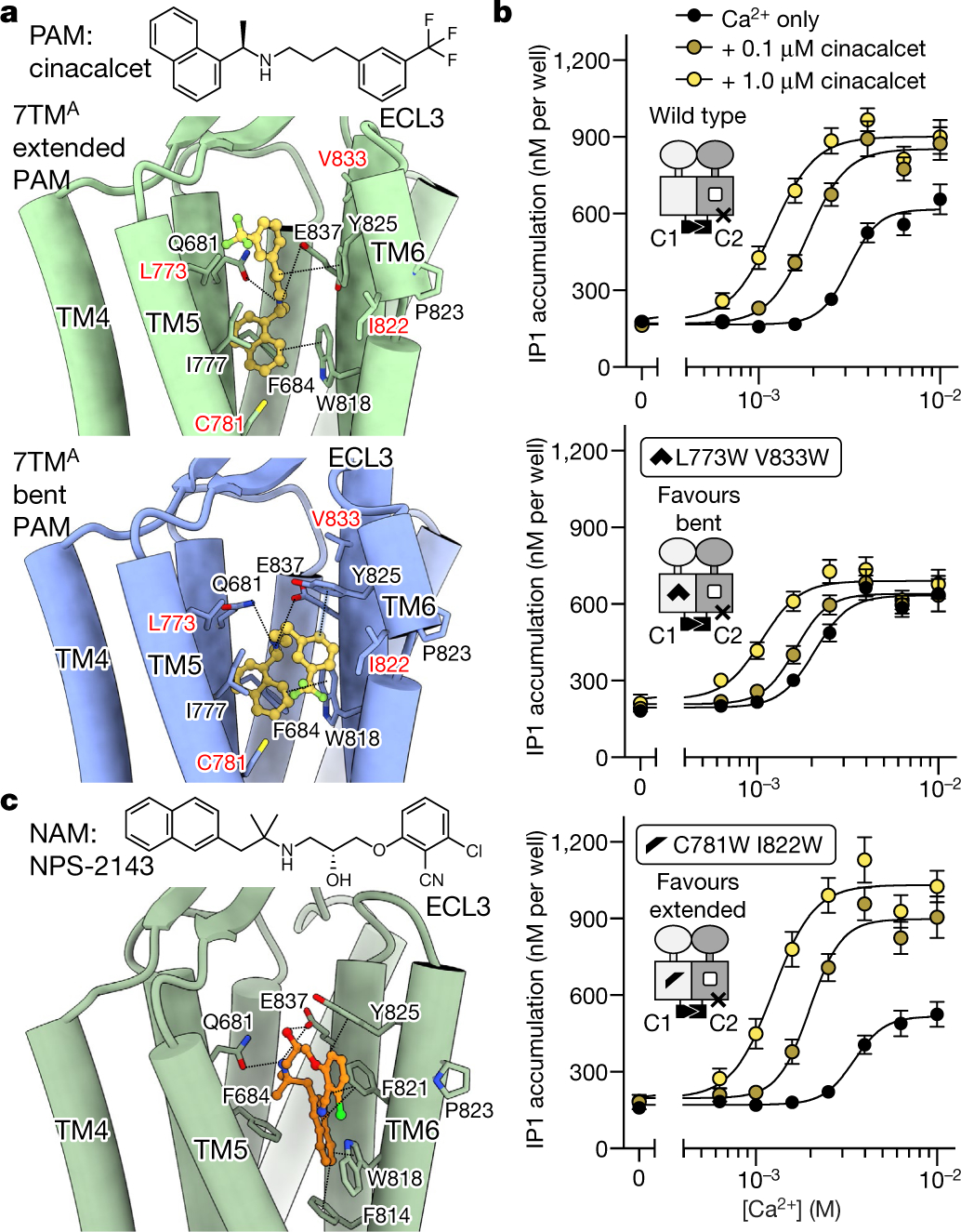
The calcium-sensing receptor (CaSR), a cell-surface sensor for Ca, is the master regulator of calcium homeostasis in humans and is the target of calcimimetic drugs for the treatment of parathyroid disorders. CaSR is a family C G-protein-coupled receptor that functions as an obligate homodimer, with each protomer composed of a Ca-binding extracellular domain and a seven-transmembrane-helix domain (7TM) that activates heterotrimeric G proteins. Here we present cryo-electron microscopy structures of near-full-length human CaSR in inactive or active states bound to Ca and various calcilytic or calcimimetic drug molecules. We show that, upon activation, the CaSR homodimer adopts an asymmetric 7TM configuration that primes one protomer for G-protein coupling. This asymmetry is stabilized by 7TM-targeting calcimimetic drugs adopting distinctly different poses in the two protomers, whereas the binding of a calcilytic drug locks CaSR 7TMs in an inactive symmetric configuration. These results provide a detailed structural framework for CaSR activation and the rational design of therapeutics targeting this receptor.
钙敏感受体(CaSR)是细胞表面的钙传感器,是人类钙稳态的主要调节剂,也是用于甲状旁腺疾病治疗的拟钙剂药物的靶标。CaSR 是一种 C 族 G 蛋白偶联受体,作为必需的同源二聚体发挥作用,每个原聚体由一个钙结合的细胞外结构域和一个激活异三聚体 G 蛋白的七跨膜螺旋结构域(7TM)组成。在这里,我们展示了与 Ca 结合的近全长人 CaSR 在非激活或激活状态下与各种钙敏感受体激动剂或拟钙剂药物分子结合的冷冻电镜结构。我们表明,在激活后,CaSR 同源二聚体采用不对称的 7TM 构象,使一个原聚体为 G 蛋白偶联做好准备。这种不对称性由 7TM 靶向拟钙剂药物在两个原聚体中采用明显不同的构象稳定,而钙敏感受体激动剂的结合则将 CaSR 7TM 锁定在非激活的对称构象中。这些结果为 CaSR 激活提供了一个详细的结构框架,并为靶向该受体的治疗药物的合理设计提供了依据。