Khoury Georges, Lee Michelle Y, Ramarathinam Sri H, McMahon James, Purcell Anthony W, Sonza Secondo, Lewin Sharon R, Purcell Damian F J
Department of Microbiology and Immunology, Peter Doherty Institute for Infection and Immunity, University of Melbourne, Melbourne, VIC, Australia.
Infection and Immunity Program, Department of Biochemistry and Molecular Biology, Biomedicine Discovery Institute, Monash University, Clayton, VIC, Australia.
Front Genet. 2021 Jun 14;12:680725. doi: 10.3389/fgene.2021.680725. eCollection 2021.
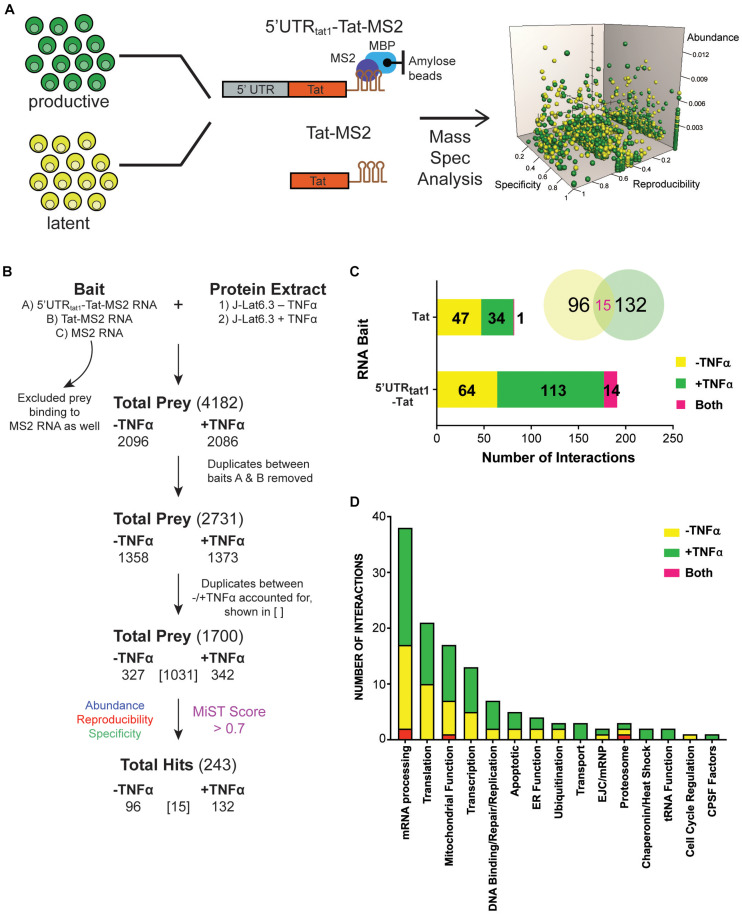
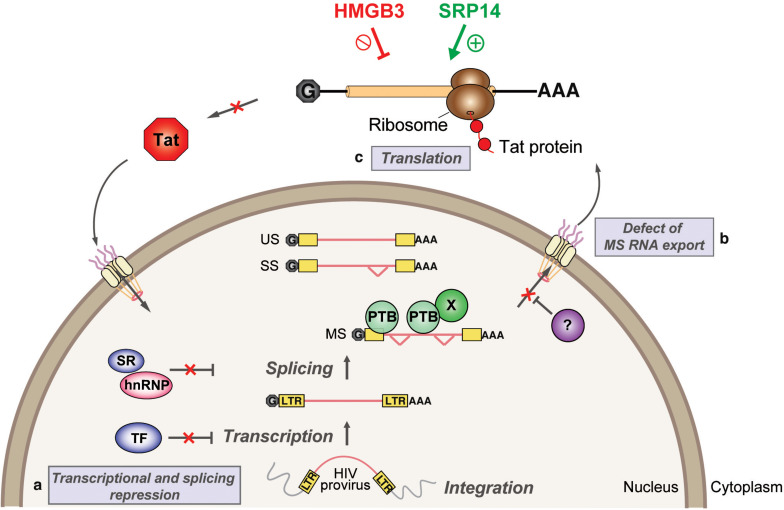
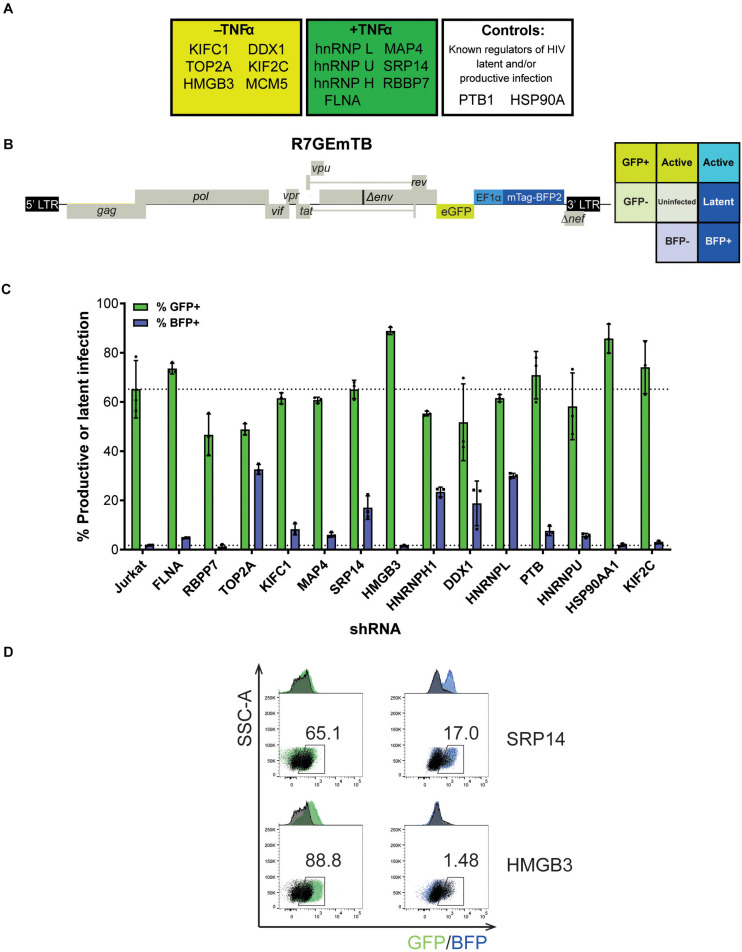
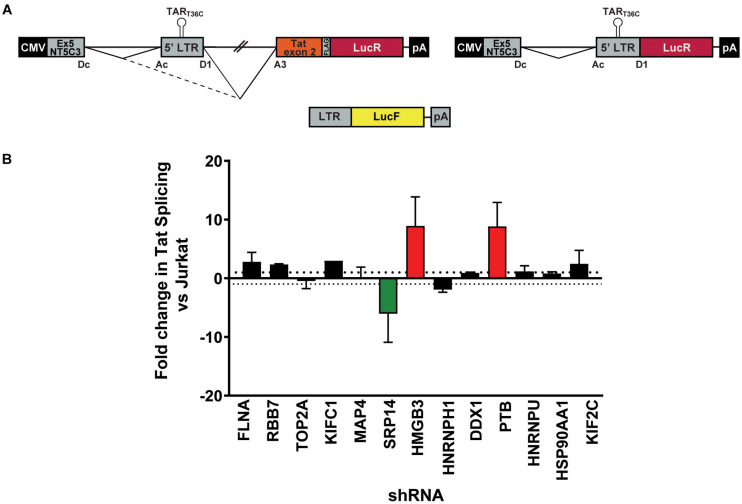
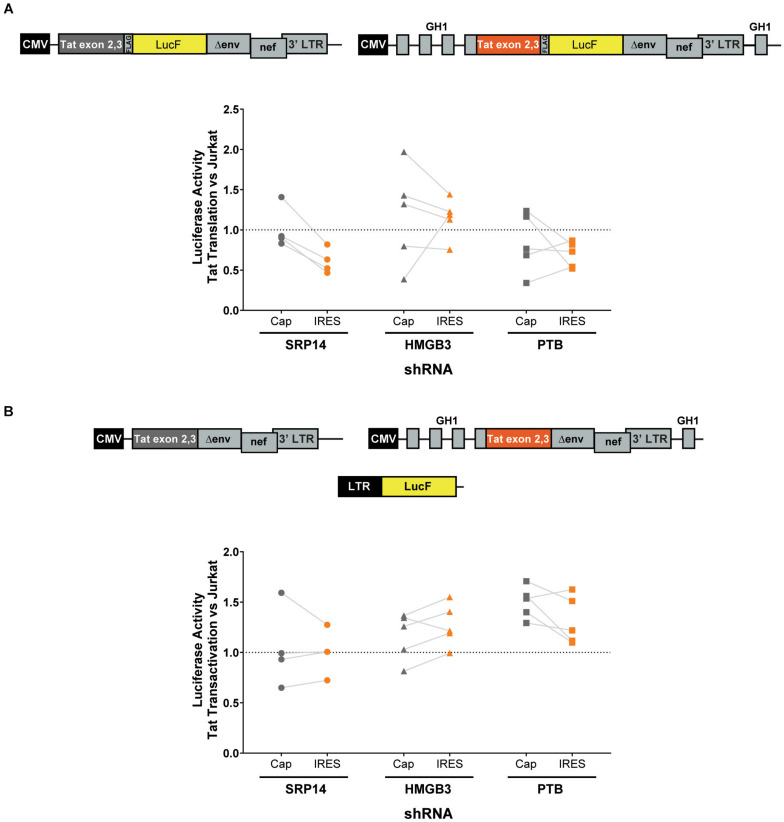
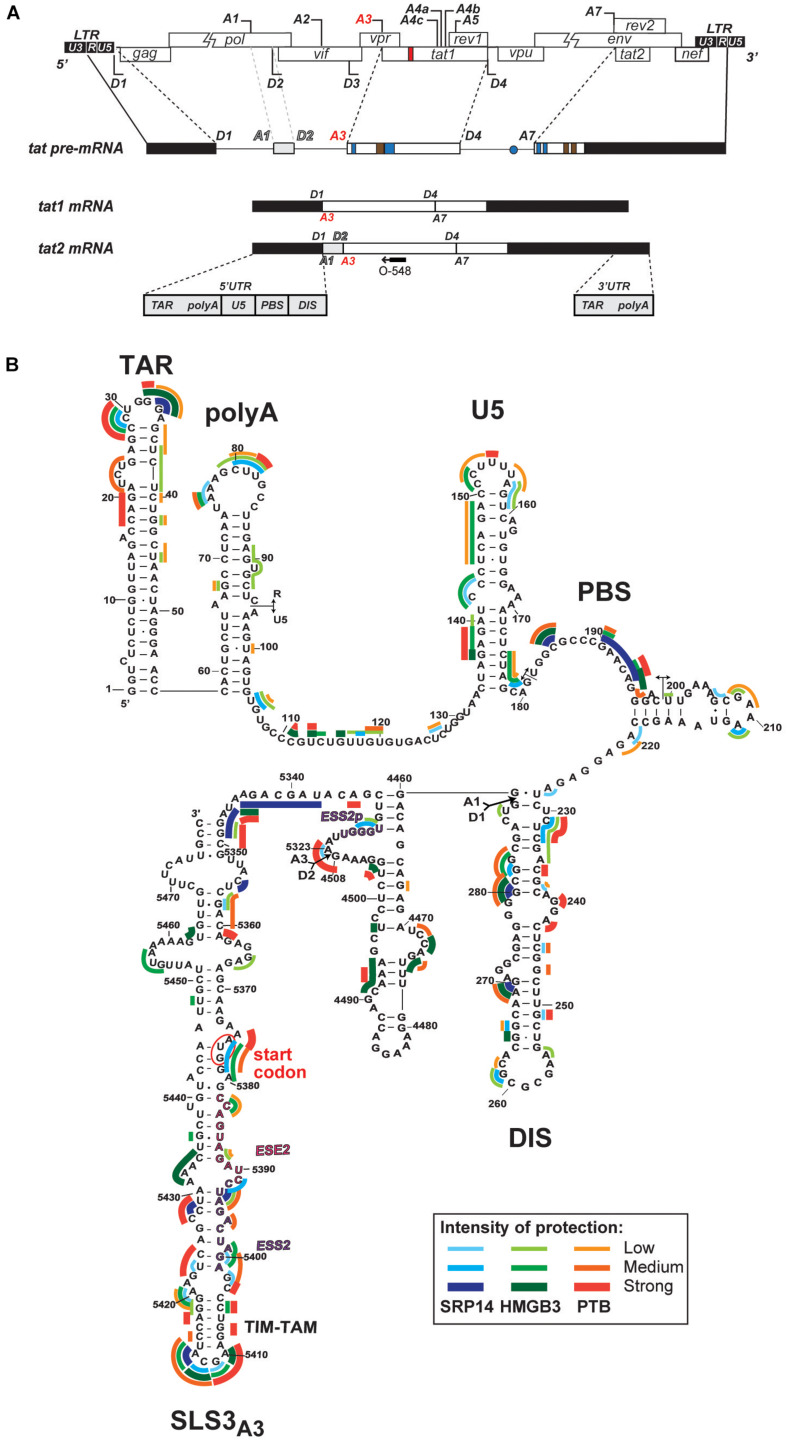
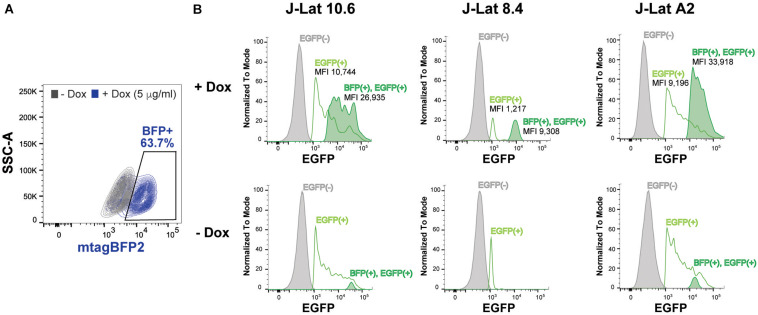
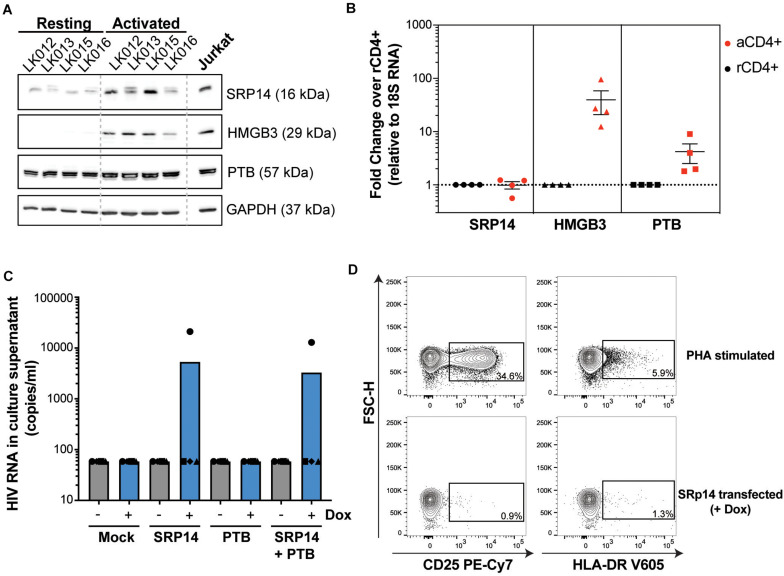
HIV-1 Tat protein is essential for virus production. RNA-binding proteins that facilitate Tat production may be absent or downregulated in resting CD4 T-cells, the main reservoir of latent HIV in people with HIV (PWH) on antiretroviral therapy (ART). In this study, we examined the role of Tat RNA-binding proteins on the expression of Tat and control of latent and productive infection. Affinity purification coupled with mass spectrometry analysis was used to detect binding partners of MS2-tagged mRNA in a T cell-line model of HIV latency. The effect of knockdown and overexpression of the proteins of interest on Tat transactivation and translation was assessed by luciferase-based reporter assays and infections with a dual color HIV reporter virus. Out of the 243 interactions identified, knockdown of SRP14 (Signal Recognition Particle 14) negatively affected mRNA processing and translation as well as Tat-mediated transactivation, which led to an increase in latent infection. On the other hand, knockdown of HMGB3 (High Mobility Group Box 3) resulted in an increase in Tat transactivation and translation as well as an increase in productive infection. Footprinting experiments revealed that SRP14 and HMGB3 proteins bind to TIM-TAM, a conserved RNA sequence-structure in mRNA that functions as a Tat IRES modulator of mRNA. Overexpression of SRP14 in resting CD4 T-cells from patients on ART was sufficient to reverse HIV-1 latency and induce virus production. The role of SRP14 and HMGB3 proteins in controlling HIV Tat expression during latency will be further assessed as potential drug targets.
HIV-1反式激活因子蛋白对于病毒产生至关重要。促进反式激活因子产生的RNA结合蛋白在静息CD4 T细胞中可能缺失或下调,而静息CD4 T细胞是接受抗逆转录病毒疗法(ART)的HIV感染者(PWH)体内潜伏HIV的主要储存库。在本研究中,我们研究了反式激活因子RNA结合蛋白在反式激活因子表达以及潜伏性和生产性感染控制中的作用。在HIV潜伏的T细胞系模型中,采用亲和纯化结合质谱分析来检测MS2标记mRNA的结合伙伴。通过基于荧光素酶的报告基因检测以及双色HIV报告病毒感染,评估了目标蛋白的敲低和过表达对反式激活因子反式激活和翻译的影响。在鉴定出的243种相互作用中,信号识别颗粒14(SRP14)的敲低对mRNA加工、翻译以及反式激活因子介导的反式激活产生负面影响,导致潜伏感染增加。另一方面,高迁移率族蛋白B3(HMGB3)的敲低导致反式激活因子反式激活和翻译增加以及生产性感染增加。足迹实验表明,SRP14和HMGB3蛋白与TIM-TAM结合,TIM-TAM是mRNA中一种保守的RNA序列结构,作为mRNA的反式激活因子内部核糖体进入位点调节剂发挥作用。在接受ART治疗的患者的静息CD4 T细胞中过表达SRP14足以逆转HIV-1潜伏状态并诱导病毒产生。SRP14和HMGB3蛋白在潜伏期控制HIV反式激活因子表达中的作用将作为潜在药物靶点进一步评估。