Research Unit of Process and Product Development of Functional Foods, Department of Food Technology and Nutrition, Faculty of Technology, Mahasarakham University, Kantarawichai, Mahasarakham 44150, Thailand.
Queensland Alliance for Agriculture and Food Innovation (QAAFI), University of Queensland, Brisbane, QLD 4072, Australia.
Molecules. 2021 Jun 7;26(11):3455. doi: 10.3390/molecules26113455.
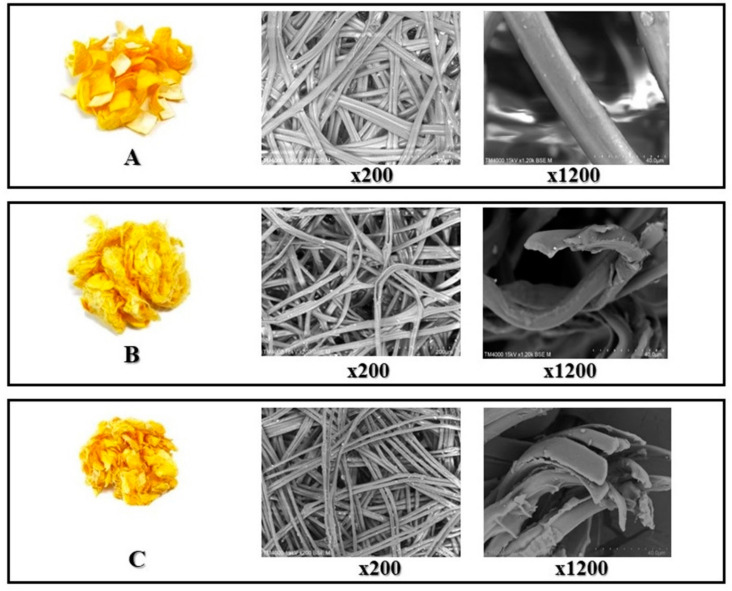
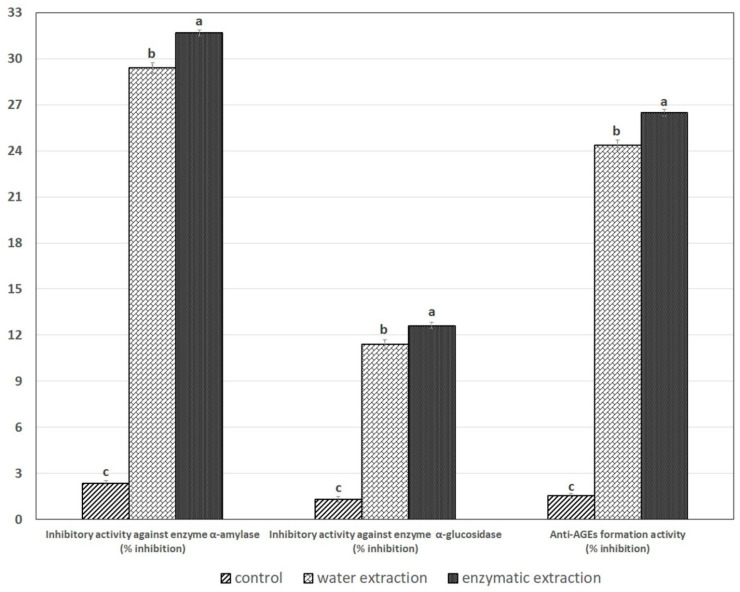
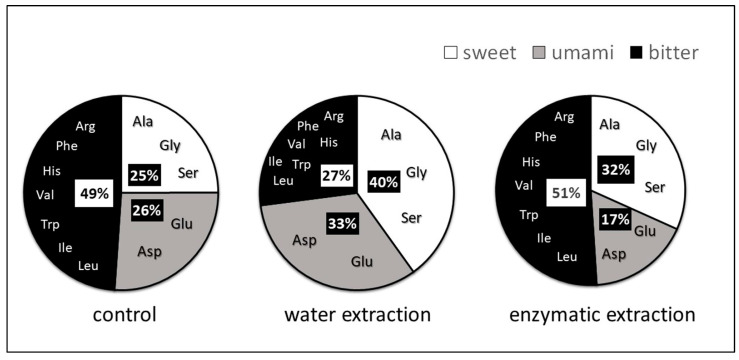
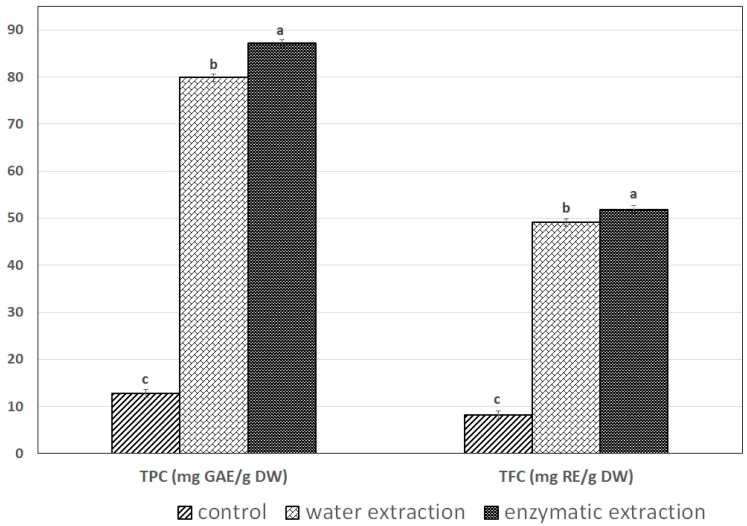
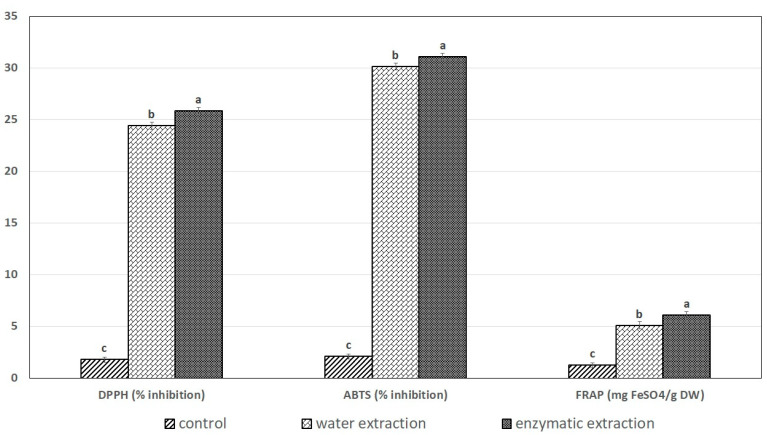
We compared the efficacy for protein extraction of water versus enzymatic extraction. The amino-acid composition, inhibitory activity against enzymes α-amylase and α-glucosidase, and anti-glycation activities of silk protein extract (SPE) were determined. We used water extraction (100 °C, six hours) and protease-enzymatic extraction. The microstructure of silk fibers was obviously different after extraction. The results showed that enzymatic extraction gave the greater values of protein content, amino acids, total phenolic content (TPC), and total flavonoid content (TFC), as well as all biological activities parameters tested, but it also provided a more bitter taste in the extract-contributing amino acids of 51% (arginine, phenylalanine, histidine, valine, tryptophan, isoleucine, and leucine) and less sweet and umami taste contributing amino acids than did water extraction, which could be more suitable to be used as concentrated nutraceuticals.
我们比较了水提和酶提两种方法在蛋白质提取方面的效果。测定了丝蛋白提取物(SPE)的氨基酸组成、对α-淀粉酶和α-葡萄糖苷酶的抑制活性以及抗糖化活性。我们采用水提(100°C,六小时)和蛋白酶-酶提两种方法。提取后,丝纤维的微观结构明显不同。结果表明,酶提法获得了更高的蛋白质含量、氨基酸含量、总酚含量(TPC)和总黄酮含量(TFC)以及所有测试的生物活性参数,但提取液的苦味也更重,这是由于提取液中 51%的氨基酸(精氨酸、苯丙氨酸、组氨酸、缬氨酸、色氨酸、异亮氨酸和亮氨酸)具有这种味道,而水提法产生的甜味和鲜味氨基酸则较少,因此酶提法更适合作为浓缩型营养保健品。