Liao Yifei, Bajwa Kanika, Reddy Sanjay M, Lupiani Blanca
Department of Veterinary Pathobiology, College of Veterinary Medicine & Biomedical Sciences, Texas A & M University, College Station, TX 77843, USA.
Microorganisms. 2021 Jun 10;9(6):1260. doi: 10.3390/microorganisms9061260.
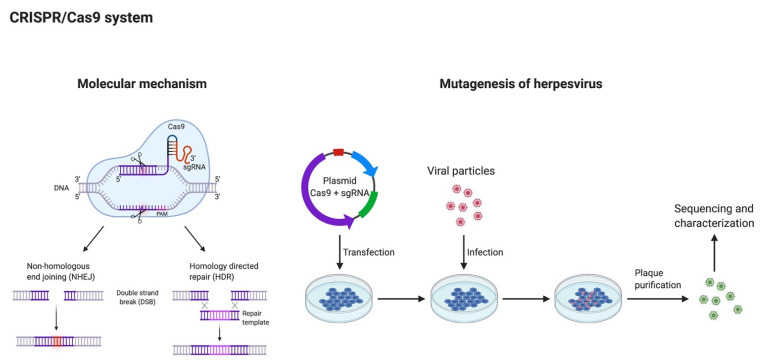
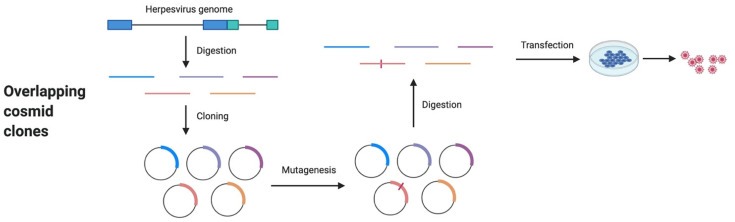
Herpesviruses are a group of double-strand DNA viruses that infect a wide range of hosts, including humans and animals. In the past decades, numerous methods have been developed to manipulate herpesviruses genomes, from the introduction of random mutations to specific genome editing. The development of genome manipulation methods has largely advanced the study of viral genes function, contributing not only to the understanding of herpesvirus biology and pathogenesis, but also the generation of novel vaccines and therapies to control and treat diseases. In this review, we summarize the major methods of herpesvirus genome manipulation with emphasis in their application to Marek's disease virus research.
疱疹病毒是一类双链DNA病毒,可感染包括人类和动物在内的多种宿主。在过去几十年中,已经开发出了许多方法来操纵疱疹病毒基因组,从引入随机突变到进行特定的基因组编辑。基因组操纵方法的发展在很大程度上推动了病毒基因功能的研究,不仅有助于理解疱疹病毒的生物学特性和发病机制,还促进了新型疫苗和治疗方法的产生,以控制和治疗疾病。在本综述中,我们总结了疱疹病毒基因组操纵的主要方法,并重点介绍了它们在马立克氏病病毒研究中的应用。