Bhatia Bharti, Furuyama Wakako, Hoenen Thomas, Feldmann Heinz, Marzi Andrea
Laboratory of Virology, Division of Intramural Research, National Institute of Allergy and Infectious Diseases, National Institutes of Health, Hamilton, MT 59840, USA.
Institute for Molecular Virology and Cell Biology, Friedrich-Loeffler-Institut, 17493 Greifswald-Insel Riems, Germany.
Vaccines (Basel). 2021 Jun 10;9(6):630. doi: 10.3390/vaccines9060630.
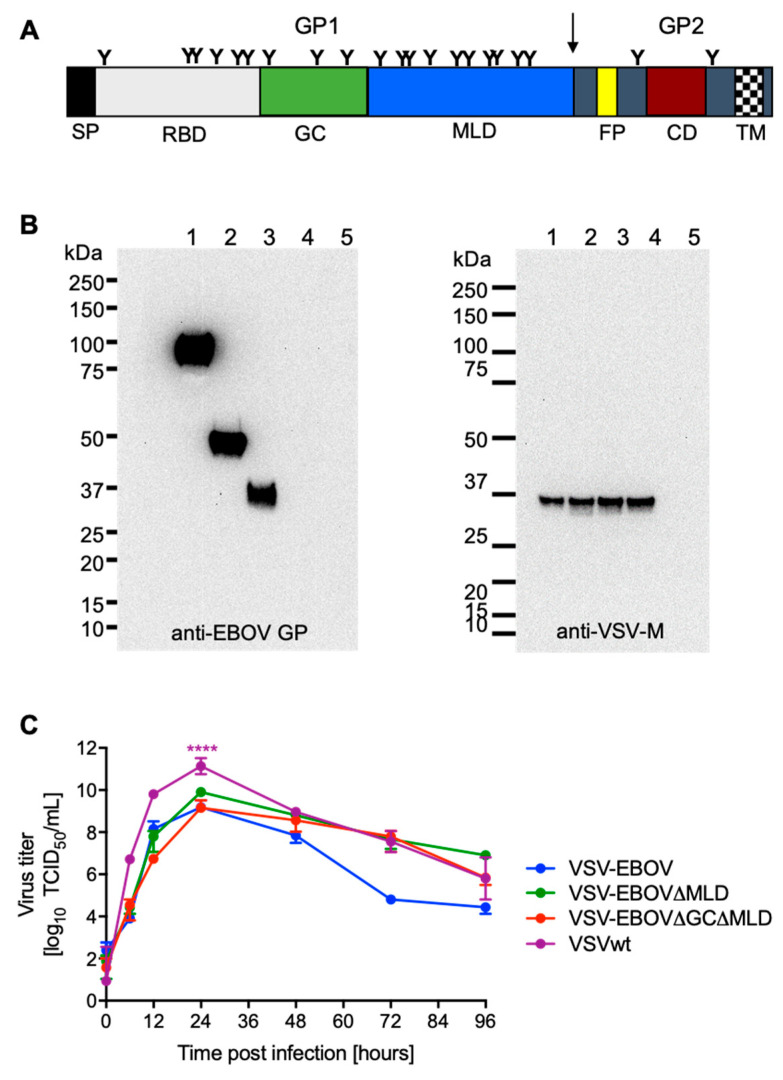
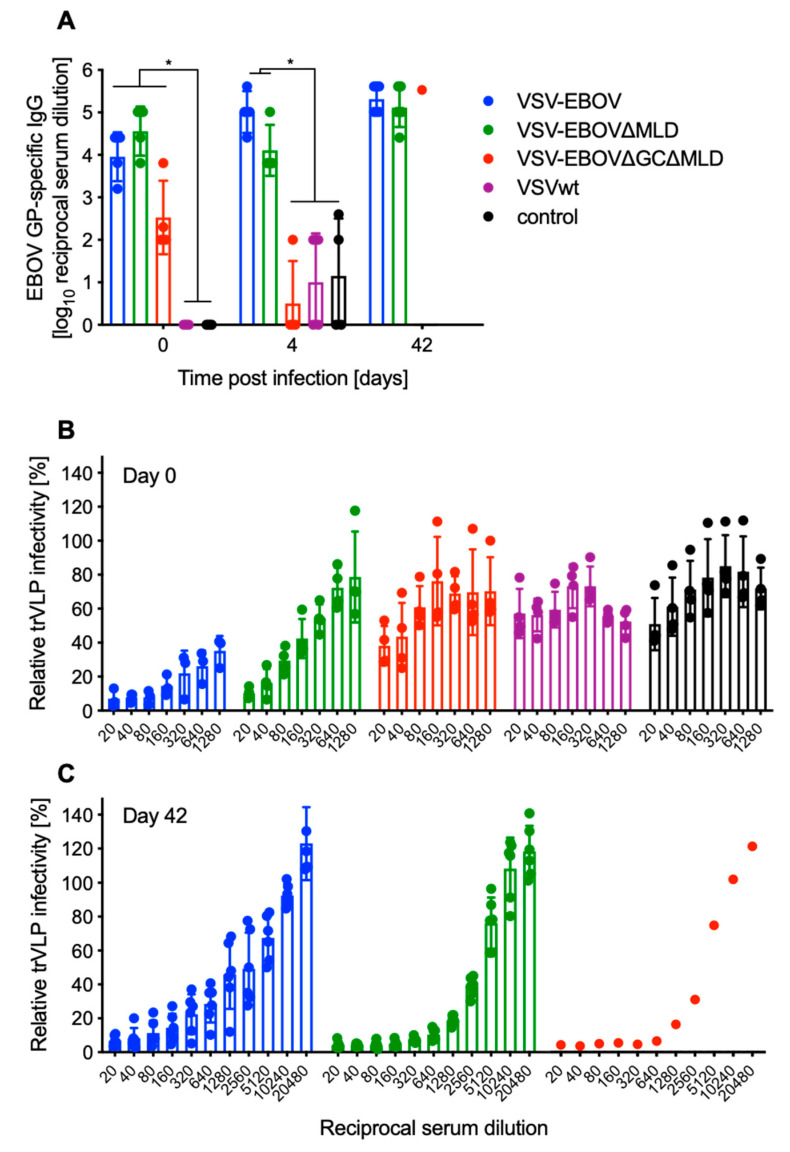
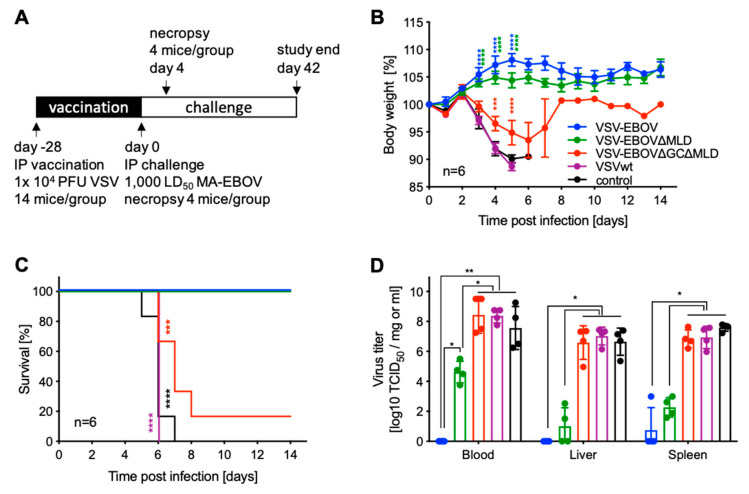
Ebola virus (EBOV) is the cause of sporadic outbreaks of human hemorrhagic disease in Africa, and the best-characterized virus in the filovirus family. The West African epidemic accelerated the clinical development of vaccines and therapeutics, leading to licensure of vaccines and antibody-based therapeutics for human use in recent years. The most widely used vaccine is based on vesicular stomatitis virus (VSV) expressing the EBOV glycoprotein (GP) (VSV-EBOV). Due to its favorable immune cell targeting, this vaccine has also been used as a base vector for the development of second generation VSV-based vaccines against Influenza, Nipah, and Zika viruses. However, in these situations, it may be beneficial if the immunogenicity against EBOV GP is minimized to induce a better protective immune response against the other foreign immunogen. Here, we analyzed if EBOV GP can be truncated to be less immunogenic, yet still able to drive replication of the vaccine vector. We found that the EBOV GP glycan cap and the mucin-like domain are both dispensable for VSV-EBOV replication. The glycan cap, however, appears critical for mediating a protective immune response against lethal EBOV challenge in mice.
埃博拉病毒(EBOV)是非洲人类出血热疾病散发性暴发的病因,也是丝状病毒科中特征最为明确的病毒。西非疫情加速了疫苗和治疗药物的临床研发,促成了近年来用于人类的疫苗和基于抗体的治疗药物的获批上市。使用最为广泛的疫苗是基于表达埃博拉病毒糖蛋白(GP)的水泡性口炎病毒(VSV)(VSV-EBOV)。由于其对免疫细胞具有良好的靶向性,这种疫苗还被用作开发针对流感病毒、尼帕病毒和寨卡病毒的第二代基于VSV的疫苗的基础载体。然而,在这些情况下,如果将针对埃博拉病毒GP的免疫原性降至最低以诱导针对其他外来免疫原的更好的保护性免疫反应,可能会有益处。在此,我们分析了埃博拉病毒GP是否可以截短以降低其免疫原性,但仍能驱动疫苗载体的复制。我们发现,埃博拉病毒GP的聚糖帽和黏蛋白样结构域对于VSV-EBOV的复制均非必需。然而,聚糖帽对于介导小鼠针对致死性埃博拉病毒攻击的保护性免疫反应似乎至关重要。