Departamento de Biología Celular y Desarrollo, Instituto de Fisiología Celular, Universidad Nacional Autónoma de México, Ap. Postal 70-248, Ciudad de México CP 04510, Mexico.
Int J Mol Sci. 2021 Jun 23;22(13):6704. doi: 10.3390/ijms22136704.
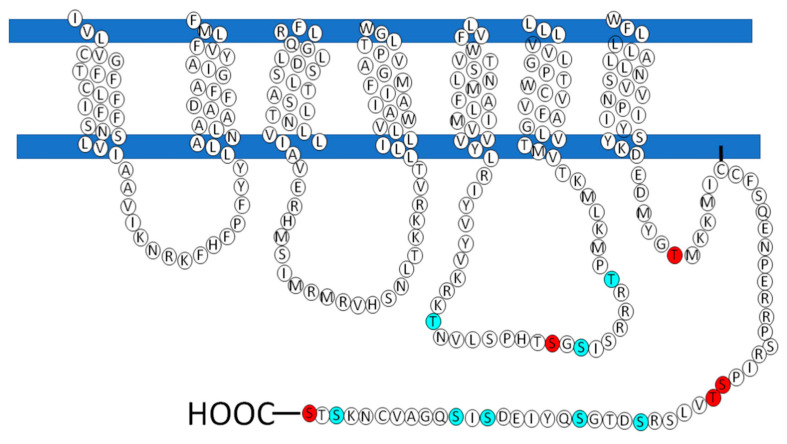
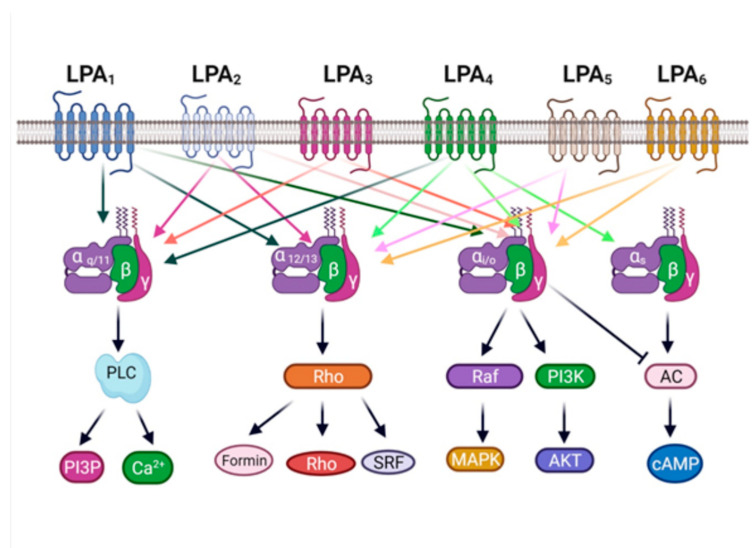
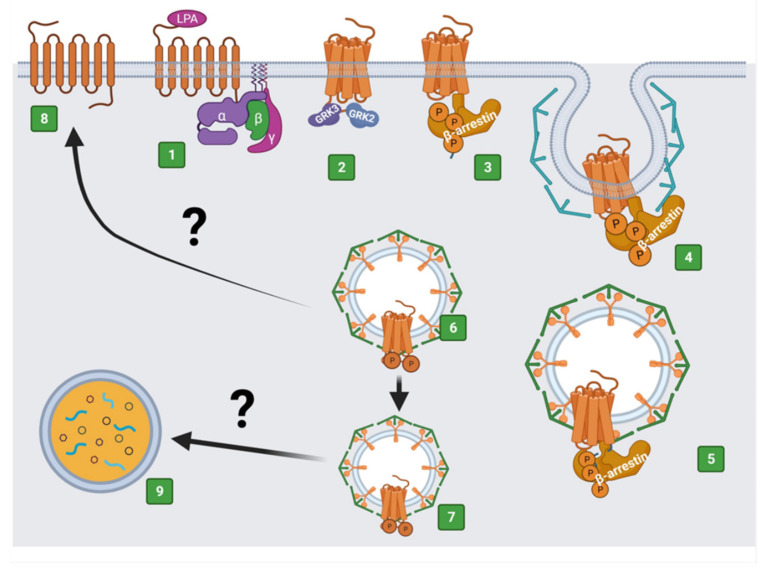
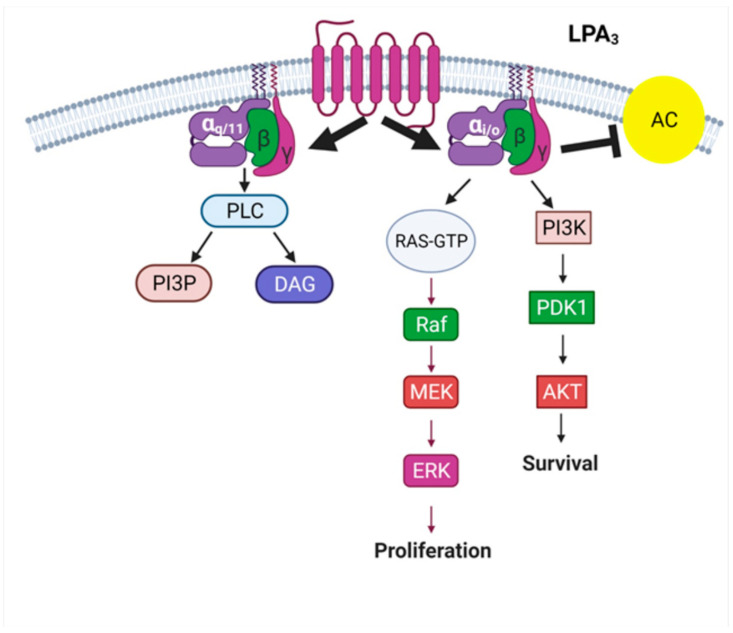
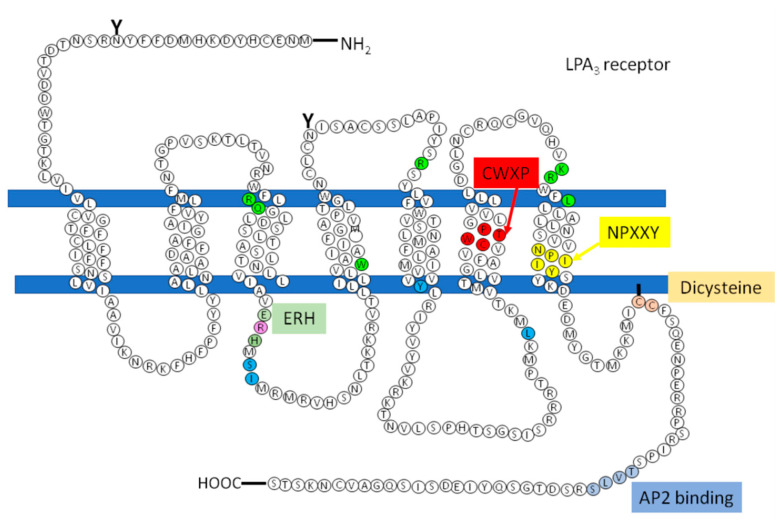
The lysophosphatidic acid 3 receptor (LPA) participates in different physiological actions and in the pathogenesis of many diseases through the activation of different signal pathways. Knowledge of the regulation of the function of the LPA receptor is a crucial element for defining its roles in health and disease. This review describes what is known about the signaling pathways activated in terms of its various actions. Next, we review knowledge on the structure of the LPA receptor, the domains found, and the roles that the latter might play in ligand recognition, signaling, and cellular localization. Currently, there is some information on the action of LPA in different cells and whole organisms, but very little is known about the regulation of its function. Areas in which there is a gap in our knowledge are indicated in order to further stimulate experimental work on this receptor and on other members of the LPA receptor family. We are convinced that knowledge on how this receptor is activated, the signaling pathways employed and how the receptor internalization and desensitization are controlled will help design new therapeutic interventions for treating diseases in which the LPA receptor is implicated.
溶血磷脂酸 3 受体(LPA)通过激活不同的信号通路参与多种生理作用和许多疾病的发病机制。了解 LPA 受体功能的调节是确定其在健康和疾病中的作用的关键因素。本综述描述了已知的关于其各种作用的信号通路激活的知识。接下来,我们回顾了关于 LPA 受体结构、发现的结构域以及后者在配体识别、信号转导和细胞定位中可能发挥的作用的知识。目前,关于 LPA 在不同细胞和整个生物体中的作用有一些信息,但关于其功能的调节知之甚少。为了进一步激发关于该受体和 LPA 受体家族其他成员的实验工作,我们指出了知识空白的领域。我们坚信,了解该受体如何被激活、所采用的信号通路以及受体内化和脱敏如何被控制,将有助于设计治疗该受体参与的疾病的新的治疗干预措施。