Centre for Textile Science and Technology (2C2T), University of Minho, Campus de Azurém, 4800-058 Guimarães, Portugal.
Mar Drugs. 2021 Jun 23;19(7):359. doi: 10.3390/md19070359.
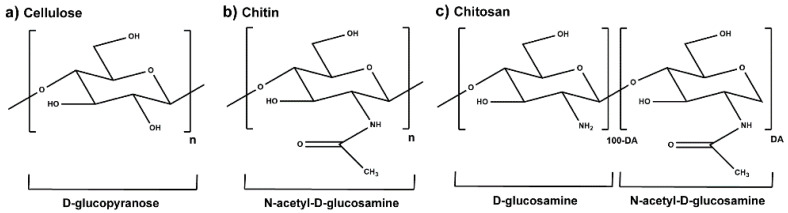
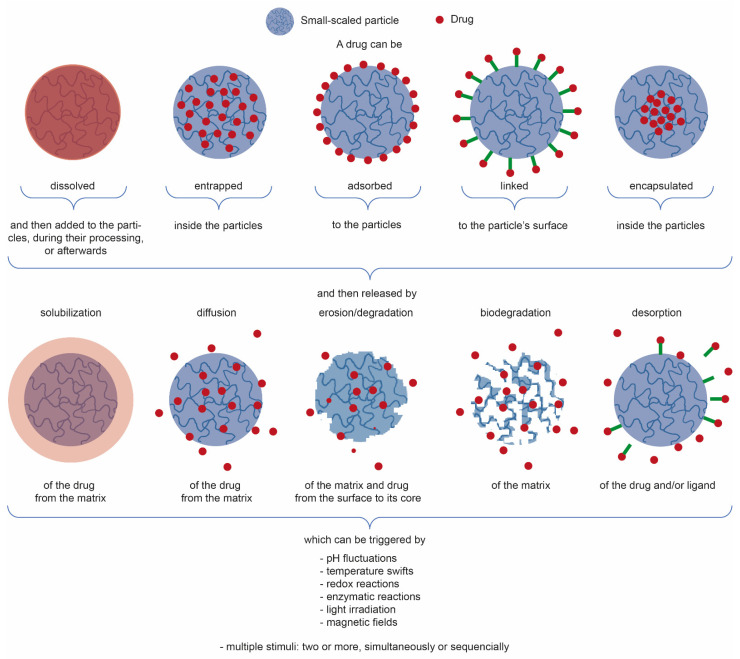
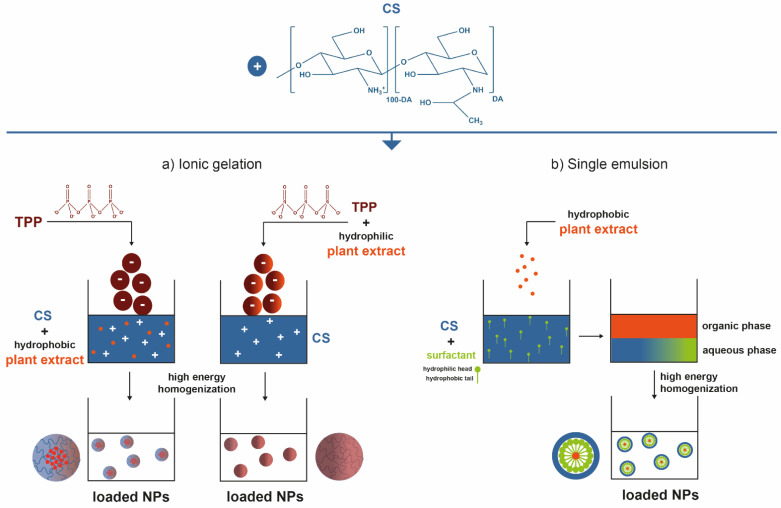
Marine-derived chitosan (CS) is a cationic polysaccharide widely studied for its bioactivity, which is mostly attached to its primary amine groups. CS is able to neutralize reactive oxygen species (ROS) from the microenvironments in which it is integrated, consequently reducing cell-induced oxidative stress. It also acts as a bacterial peripheral layer hindering nutrient intake and interacting with negatively charged outer cellular components, which lead to an increase in the cell permeability or to its lysis. Its biocompatibility, biodegradability, ease of processability (particularly in mild conditions), and chemical versatility has fueled CS study as a valuable matrix component of bioactive small-scaled organic drug-delivery systems, with current research also showcasing CS's potential within tridimensional sponges, hydrogels and sutures, blended films, nanofiber sheets and fabric coatings. On the other hand, renewable plant-derived extracts are here emphasized, given their potential as eco-friendly radical scavengers, microbicidal agents, or alternatives to antibiotics, considering that most of the latter have induced bacterial resistance because of excessive and/or inappropriate use. Loading them into small-scaled particles potentiates a strong and sustained bioactivity, and a controlled release, using lower doses of bioactive compounds. A pH-triggered release, dependent on CS's protonation/deprotonation of its amine groups, has been the most explored stimulus for that control. However, the use of CS derivatives, crosslinking agents, and/or additional stabilization processes is enabling slower release rates, following extract diffusion from the particle matrix, which can find major applicability in fiber-based systems within ROS-enriched microenvironments and/or spiked with microbes. Research on this is still in its infancy. Yet, the few published studies have already revealed that the composition, along with an adequate drug release rate, has an important role in controlling an existing infection, forming new tissue, and successfully closing a wound. A bioactive finishing of textiles has also been promoting high particle infiltration, superior washing durability, and biological response.
海洋来源的壳聚糖 (CS) 是一种阳离子多糖,因其生物活性而被广泛研究,其生物活性主要归因于其伯胺基团。CS 能够中和其所处微环境中的活性氧物质 (ROS),从而降低细胞诱导的氧化应激。它还可以作为细菌的外围层,阻止营养物质的摄入并与带负电荷的细胞外成分相互作用,从而导致细胞通透性增加或裂解。CS 的生物相容性、可生物降解性、易于加工性(特别是在温和条件下)以及化学多功能性促使其成为生物活性小分子药物输送系统有价值的基质成分,目前的研究还展示了 CS 在三维海绵、水凝胶和缝线、混合薄膜、纳米纤维片和织物涂层中的潜力。另一方面,强调了可再生植物来源的提取物,因为它们具有作为环保型自由基清除剂、杀菌剂或抗生素替代品的潜力,考虑到大多数抗生素由于过度和/或不当使用而诱导了细菌耐药性。将它们负载到小颗粒中可以增强强大且持续的生物活性,并通过使用较低剂量的生物活性化合物来控制释放。基于 CS 胺基的质子化/去质子化的 pH 触发释放是控制释放的最常用的刺激方式。然而,CS 衍生物、交联剂和/或附加的稳定化过程的使用可以实现更慢的释放速率,这是从颗粒基质中提取提取物后的结果,这种方法在富含 ROS 的微环境中的纤维系统中或含有微生物的系统中具有重要的应用。该领域的研究仍处于起步阶段。然而,少数已发表的研究已经表明,组成以及适当的药物释放速率在控制现有感染、形成新组织和成功闭合伤口方面起着重要作用。对纺织品进行生物活性整理也可以促进高颗粒渗透、优异的耐洗性和生物学反应。