Departament of Physiology, Facultad de Farmacia, Universidad del País Vasco UPV/EHU, 01006 Vitoria-Gasteiz, Spain.
Department of Biophysics, Faculty of Medicine, Ankara University, 06100 Ankara, Turkey.
Int J Mol Sci. 2021 Jun 25;22(13):6827. doi: 10.3390/ijms22136827.
Diabetic patients have prolonged cardiac repolarization and higher risk of arrhythmia. Besides, diabetes activates the innate immune system, resulting in higher levels of plasmatic cytokines, which are described to prolong ventricular repolarization.
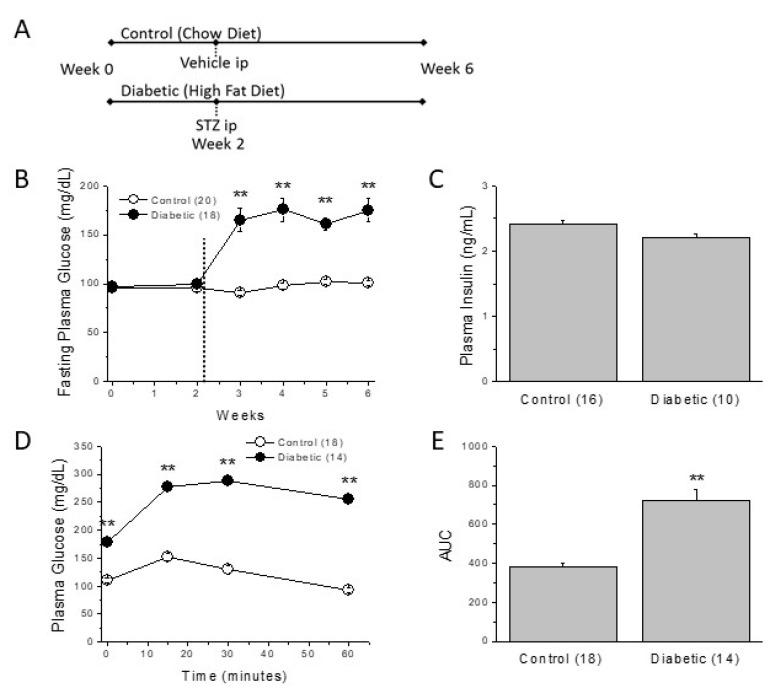
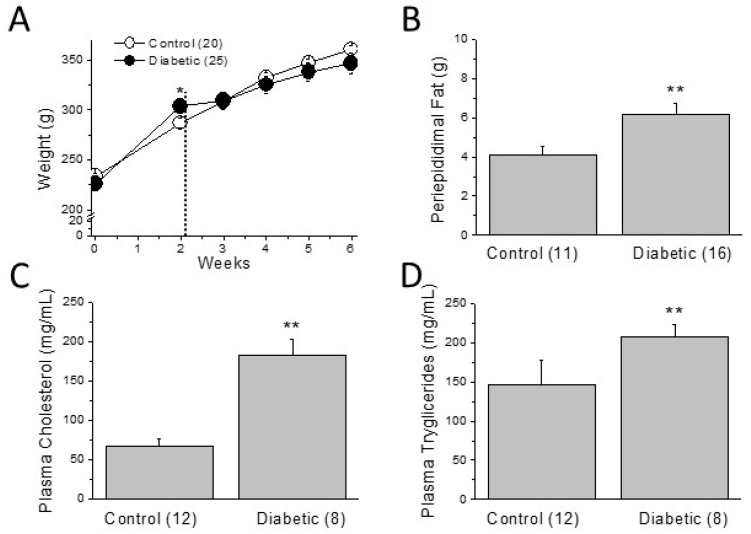
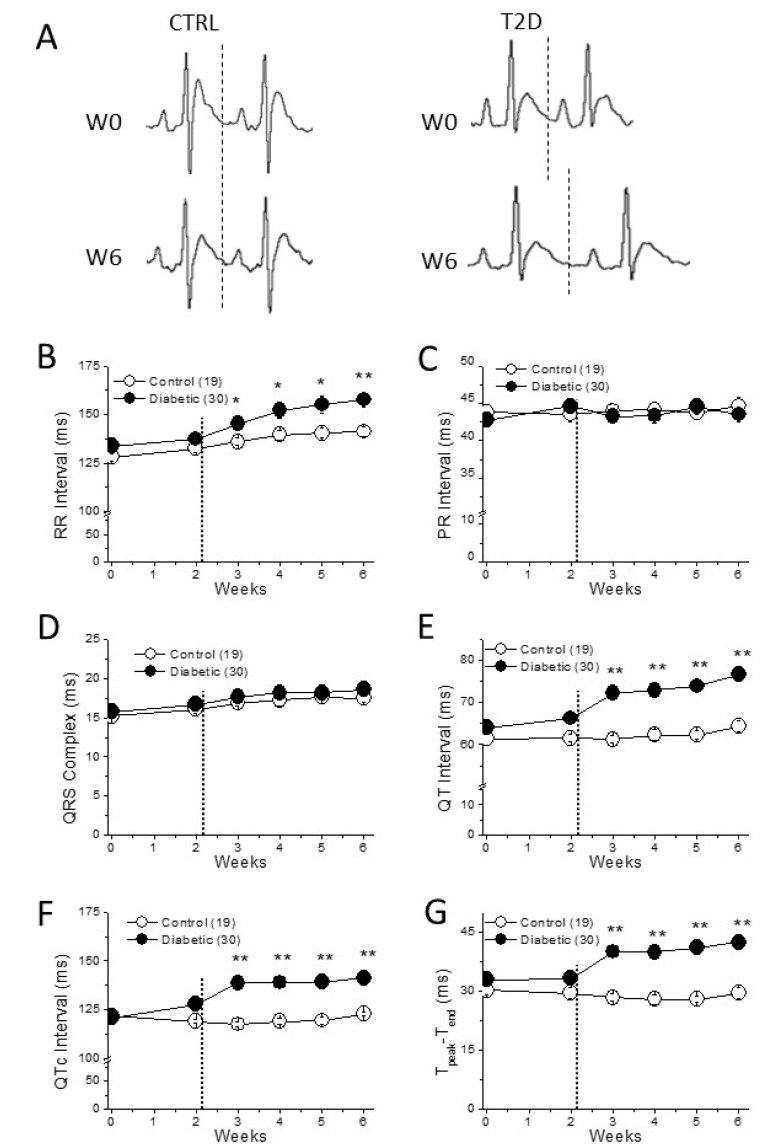
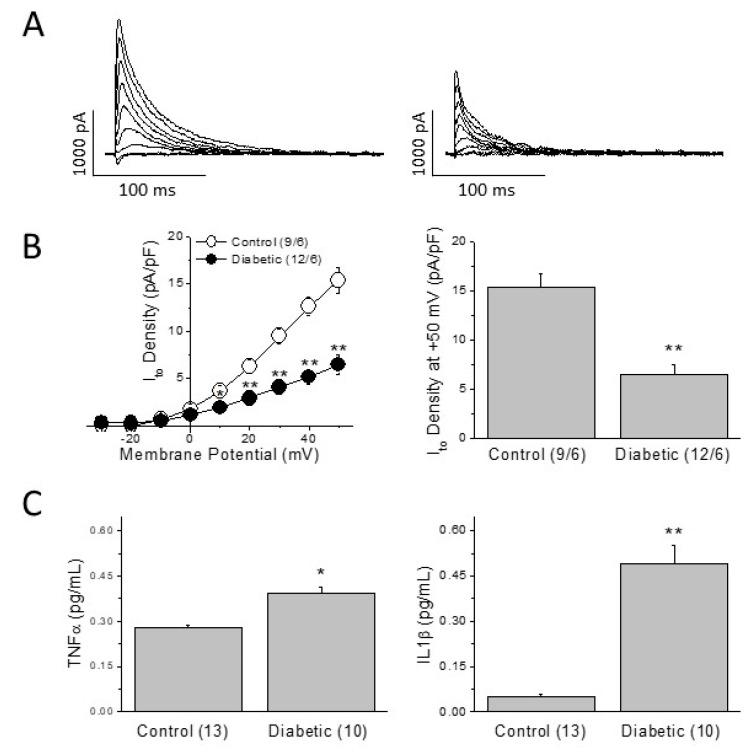
We characterize a metabolic model of type 2 diabetes (T2D) with prolonged cardiac repolarization. Sprague-Dawley rats were fed on a high-fat diet (45% Kcal from fat) for 6 weeks, and a low dose of streptozotozin intraperitoneally injected at week 2. Body weight and fasting blood glucose were measured and electrocardiograms of conscious animals were recorded weekly. Plasmatic lipid profile, insulin, cytokines, and arrhythmia susceptibility were determined at the end of the experimental period. Outward K currents and action potentials were recorded in isolated ventricular myocytes by patch-clamp.
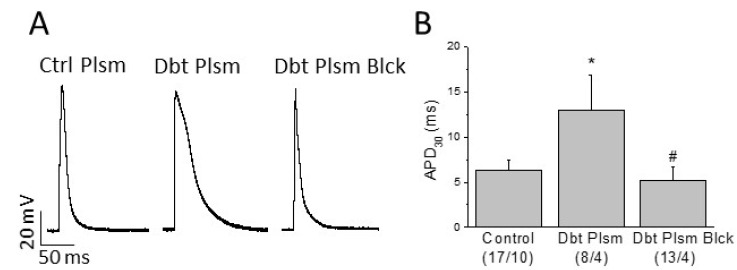
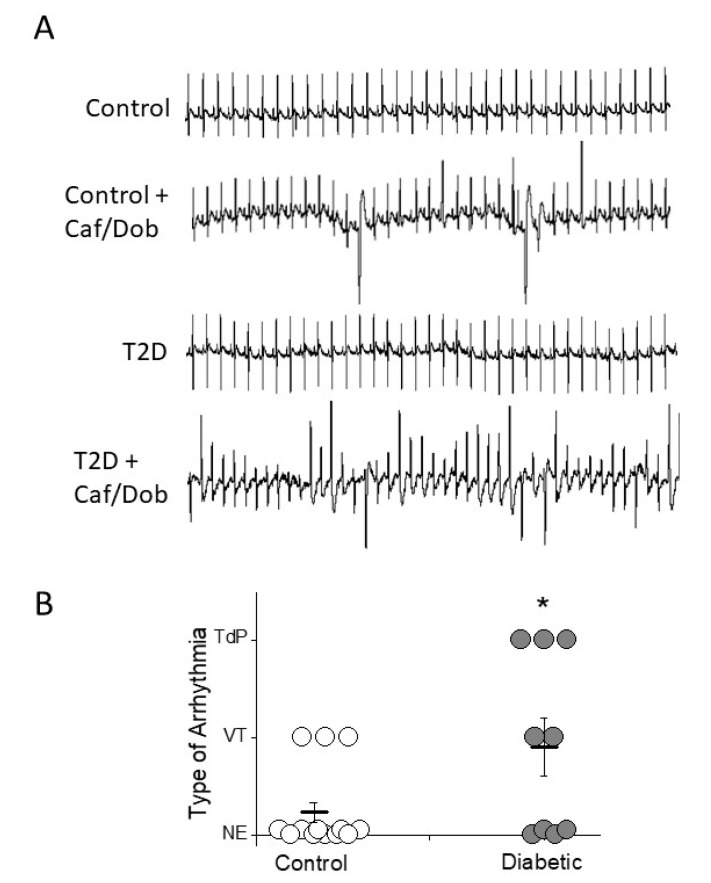
T2D animals showed insulin resistance, hyperglycemia, and elevated levels of plasma cholesterol, triglycerides, TNFα, and IL-1b. They also developed bradycardia and prolonged QTc-interval duration that resulted in increased susceptibility to severe ventricular tachycardia under cardiac challenge. Action potential duration (APD) was prolonged in control cardiomyocytes incubated 24 h with plasma isolated from diabetic rats. However, adding TNFα and IL-1b receptor blockers to the serum of diabetic animals prevented the increased APD.
The elevation of the circulating levels of TNFα and IL-1b are responsible for impaired ventricular repolarization and higher susceptibility to cardiac arrhythmia in our metabolic model of T2D.
糖尿病患者的心脏复极时间延长,心律失常风险较高。此外,糖尿病会激活固有免疫系统,导致血浆细胞因子水平升高,据描述,这会延长心室复极。
我们构建了一种伴有心脏复极延长的 2 型糖尿病(T2D)代谢模型。6 周内,SD 大鼠给予高脂肪饮食(45%的热量来自脂肪),第 2 周时腹腔内注射小剂量链脲佐菌素。每周测量体重和空腹血糖,并记录清醒动物的心电图。实验期末测定血浆脂质谱、胰岛素、细胞因子和心律失常易感性。通过膜片钳技术在分离的心室肌细胞上记录外向钾电流和动作电位。
T2D 动物表现出胰岛素抵抗、高血糖和血浆胆固醇、甘油三酯、TNFα 和 IL-1b 水平升高。它们还出现了心动过缓,并延长了 QTc 间期,导致在心脏刺激下严重室性心动过速的易感性增加。与对照组相比,在糖尿病大鼠血浆孵育 24 小时的心肌细胞中,动作电位时程(APD)延长。然而,在糖尿病动物的血清中添加 TNFα 和 IL-1b 受体阻滞剂可预防 APD 延长。
循环 TNFα 和 IL-1b 水平升高导致我们的 T2D 代谢模型心室复极受损和心律失常易感性增加。