Stueber Deanna D, Villanova Jake, Aponte Itzel, Xiao Zhen, Colvin Vicki L
Center for Biomedical Engineering, School of Engineering, Brown University, 171 Meeting Street, Providence, RI 02912, USA.
Department of Chemistry, Brown University, 324 Brook Street, Providence, RI 02912, USA.
Pharmaceutics. 2021 Jun 24;13(7):943. doi: 10.3390/pharmaceutics13070943.
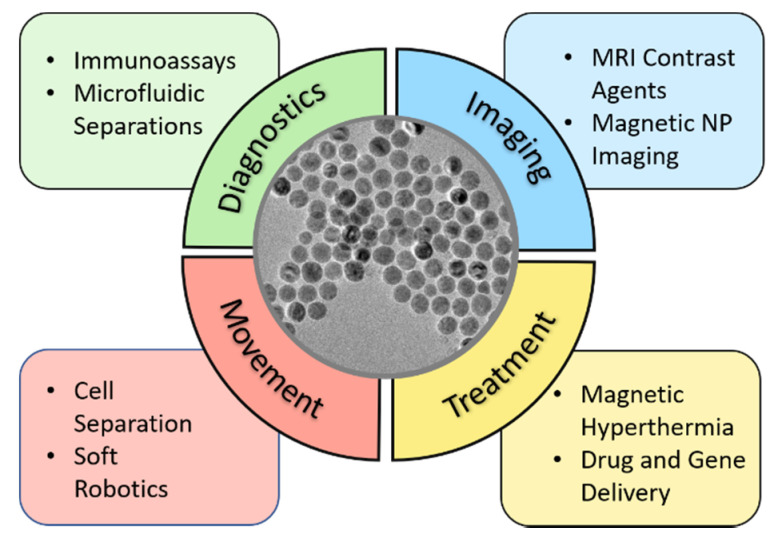
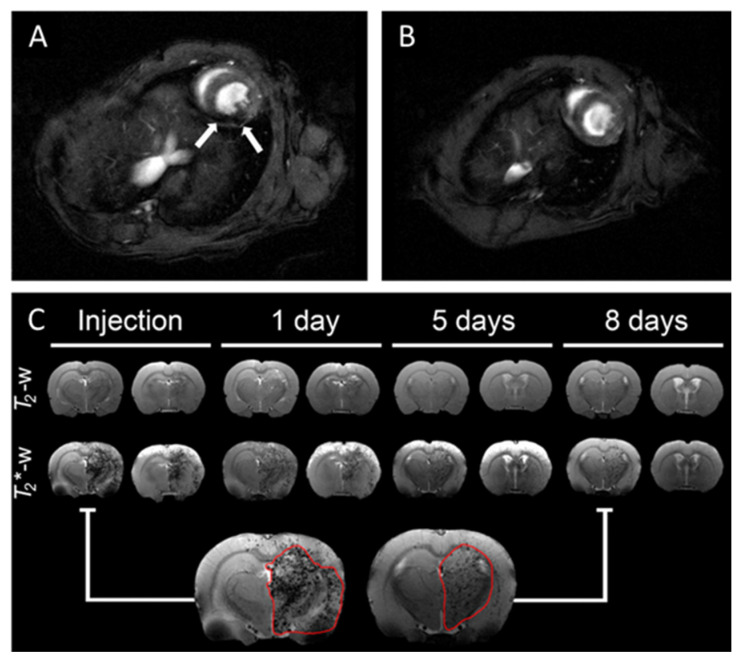
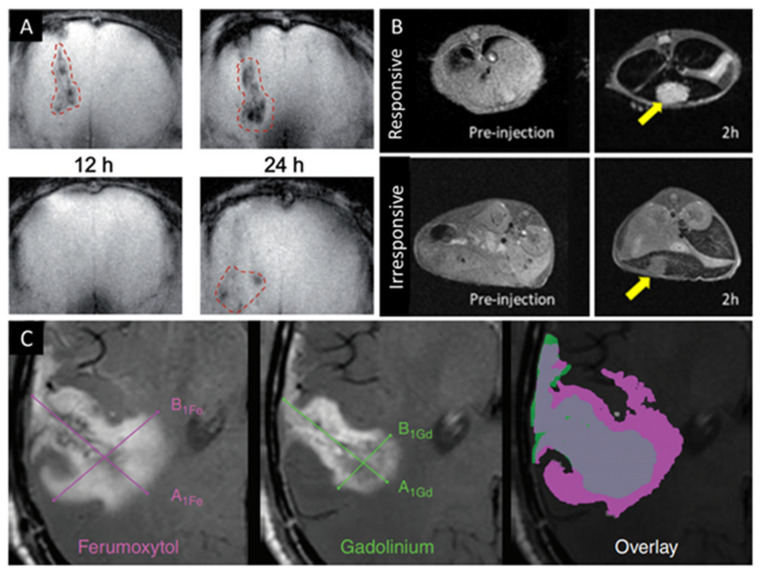
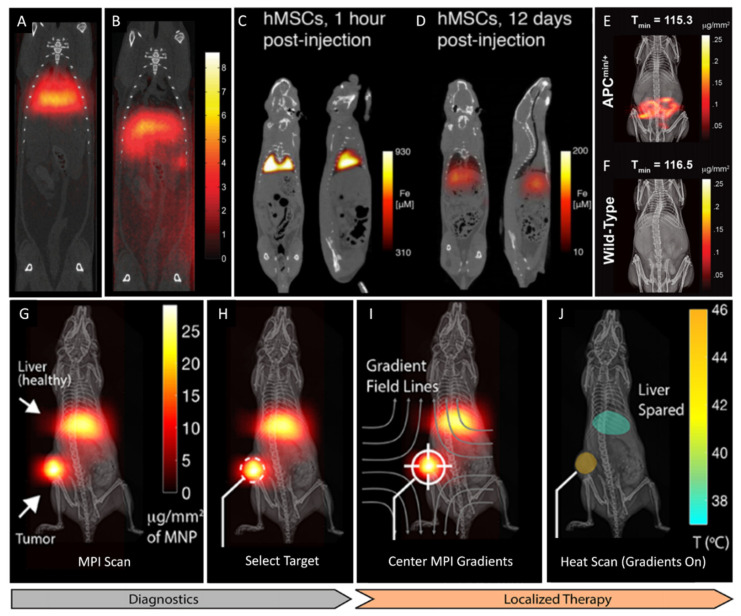
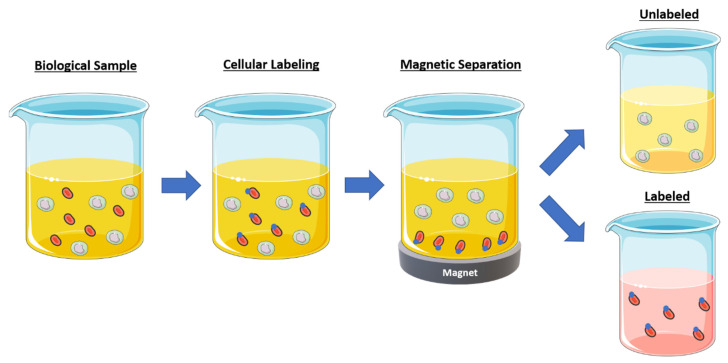
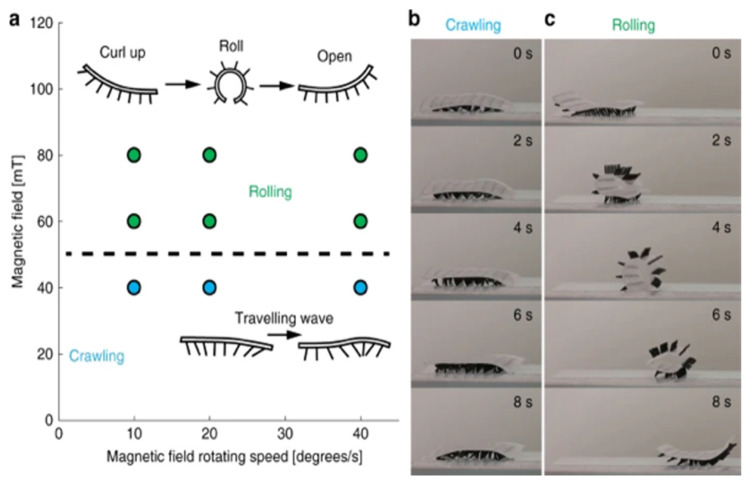
The use of magnetism in medicine has changed dramatically since its first application by the ancient Greeks in 624 BC. Now, by leveraging magnetic nanoparticles, investigators have developed a range of modern applications that use external magnetic fields to manipulate biological systems. Drug delivery systems that incorporate these particles can target therapeutics to specific tissues without the need for biological or chemical cues. Once precisely located within an organism, magnetic nanoparticles can be heated by oscillating magnetic fields, which results in localized inductive heating that can be used for thermal ablation or more subtle cellular manipulation. Biological imaging can also be improved using magnetic nanoparticles as contrast agents; several types of iron oxide nanoparticles are US Food and Drug Administration (FDA)-approved for use in magnetic resonance imaging (MRI) as contrast agents that can improve image resolution and information content. New imaging modalities, such as magnetic particle imaging (MPI), directly detect magnetic nanoparticles within organisms, allowing for background-free imaging of magnetic particle transport and collection. "Lab-on-a-chip" technology benefits from the increased control that magnetic nanoparticles provide over separation, leading to improved cellular separation. Magnetic separation is also becoming important in next-generation immunoassays, in which particles are used to both increase sensitivity and enable multiple analyte detection. More recently, the ability to manipulate material motion with external fields has been applied in magnetically actuated soft robotics that are designed for biomedical interventions. In this review article, the origins of these various areas are introduced, followed by a discussion of current clinical applications, as well as emerging trends in the study and application of these materials.
自公元前624年古希腊首次应用磁性以来,医学领域对磁性的应用已发生了巨大变化。如今,通过利用磁性纳米颗粒,研究人员开发了一系列现代应用,利用外部磁场来操纵生物系统。包含这些颗粒的药物递送系统可以将治疗药物靶向特定组织,而无需生物或化学信号。一旦在生物体内精确定位,磁性纳米颗粒可以通过振荡磁场加热,这会导致局部感应加热,可用于热消融或更精细的细胞操作。使用磁性纳米颗粒作为造影剂也可以改善生物成像;几种类型的氧化铁纳米颗粒已获得美国食品药品监督管理局(FDA)批准,可用于磁共振成像(MRI)作为造影剂,以提高图像分辨率和信息含量。新的成像方式,如磁性粒子成像(MPI),可直接检测生物体内的磁性纳米颗粒,实现对磁性颗粒运输和聚集的无背景成像。“芯片实验室”技术受益于磁性纳米颗粒在分离方面提供的更强控制能力,从而改善细胞分离。磁性分离在下一代免疫分析中也变得越来越重要,其中颗粒用于提高灵敏度并实现多种分析物检测。最近,利用外部磁场操纵材料运动的能力已应用于为生物医学干预设计的磁驱动软机器人中。在这篇综述文章中,介绍了这些不同领域的起源,随后讨论了当前的临床应用以及这些材料研究和应用的新趋势。