Díaz Mario, Mesa-Herrera Fátima, Marín Raquel
Laboratory of Membrane Physiology and Biophysics, Department of Animal Biology, School of Biology, Universidad de La Laguna, 38206 Tenerife, Spain.
Instituto Universitario de Enfermedades Tropicales y Salud Pública de Canarias (IUETSP), Universidad de La Laguna, 38206 Tenerife, Spain.
Antioxidants (Basel). 2021 Jun 3;10(6):907. doi: 10.3390/antiox10060907.
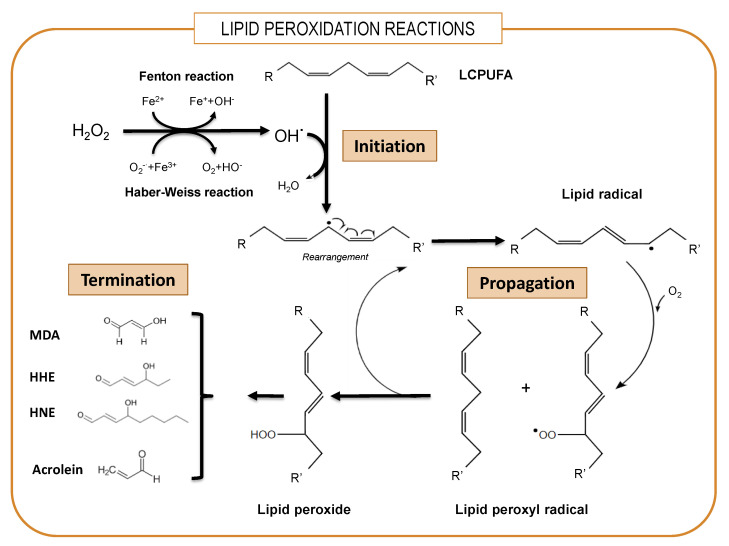
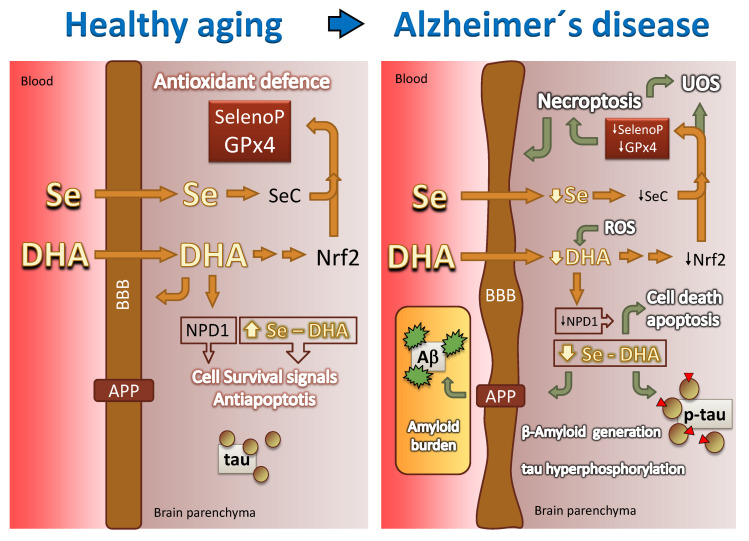
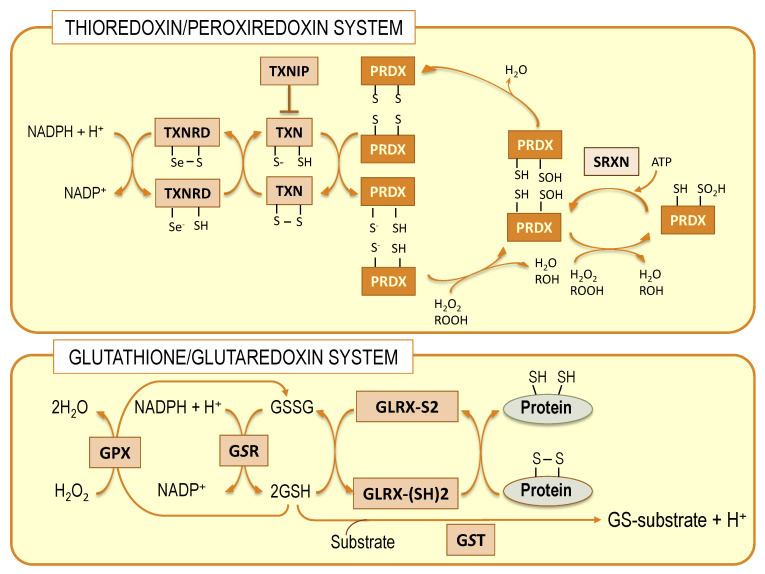
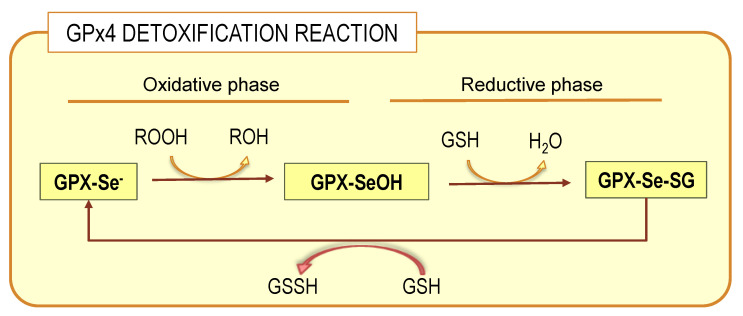
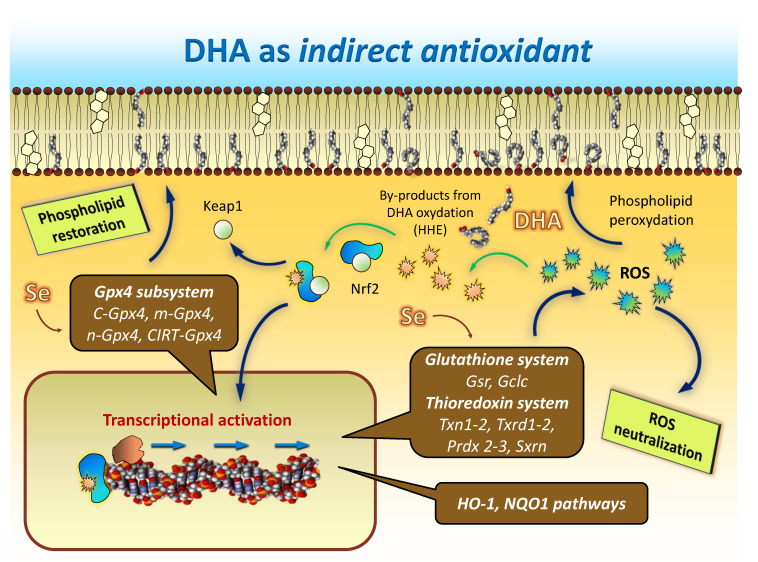
DHA (docosahexaenoic acid) is perhaps the most pleiotropic molecule in nerve cell biology. This long-chain highly unsaturated fatty acid has evolved to accomplish essential functions ranging from structural components allowing fast events in nerve cell membrane physiology to regulation of neurogenesis and synaptic function. Strikingly, the plethora of DHA effects has to take place within the hostile pro-oxidant environment of the brain parenchyma, which might suggest a molecular suicide. In order to circumvent this paradox, different molecular strategies have evolved during the evolution of brain cells to preserve DHA and to minimize the deleterious effects of its oxidation. In this context, DHA has emerged as a member of the "indirect antioxidants" family, the redox effects of which are not due to direct redox interactions with reactive species, but to modulation of gene expression within thioredoxin and glutathione antioxidant systems and related pathways. Weakening or deregulation of these self-protecting defenses orchestrated by DHA is associated with normal aging but also, more worryingly, with the development of neurodegenerative diseases. In the present review, we elaborate on the essential functions of DHA in the brain, including its role as indirect antioxidant, the selenium connection for proper antioxidant function and their changes during normal aging and in Alzheimer's disease.
二十二碳六烯酸(DHA)可能是神经细胞生物学中最具多效性的分子。这种长链高度不饱和脂肪酸已经进化到能完成多种重要功能,从作为神经细胞膜生理学中快速活动的结构成分,到对神经发生和突触功能的调节。令人惊讶的是,大量DHA的作用必须在脑实质充满敌意的促氧化环境中发生,这可能暗示着一种分子自杀行为。为了规避这一矛盾,在脑细胞进化过程中出现了不同的分子策略来保护DHA,并将其氧化的有害影响降至最低。在这种情况下,DHA已成为“间接抗氧化剂”家族的一员,其氧化还原作用并非源于与活性物质的直接氧化还原相互作用,而是通过调节硫氧还蛋白和谷胱甘肽抗氧化系统及相关途径中的基因表达来实现。由DHA精心策划的这些自我保护防御机制的减弱或失调与正常衰老有关,但更令人担忧的是,还与神经退行性疾病的发展有关。在本综述中,我们详细阐述了DHA在大脑中的重要功能,包括其作为间接抗氧化剂的作用、适当抗氧化功能的硒联系,以及它们在正常衰老和阿尔茨海默病中的变化。