Murti Rudi Hari, Afifah Enik Nurlaili, Nuringtyas Tri Rini
Department of Agronomy, Faculty of Agriculture, Universitas Gadjah Mada, Yogyakarta 55281, Indonesia.
Faculty of Biology, Universitas Gadjah Mada, Yogyakarta 55281, Indonesia.
Plants (Basel). 2021 Jun 3;10(6):1143. doi: 10.3390/plants10061143.
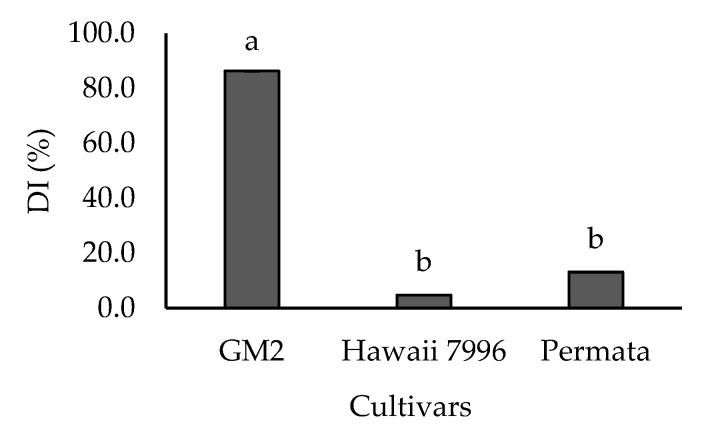
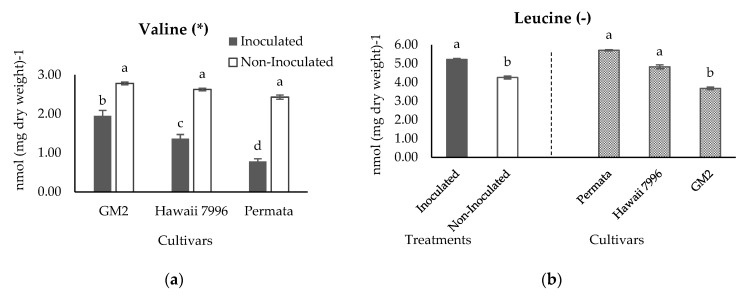
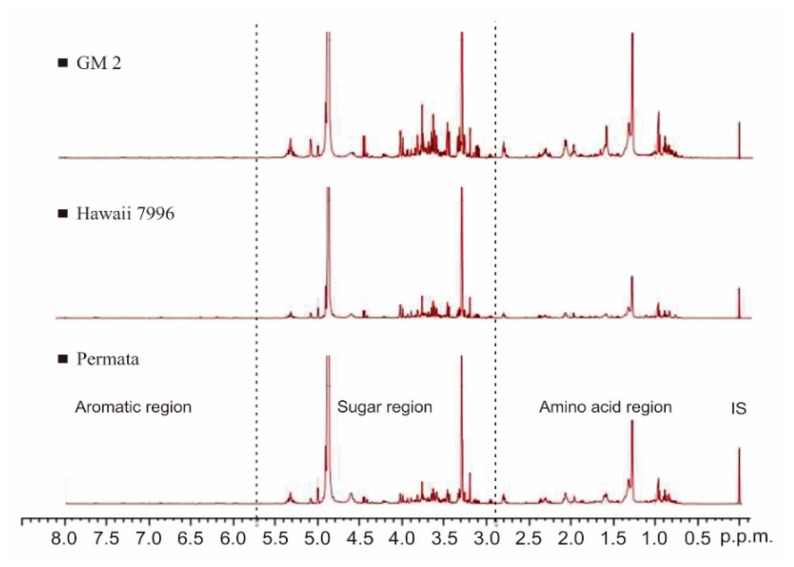
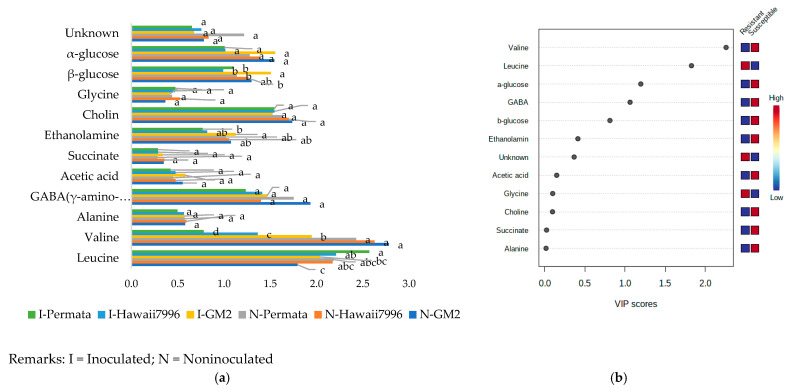
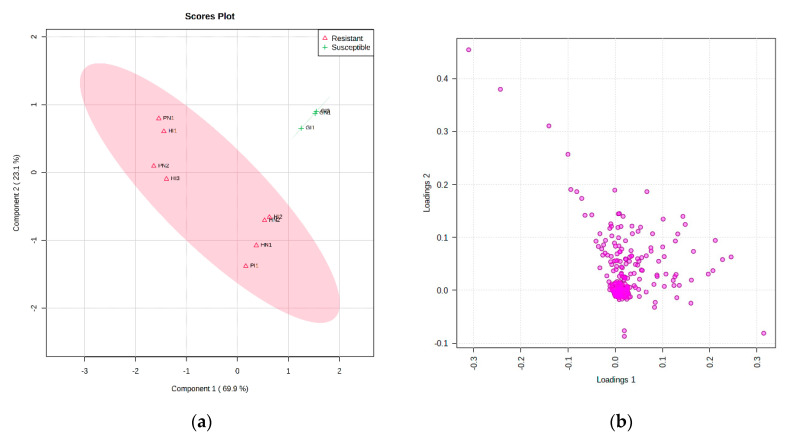
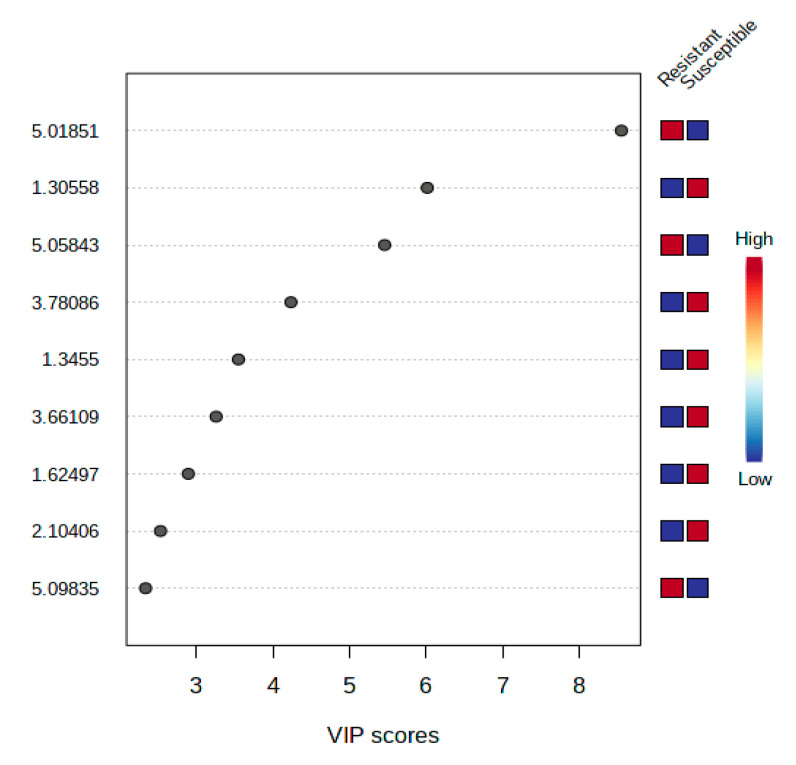
is the pathogen responsible for wilting, yield losses, and death in tomato plants. The use of resistant cultivars has been proven as the most appropriate solution to controlling this pathogen. Therefore, further study of host-plant resistance mechanisms in tomatoes is urgently needed. H-NMR (nuclear magnetic resonance) spectroscopy combined with multivariate data analysis has been used to identify the biochemical compounds that play a crucial role in the defense mechanisms of tomato against bacterial wilt. Eleven metabolites consisting of amino acids, sugars and organic acids were identified and presented at different concentrations in each cultivar. Leucine and valine were determined as distinguishable metabolites of resistant and susceptible cultivars. Permata and Hawaii 7996 as resistant cultivars had a significant decrease of valine after inoculation about 1.5-2 times compared to the susceptible cultivar (GM2). Meanwhile, the resistant cultivars had a higher level of leucine, about 1.3-1.5 times compared to the susceptible ones. Synthesis of leucine and valine are linked as a member of the pyruvate family. Therefore, the decrease in valine may be related to the higher need for leucine to form the leucine-rich receptor, which plays a role in the plant's immune system against the bacterial wilt.
是导致番茄植株枯萎、产量损失和死亡的病原体。使用抗性品种已被证明是控制这种病原体的最合适解决方案。因此,迫切需要进一步研究番茄的宿主植物抗性机制。核磁共振(H-NMR)光谱结合多变量数据分析已被用于识别在番茄抗青枯病防御机制中起关键作用的生化化合物。鉴定出了11种由氨基酸、糖类和有机酸组成的代谢物,并在每个品种中呈现出不同的浓度。亮氨酸和缬氨酸被确定为抗性和感病品种的可区分代谢物。作为抗性品种的Permata和夏威夷7996接种后缬氨酸含量显著下降,与感病品种(GM2)相比约为1.5 - 2倍。同时,抗性品种的亮氨酸水平较高,与感病品种相比约为1.3 - 1.5倍。亮氨酸和缬氨酸的合成作为丙酮酸家族的成员相互关联。因此,缬氨酸的减少可能与形成富含亮氨酸的受体对亮氨酸的更高需求有关,该受体在植物抵抗青枯病的免疫系统中发挥作用。