
自驱动纸和木模型:用于研究和教学的低成本手工仿生机电一体化系统
Self-Actuated Paper and Wood Models: Low-Cost Handcrafted Biomimetic Compliant Systems for Research and Teaching.
作者信息
Poppinga Simon, Schenck Pablo, Speck Olga, Speck Thomas, Bruchmann Bernd, Masselter Tom
机构信息
Plant Biomechanics Group @ Botanic Garden, University of Freiburg, 79104 Freiburg im Breisgau, Germany.
Freiburg Materials Research Center (FMF), University of Freiburg, 79104 Freiburg im Breisgau, Germany.
出版信息
Biomimetics (Basel). 2021 Jun 22;6(3):42. doi: 10.3390/biomimetics6030042.
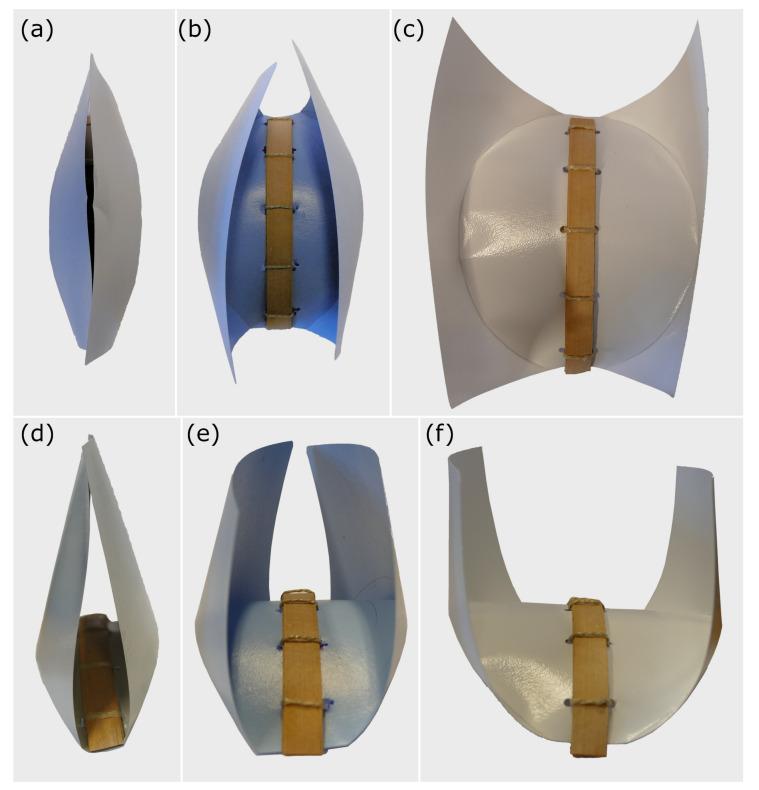
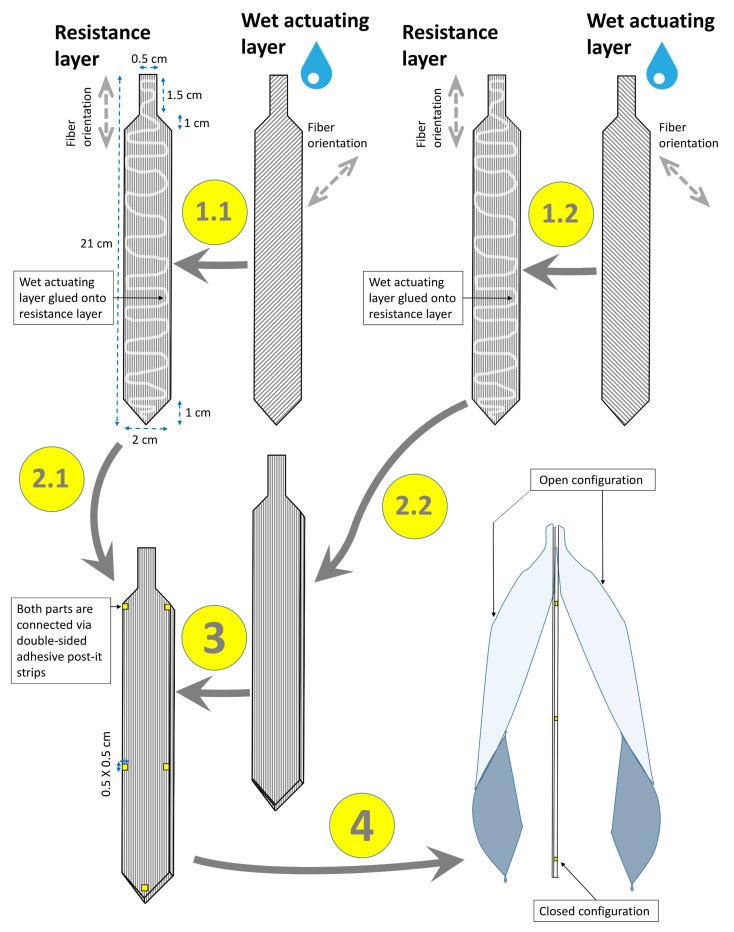
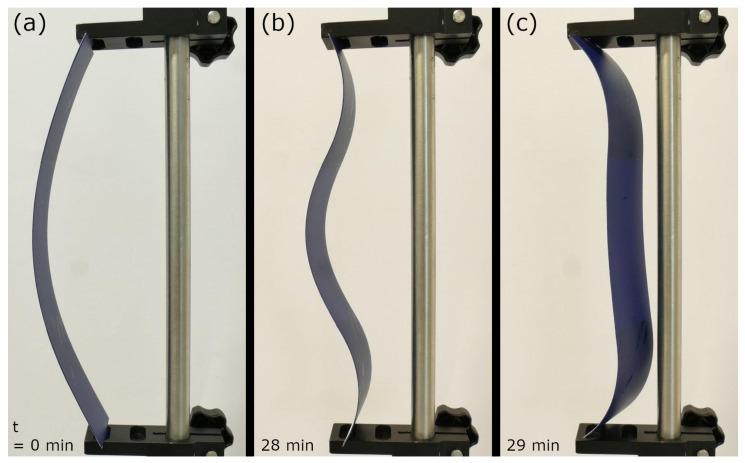
The abstraction and implementation of plant movement principles into biomimetic compliant systems are of increasing interest for technical applications, e.g., in architecture, medicine, and soft robotics. Within the respective research and development approaches, advanced methods such as 4D printing or 3D-braiding pultrusion are typically used to generate proof-of-concept demonstrators at the laboratory or demonstrator scale. However, such techniques are generally time-consuming, complicated, and cost-intensive, which often impede the rapid realization of a sufficient number of demonstrators for testing or teaching. Therefore, we have produced comparable simple handcrafted compliant systems based on paper, wood, plastic foil, and/or glue as construction materials. A variety of complex plant movement principles have been transferred into these low-cost physical demonstrators, which are self-actuated by shrinking processes induced by the anisotropic hygroscopic properties of wood or paper. The developed systems have a high potential for fast, precise, and low-cost abstraction and transfer processes in biomimetic approaches and for the "hands-on understanding" of plant movements in applied university and school courses.
将植物运动原理抽象化并应用于仿生顺应系统,在诸如建筑、医学和软体机器人等技术应用领域正引发越来越多的关注。在各自的研发方法中,诸如4D打印或3D编织拉挤成型等先进方法通常用于在实验室或演示规模上生成概念验证演示器。然而,这些技术通常耗时、复杂且成本高昂,这常常阻碍快速实现足够数量的演示器用于测试或教学。因此,我们制作了基于纸张、木材、塑料薄膜和/或胶水作为建筑材料的类似简单手工制作的顺应系统。多种复杂的植物运动原理已被转化到这些低成本的物理演示器中,这些演示器通过木材或纸张的各向异性吸湿特性引起的收缩过程实现自驱动。所开发的系统在仿生方法中具有快速、精确和低成本的抽象化与转化过程的巨大潜力,并且在应用大学和学校课程中对于“亲身理解”植物运动具有重要意义。




 Zotero 插件