Ege Duygu
Biomedical Engineering, Boğaziçi University, Rasathane Cd, Kandilli Campus, Istanbul 34684, Turkey.
Materials (Basel). 2021 Jun 16;14(12):3332. doi: 10.3390/ma14123332.
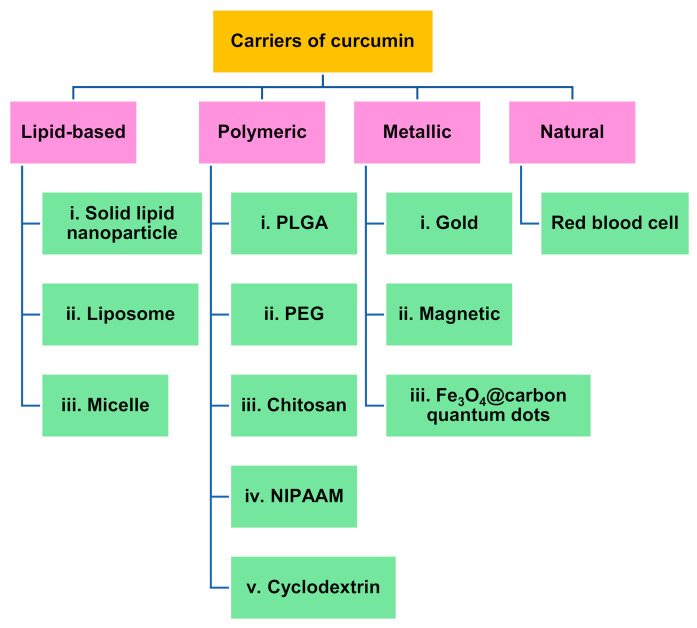
AD is a chronic neurodegenerative disease. Many different signaling pathways, such as Wnt/β-catenin, Notch, ROS/JNK, and PI3K/Akt/mTOR are involved in Alzheimer's disease and crosstalk between themselves. A promising treatment involves the uses of flavonoids, and one of the most promising is curcumin; however, because it has difficulty permeating the blood-brain barrier (BBB), it must be encapsulated by a drug carrier. Some of the most frequently studied are lipid nanocarriers, liposomes, micelles and PLGA. These carriers are further conjugated with brain-targeting agents such as lactoferrin and transferrin. In this review paper, curcumin and its therapeutic effects, which have been examined in vivo, are analyzed and then the delivery systems to the brain are addressed. Overall, the analysis of the literature revealed great potential for curcumin in treating AD and indicated the challenges that require further research.
阿尔茨海默病(AD)是一种慢性神经退行性疾病。许多不同的信号通路,如Wnt/β-连环蛋白、Notch、ROS/JNK和PI3K/Akt/mTOR都与阿尔茨海默病有关,并且它们之间存在相互作用。一种有前景的治疗方法涉及使用类黄酮,其中最有前景的之一是姜黄素;然而,由于它难以穿透血脑屏障(BBB),必须用药物载体进行包封。一些最常被研究的是脂质纳米载体、脂质体、胶束和聚乳酸-羟基乙酸共聚物(PLGA)。这些载体还与脑靶向剂如乳铁蛋白和转铁蛋白进一步偶联。在这篇综述文章中,分析了姜黄素及其在体内已被研究的治疗效果,然后探讨了向脑内的递送系统。总体而言,文献分析揭示了姜黄素在治疗AD方面具有巨大潜力,并指出了需要进一步研究的挑战。