Sir William Dunn School of Pathology, University of Oxford, Oxford, UK.
Univ Rennes, CNRS, Structure Fédérative de Recherche Biosit, IGDR (Institut de Génétique et Développement de Rennes) - UMR 6290, Rennes, France.
Nat Commun. 2021 Jul 1;12(1):4055. doi: 10.1038/s41467-021-24361-9.
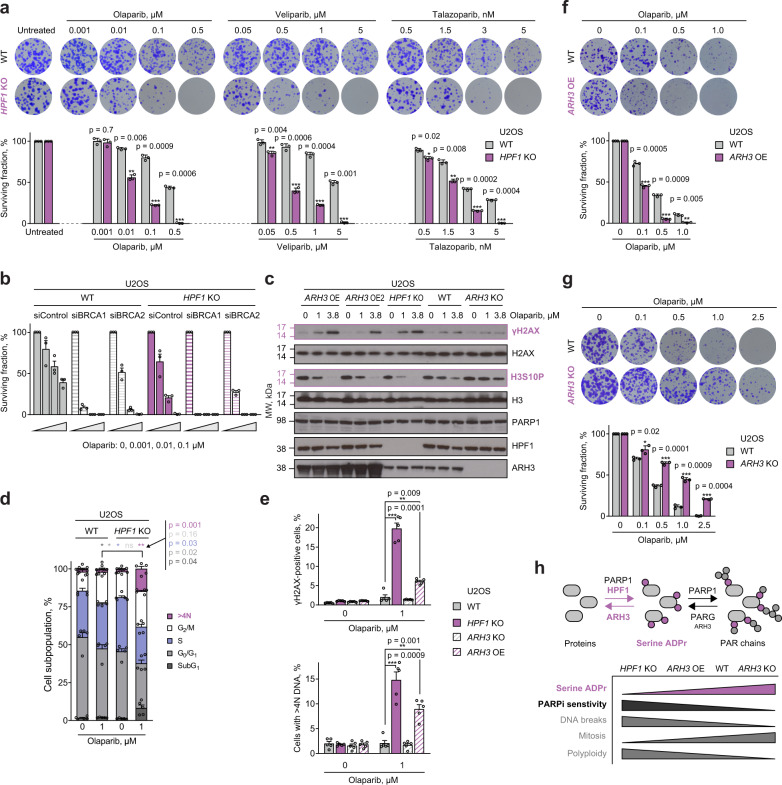
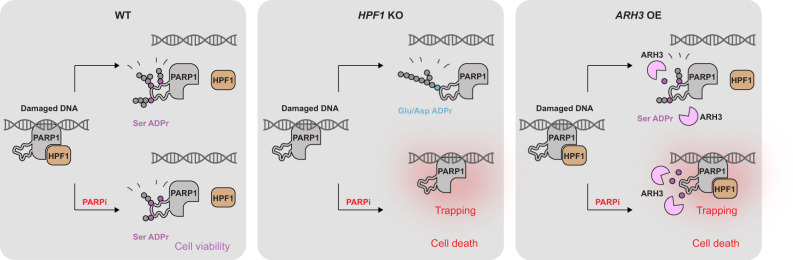
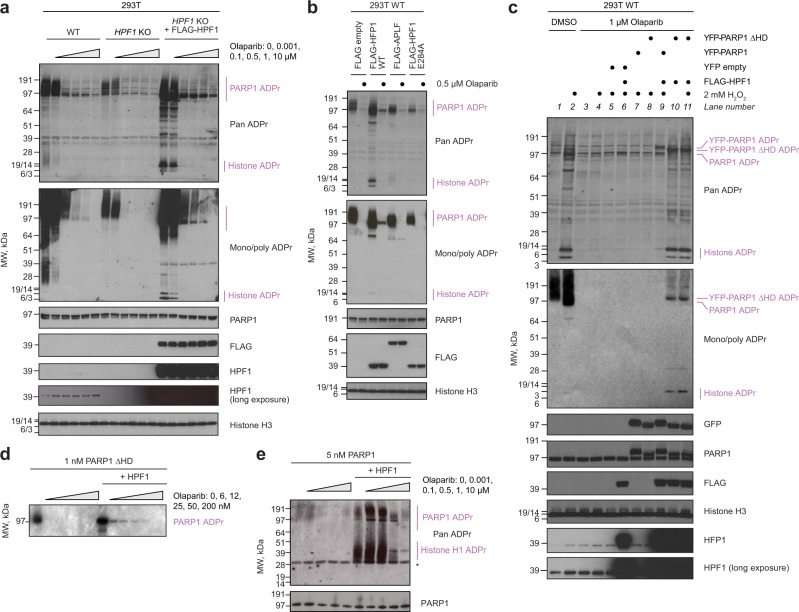
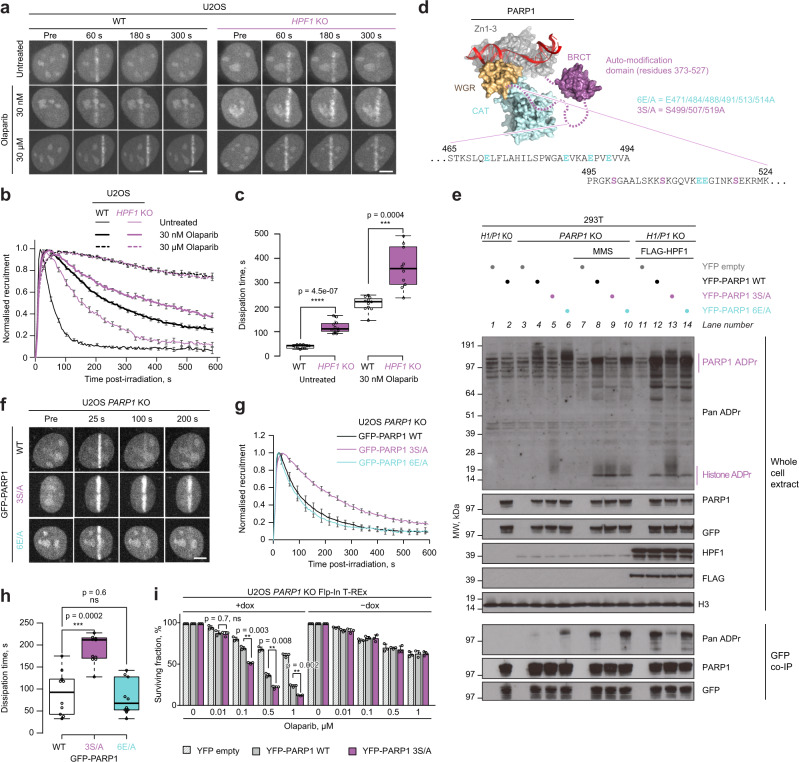
Poly(ADP-ribose) polymerase 1 (PARP1) and PARP2 are recruited and activated by DNA damage, resulting in ADP-ribosylation at numerous sites, both within PARP1 itself and in other proteins. Several PARP1 and PARP2 inhibitors are currently employed in the clinic or undergoing trials for treatment of various cancers. These drugs act primarily by trapping PARP1 on damaged chromatin, which can lead to cell death, especially in cells with DNA repair defects. Although PARP1 trapping is thought to be caused primarily by the catalytic inhibition of PARP-dependent modification, implying that ADP-ribosylation (ADPr) can counteract trapping, it is not known which exact sites are important for this process. Following recent findings that PARP1- or PARP2-mediated modification is predominantly serine-linked, we demonstrate here that serine ADPr plays a vital role in cellular responses to PARP1/PARP2 inhibitors. Specifically, we identify three serine residues within PARP1 (499, 507, and 519) as key sites whose efficient HPF1-dependent modification counters PARP1 trapping and contributes to inhibitor tolerance. Our data implicate genes that encode serine-specific ADPr regulators, HPF1 and ARH3, as potential PARP1/PARP2 inhibitor therapy biomarkers.
聚(ADP-核糖)聚合酶 1(PARP1)和 PARP2 可被 DNA 损伤募集和激活,导致 PARP1 自身和其他蛋白质中许多部位的 ADP-核糖基化。目前有几种 PARP1 和 PARP2 抑制剂在临床上使用或正在进行各种癌症的治疗试验。这些药物主要通过在受损染色质上捕获 PARP1 起作用,这可能导致细胞死亡,尤其是在具有 DNA 修复缺陷的细胞中。虽然 PARP1 捕获被认为主要是由于 PARP 依赖性修饰的催化抑制所致,暗示 ADP-核糖基化(ADPr)可以拮抗捕获,但尚不清楚哪些确切的位点对此过程很重要。最近的发现表明,PARP1 或 PARP2 介导的修饰主要是丝氨酸连接的,我们在此证明丝氨酸 ADPr 在细胞对 PARP1/PARP2 抑制剂的反应中起着至关重要的作用。具体来说,我们确定了 PARP1 中的三个丝氨酸残基(499、507 和 519)作为关键位点,其高效的 HPF1 依赖性修饰可拮抗 PARP1 捕获并有助于抑制剂耐受。我们的数据表明,编码丝氨酸特异性 ADPr 调节剂 HPF1 和 ARH3 的基因可能是 PARP1/PARP2 抑制剂治疗的潜在生物标志物。