Turgutkaya Atakan, Aşçı Gülay
Adnan Menderes University - ADÜ, Hematology Department, Aydın, Turkey.
Ege University - EÜTF, Ege University Hospital, Bornova, İzmir, Turkey.
J Vasc Bras. 2021 Jun 16;20:e20200245. doi: 10.1590/1677-5449.200245.
Cardiovascular events are seen more frequently after the age of 60 and they are a significant cause of morbidity and mortality. Arterial stiffness is a property that can be expressed by pulse wave velocity and this value is assumed to be a predictor of cardiovascular events. Patients with chronic kidney disease and dysregulated blood sugar have increased atherosclerosis and arterial stiffness, but the relationship between physiological levels of Hba1c and arterial stiffness is less clear in chronic kidney disease patients without diabetes mellitus.
Here, we aimed to investigate the degree of arterial stiffness among non-diabetic, non-dialysis dependent chronic kidney disease patients with physiological HbA1c levels.
We enrolled 51 patients who were followed up at Ege University Hospital Nephrology Department between February and June 2015. Non-diabetic, non-dialysis dependent chronic kidney disease patients were included in the study. Blood pressure and pulse wave velocity were measured with an applanation tonometry device (Sphygmocor Vx Software Atcor Medical, Australia). Correlations between pulse wave velocity and the aforementioned parameters were investigated (see below).
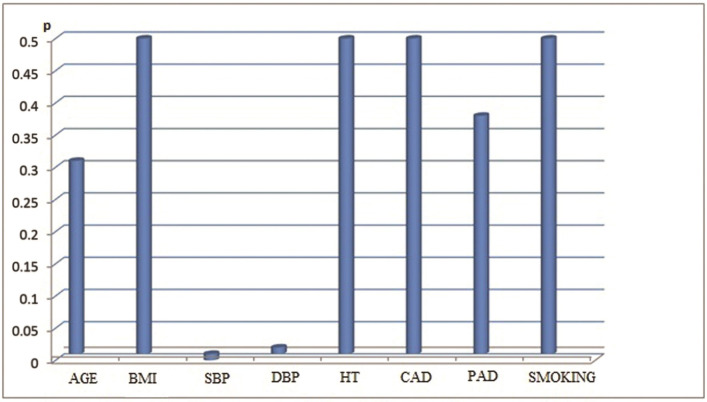
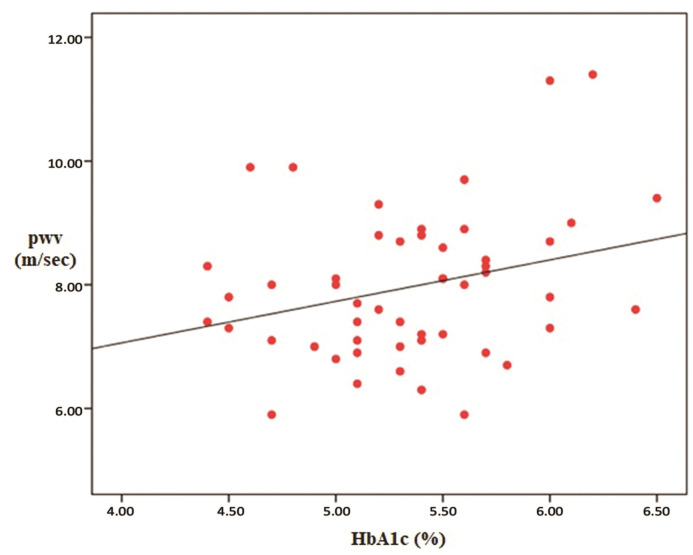
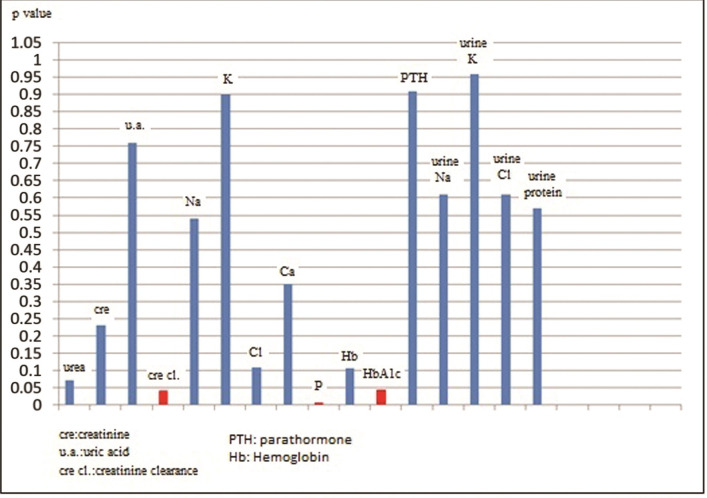
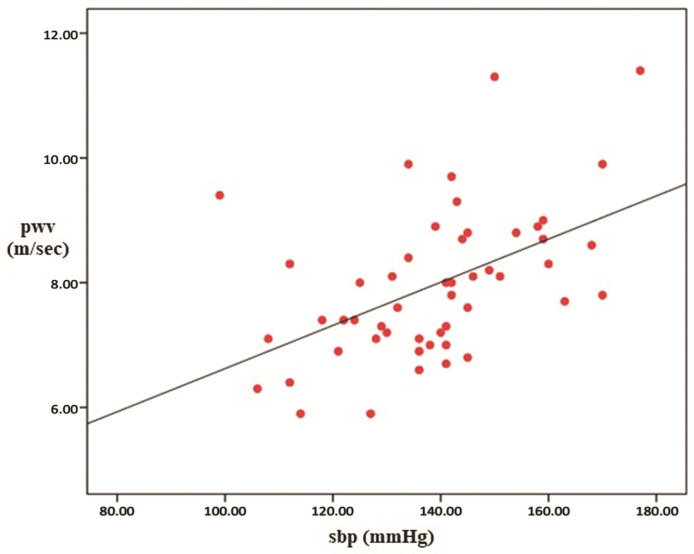
We detected a significant correlation between pulse wave velocity and systolic blood pressure (p=0.0001) and Hba1c (p=0.044) separately. There was an inverse correlation with creatinine clearance (p=0.04). We also detected a significant correlation with serum phosphorus level (p=0.0077) and furosemide use (p=0.014). No correlations were found among the other parameters.
Arterial stiffness is an important predictor of cardiovascular events and measuring it is an inexpensive method for estimating morbidity and mortality. Our study supports the importance of measuring arterial stiffness and of controlling blood glucose levels, even at physiological Hba1c values, especially for chronic kidney disease patients.
心血管事件在60岁以后更为常见,是发病和死亡的重要原因。动脉僵硬度是一种可通过脉搏波速度来表示的特性,该值被认为是心血管事件的一个预测指标。慢性肾脏病和血糖失调患者的动脉粥样硬化和动脉僵硬度增加,但在无糖尿病的慢性肾脏病患者中,糖化血红蛋白(HbA1c)生理水平与动脉僵硬度之间的关系尚不清楚。
在此,我们旨在研究具有生理HbA1c水平的非糖尿病、非透析依赖的慢性肾脏病患者的动脉僵硬度程度。
我们纳入了2015年2月至6月在伊兹密尔埃杰大学医院肾病科接受随访的51例患者。研究纳入非糖尿病、非透析依赖的慢性肾脏病患者。使用压平式眼压计设备(澳大利亚Atcor Medical公司的Sphygmocor Vx软件)测量血压和脉搏波速度。研究脉搏波速度与上述参数之间的相关性(见下文)。
我们分别检测到脉搏波速度与收缩压(p=0.0001)和HbA1c(p=0.044)之间存在显著相关性。与肌酐清除率呈负相关(p=0.04)。我们还检测到与血清磷水平(p=0.0077)和使用速尿(p=0.014)存在显著相关性。在其他参数之间未发现相关性。
动脉僵硬度是心血管事件的重要预测指标,测量它是估计发病和死亡的一种廉价方法。我们的研究支持测量动脉僵硬度以及控制血糖水平的重要性,即使在HbA1c生理值时也是如此,尤其是对于慢性肾脏病患者。